
Tree Shrub Diseases Science
Tree shrub diseases develop through biological, environmental, and structural processes that unfold over time. Unlike turf issues that often show rapid surface symptoms, diseases in woody plants typically emerge slowly as internal systems become disrupted. Understanding tree shrub diseases through a scientific lens—grounded in tree and shrub science—helps explain why symptoms appear late, persist across seasons, and rarely resolve without addressing underlying causes.
Tree and shrub disease science builds on core tree and shrub science principles by examining how pathogens interact with plant tissue, how environmental stress weakens defenses, and why visible symptoms often lag far behind the original trigger.
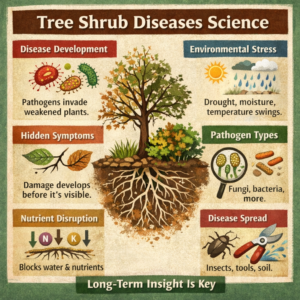
How Tree Shrub Diseases Develop Over Time
Diseases rarely begin with visible damage. In most cases, disease development starts below the surface or within plant tissue long before symptoms appear. Pathogens such as fungi, bacteria, or opportunistic microorganisms take advantage of weakened conditions rather than attacking healthy plants outright, a pattern well documented in university extension research on plant disease development.
Root stress, nutrient imbalance, compacted soil, moisture extremes, and physical injury all reduce a plant’s natural defense systems. Once defenses decline, pathogens can colonize internal tissue and gradually disrupt water movement, nutrient transport, and cellular function. As a result, disease progression often spans months or even years.
Environmental Stress and Tree Shrub Diseases
Environmental stress plays a central role in tree shrub diseases. Temperature swings, prolonged moisture, drought cycles, and poor drainage create conditions that favor disease development. While pathogens may be present in the environment at all times, disease expression depends on whether the plant can resist infection.
Stress reduces energy reserves and limits the plant’s ability to compartmentalize damage. Over time, repeated stress weakens internal systems, allowing disease organisms to expand. This explains why disease symptoms often worsen after seasonal extremes rather than appearing immediately.
Common Pathogens Involved in Diseases
Most diseases fall into several biological categories. Fungal diseases are the most common and typically spread through spores carried by wind, water, or soil contact. These organisms thrive in moist environments and often persist unnoticed until conditions allow rapid growth.
Bacterial diseases function differently. They often enter through wounds or natural openings and move through vascular tissue, interfering with water transport. In some cases, environmental conditions determine whether bacteria remain dormant or become active.
Importantly, the presence of a pathogen alone does not guarantee disease. Disease occurs when plant defenses, environmental conditions, and pathogen activity align.
Why Tree Shrub Diseases Often Go Undetected
One defining feature of tree shrub diseases is delayed symptom expression. Trees and shrubs store energy and nutrients across multiple seasons. Because of this, they can temporarily compensate for internal damage without showing outward decline.
Visible symptoms such as leaf discoloration, canopy thinning, dieback, or reduced growth often reflect damage that occurred much earlier. By the time symptoms appear, disease processes may already be well established internally. This delay explains why surface treatments alone rarely correct underlying disease issues.
Tree Shrub Diseases and Nutrient Disruption
Tree shrub diseases frequently interfere with nutrient uptake and transport rather than causing immediate tissue death. Pathogens may damage roots, restrict vascular flow, or alter metabolic processes that control nutrient allocation.
When nutrient movement becomes inefficient, plants show secondary symptoms that resemble deficiencies. However, adding nutrients without addressing disease pressure or root function rarely restores health. Disease science emphasizes understanding how nutrients move through woody plants, not just whether nutrients are present.
This interaction between disease and nutrition highlights why long-term plant health depends on balanced systems rather than reactive inputs.
Disease Spread Patterns in Trees and Shrubs
Tree shrub diseases spread in predictable ways based on biology and environment. Some pathogens remain localized near the infection site, while others move systemically through vascular tissue. Soilborne diseases often persist in the root zone and reappear seasonally, even after visible symptoms fade.
Environmental movement also plays a role. Water splash, pruning tools, insect activity, and soil displacement can all transport pathogens. Understanding these pathways helps explain why disease pressure may recur despite surface-level improvement.
Distinguishing Disease from Other Plant Stress
Not all decline is caused by disease. Tree shrub diseases can resemble damage from insects, nutrient imbalance, or environmental stress. However, disease differs in how symptoms progress and persist over time.
Stress-related damage often stabilizes once conditions improve. Disease-driven decline tends to worsen gradually, spread unevenly, or return season after season. Scientific evaluation focuses on progression patterns, tissue response, and environmental history rather than isolated symptoms.
Why Tree Shrub Diseases Require a Systems Approach
Tree shrub diseases do not exist in isolation. They interact with soil conditions, nutrient availability, moisture patterns, and plant structure—factors commonly addressed within broader lawn care resources that explain how outdoor systems function together. Because woody plants operate on long biological timelines, effective disease management depends on stabilizing the entire system rather than reacting to visible damage.
Disease science emphasizes prevention, resilience, and long-term balance. When root health, nutrient flow, and environmental conditions remain stable, trees and shrubs are better equipped to suppress disease naturally, which is why professional tree and shrub care services focus on long-term plant health rather than short-term correction.
Hear What Our Happy Customers Have to Say!
For a Limited Time
Get Started Today and Enjoy Our Special Offer: Free Grub Control, Free Aeration, Free Fungicide, and Free Turf-Damaging Insect Control! Plus, Save 10% When You Prepay!
Your Local Lawn Care Experts
Dallas-Fort Worth
Address
3333 Earhart Dr., Suite 200
Carrollton, TX 75006
Phone Number
1-800-465-2934
Ready to elevate your lawn care game?
Get a free quote today.