
Latest News from Dr. Green Services
Stay Up to Date with Dr. Green Services
At Dr. Green Services, we believe in keeping our customers informed. Here you’ll find our latest press releases, company news, and updates about our lawn care services. From new promotions to helpful lawn tips and community efforts, this page is your go-to source for everything happening at Dr. Green Services.
Dr. Green Services Advises Illinois Homeowners: As Temps Rise, Spring Weed Control is Crucial to Stopping Weeds From Taking Over
Apr 30, 2026, 08:47 ET
CHICAGO, April 30, 2026 /PRNewswire/ -- As temperatures rise across Illinois and Northwest Indiana, lawns are entering a critical stage of the growing season. According to experts at Dr. Green Services, spring weed control is the most important step homeowners can take to stop weeds before they take over and weaken healthy grass.

As soil temperatures climb into the 50s, turfgrass begins to come out of winter dormancy. At the same time, common weeds such as dandelions and clover begin to actively grow. Because of this overlap, early weed control plays a major role in how a lawn performs throughout the year, especially as weeds compete for nutrients, water, and sunlight.
"If weeds are not controlled early, they spread quickly and become much more difficult to eliminate," said Marc Harris, Operations Manager for the Illinois and Indiana regions at Dr. Green Services. "That's why proper timing and professional-grade treatments are so important during the spring season."
Dr. Green Services highlights pre-emergent crabgrass control as one of the most effective preventive solutions. These treatments stop crabgrass before it emerges. However, broadleaf weeds such as dandelions and clover must be targeted early with post-emergent treatments while they are actively growing. When applied too late, crabgrass can already establish and broadleaf weeds can mature, spread, and require more aggressive control methods that may stress the lawn.
In addition, early-season applications of premium fertilizer help strengthen root systems and promote thicker turf. As a result, a dense lawn naturally crowds out weeds and improves long-term health. Dr. Green Services uses custom-blended premium fertilizer designed specifically for Midwest lawns to deliver balanced nutrients and consistent results.
While many homeowners attempt do-it-yourself weed control, inconsistent timing and product selection often lead to poor outcomes. In contrast, a professional lawn care service combines expert knowledge, high-quality materials, and precise application timing to deliver more reliable and longer-lasting results.
With over 40 years of experience, Dr. Green Services continues to help homeowners across Chicagoland, Illinois, and Northwest Indiana achieve greener lawns with fewer weeds. The company's certified technicians tailor each treatment based on local conditions, ensuring every lawn receives the care it needs during this critical spring window.
Homeowners looking to learn more about the science behind effective weed control can visit https://drgreenservices.com/weed-control-science/, or request a free quote at https://drgreenservices.com/get-a-quote/. Additionally, early scheduling helps ensure treatments are applied at the optimal time for maximum effectiveness.
Dr. Green Services Advises Texas Homeowners: April Is the Critical Window to Stop Mosquito Populations Before Peak Season
Apr 30, 2026, 08:42 ET
CARROLLTON, Texas, April 30, 2026 /PRNewswire/ -- As spring temperatures rise and rainfall increases across North Texas, mosquito activity is rapidly accelerating. According to experts at Dr. Green Services, April is the most important time for homeowners to take action and prevent mosquito populations from surging into the summer months.
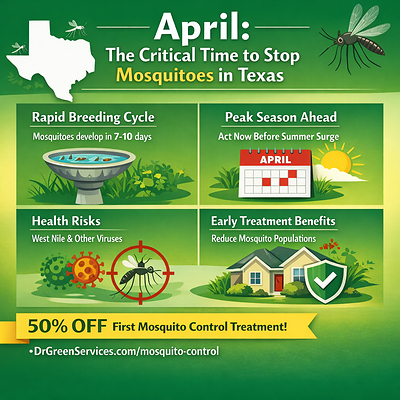
Mosquitoes require only small amounts of standing water to reproduce. After spring showers, common areas such as gutters, flowerpots, birdbaths, and low spots in lawns quickly become breeding sites. Meanwhile, warm temperatures significantly speed up their development. In fact, mosquitoes can complete their life cycle in as little as 7 to 10 days under ideal conditions, allowing populations to expand quickly if left untreated. Learn more about how mosquitoes develop and spread:
https://drgreenservices.com/mosquito-control-science/
Because of this rapid growth cycle, early intervention plays a critical role in long-term mosquito control in Texas.
"April is when mosquito populations begin building momentum across North Texas," said James Tatum, Director of Operations at Dr. Green Services. "If homeowners wait until they are constantly dealing with bites, the infestation is already established. Starting treatments now helps break the breeding cycle and keeps mosquito pressure much lower throughout the season."
In addition to being a nuisance, mosquitoes are known carriers of diseases such as West Nile virus, which has been reported in Texas in previous years. Therefore, proactive mosquito control is not only about comfort, but also about protecting families and pets.
While many homeowners rely on do-it-yourself products, these solutions often provide only temporary relief. Mosquitoes continue to breed in hidden areas, and without consistent, professional treatment, populations can quickly rebound.
Dr. Green Services offers a comprehensive mosquito control program designed to target mosquitoes at every stage of their life cycle. Each visit includes a detailed yard treatment, along with free perimeter pest control that helps reduce ants, spiders, fleas, ticks, cockroaches, and earwigs. Homeowners can explore service details here:
https://drgreenservices.com/mosquito-control/
Additionally, new customers can take advantage of a limited-time offer of half off the first mosquito control visit. To schedule professional mosquito control, visit:
https://drgreenservices.com/professional-mosquito-control/
By starting service in April, homeowners can significantly reduce mosquito activity before peak summer conditions arrive. As a result, outdoor spaces remain more comfortable, and families can enjoy their yards without constant interruption.
About Dr. Green Services
Dr. Green Services is a local, family-owned company with over 40 years of experience providing lawn care and pest control solutions. The company is known for its highly trained technicians, customized treatments, and commitment to delivering consistent results.
Dr. Green Services Advises Texas Homeowners: March Is the Critical Window to Strengthen Lawns and Stop Spring Weeds
Mar 23, 2026, 08:33 ET
CARROLLTON, Texas, March 23, 2026 /PRNewswire/ -- As temperatures begin rising across North Texas, lawns are starting to emerge from winter dormancy. According to lawn care experts at Dr. Green Services, March is one of the most important months for homeowners to strengthen grass roots, prevent weeds, and prepare lawns for the extreme heat of the Texas summer.
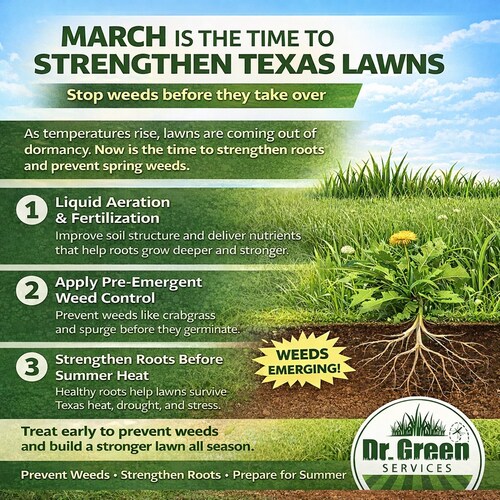
During winter dormancy, turfgrass slows its growth and conserves energy. However, as soil temperatures rise into the mid-50s and 60s, warm-season grasses such as Bermuda and St. Augustine begin to wake up and rebuild their root systems. At the same time, aggressive spring weeds like crabgrass, goosegrass, and spurge also begin germinating.
Because of this overlap, early spring lawn treatments play a major role in determining how a lawn performs throughout the growing season.
"March is when lawns begin rebuilding their root systems," said James Tatum, Director of Operations for the Texas region at Dr. Green Services. "When homeowners strengthen roots early and prevent weeds before they emerge, lawns are much better prepared to handle summer heat, drought, and stress."
Dr. Green Services recommends a three-step strategy for Texas lawns during early spring.
First, liquid aeration helps loosen compacted soil so oxygen, water, and nutrients can reach developing roots more effectively. Unlike mechanical core aeration, liquid aeration works throughout the soil profile without pulling plugs or disturbing turf that is just coming out of dormancy. More information about the differences between these methods is available here:
https://drgreenservices.com/liquid-aeration-vs-core-aeration/
Second, balanced fertilizer applications provide essential nutrients that help grass rebuild energy reserves after winter. Proper fertilization encourages deeper root development and promotes thicker, healthier turf.
Third, pre-emergent weed control helps stop invasive weeds before they have a chance to grow. When applied at the correct time, pre-emergent treatments form a protective barrier in the soil that prevents many common spring weeds from germinating. A detailed explanation of these treatments can be found here:
https://drgreenservices.com/pre-emergent-vs-post-emergent/
By combining aeration, fertilization, and weed prevention early in the season, lawns are able to establish stronger roots and thicker turf before weeds and summer stress arrive.
Dr. Green Services has provided professional lawn care for more than 40 years. The company works directly with leading manufacturers to develop custom fertilizer blends designed specifically for regional soil conditions and climate.
Illinois and Northwest Indiana Lawns Begin Spring Transition as Experts Recommend Slow-Release Nitrogen Fertilizer
Mar 23, 2026, 08:32 ET
CHICAGO, March 23, 2026 /PRNewswire/ -- As March temperatures gradually rise across Illinois and Northwest Indiana, lawns are beginning the natural transition out of winter dormancy. While many yards still appear pale or thin early in the season, lawn care experts at Dr. Green Services say proper fertilization can help turf recover more quickly once grass is ready to grow.

According to turf professionals, one of the most important steps during this early spring period is applying a slow-release, high-nitrogen fertilizer. Nitrogen is the primary nutrient responsible for chlorophyll production, which gives grass its green color and fuels new growth.
Because cool-season grasses common throughout the Midwest — including Kentucky bluegrass and perennial ryegrass — rely heavily on nitrogen during spring growth, properly timed fertilization helps turf green up faster while encouraging stronger development.
Research on fertilizer programs consistently shows that slow-release nitrogen feeds lawns gradually, allowing grass plants to absorb nutrients over time rather than all at once. As a result, turf grows more evenly and develops healthier roots. Additional information explaining the differences between fertilizer types can be found in Dr. Green Services' guide to slow-release vs. quick-release fertilizer:
https://drgreenservices.com/slow-release-vs-quick-release-fertilizer/
"Early spring is when lawns begin shifting from dormancy to active growth," said Marc Harris, Operations Manager for the Chicago and Indiana regions at Dr. Green Services. "A slow-release nitrogen fertilizer provides nutrients right when turf becomes ready to grow."
In addition to improving color and growth, early nitrogen fertilization helps turf become thicker and more competitive. As grass fills in, it naturally limits the open space where weeds typically establish.
"When grass grows thicker in spring, weeds have fewer opportunities to take hold," Harris explained. "Encouraging new grass growth early helps lawns stay healthier throughout the season."
Timing remains essential. Lawn care professionals recommend fertilizing once soil temperatures approach the mid-50-degree range, which signals the beginning of active turf growth in the Midwest.
For homeowners across Illinois and Northwest Indiana, this early spring window represents a key opportunity to strengthen lawns before summer stress arrives. More information about the science of nitrogen fertilizer and how it supports turf development can be found here:
https://drgreenservices.com/nitrogen-fertilizer-science/
Research also shows that proper fertilization supports deeper grass root growth, which helps lawns withstand drought, heat, and seasonal stress later in the year. Additional details about this process are available here:
https://drgreenservices.com/grass-root-growth-science/
As lawn care season begins, experts say applying the right fertilizer at the right time can make a significant difference in how quickly turf greens up and how well it resists weeds throughout the growing season.
Dr. Green Services Explains Why February Planning Leads to Healthier Lawns in Chicagoland
Feb 16, 2026, 08:56 ET
Local lawn care experts urge homeowners to prepare now for spring weeds, grub control, and stronger turf
CHICAGO, Feb. 16, 2026 /PRNewswire/ -- While winter still grips Chicagoland, the foundation for a healthy summer lawn is already being set. Dr. Green Services, a local, family-owned lawn care service, is encouraging homeowners to view February as a critical planning month. Even though lawns remain dormant, Northern Illinois soil and weather conditions demand early, science-based preparation to achieve strong, resilient turf in spring.
Why Waiting Until Spring Is Often Too Late

Many homeowners wait for warmer weather before thinking about lawn care. However, by the time grass turns green, key treatment windows are already closing. Soil temperatures can rise quickly during late winter warm spells, triggering early biological activity below the surface.
Pre-emergent weed control depends on precise timing. Once soil temperatures reach key thresholds, weeds like crabgrass begin to germinate. If treatments are not planned in advance, weeds can establish before prevention is possible. Similarly, effective grub control requires foresight. Reactive treatments later in the season often come after damage has already occurred. Missed timing frequently results in thin turf that struggles with weeds, heat stress, and drought.
What Dr. Green Services Prepares in February
Dr. Green Services uses February to develop customized lawn care plans tailored to each property. This includes selecting fertilizer blends designed for Illinois turf, scheduling treatments around local weather patterns, and coordinating technician routes to ensure consistent service when spring arrives. Planning ahead allows treatments to be applied at the exact moment lawns need them most.
Why Local Chicagoland Expertise Matters
Chicagoland lawns face unique challenges. Freeze-thaw cycles can compact soil and stress root systems, while heavy clay soils often prevent nutrients from reaching turf roots. National, one-size-fits-all programs rarely account for these conditions, leading to uneven results across Illinois lawns.
"In Chicagoland, the transition from frozen ground to active growth happens fast," said Marc Harris, Operations Manager at Dr. Green Services. "By the time weeds are visible, the opportunity for prevention is already shrinking. February planning allows us to get the science and timing right before the ground even thaws."
Plan Now for a Healthier Spring Lawn
Homeowners are encouraged to plan early and avoid the spring rush. With decades of local experience and a science-based approach, Dr. Green Services helps Chicagoland lawns start the season strong. Homeowners can also explore seasonal tips and expert guidance by visiting the company's lawn care resources page at https://drgreenservices.com/lawn-care-resources/
Dr. Green Services Warns Texas Homeowners: February Lawn Care Timing Is Critical
Feb 16, 2026, 08:42 ET
Early action helps prevent spring weeds and promotes stronger turf across North Texas
DALLAS and FORT WORTH, Texas, Feb. 16, 2026 /PRNewswire/ -- While much of the country remains focused on winter weather, Dr. Green Services is drawing attention to an important reality for Texas homeowners: lawns across North Texas are already beginning to wake up. Unlike northern regions where turf remains dormant well into spring, Texas lawns respond earlier to rising soil temperatures, making February a critical month for proactive lawn care planning.
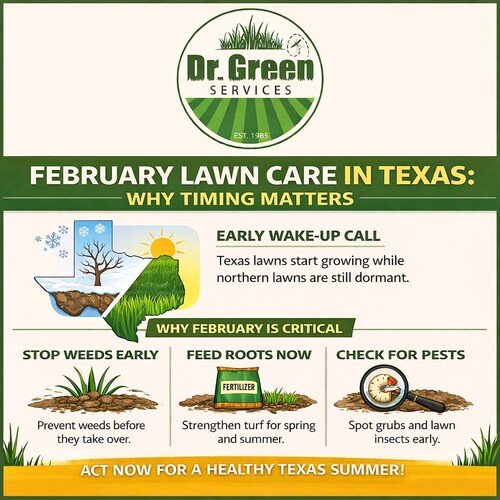
As soil temperatures steadily increase, turfgrass begins shifting from dormancy to early root activity weeks sooner than many homeowners expect. This early biological movement creates a narrow window to prevent weed pressure and establish a strong foundation for spring growth, while still accounting for the risk of late-season freeze damage that can impact Texas lawns
(https://drgreenservices.com/freeze-damage-in-texas/).
Waiting until April to think about lawn care often leads to season-long challenges in Texas. Common weeds can begin germinating as soon as soil temperatures reach consistent thresholds, and pre-emergent weed control depends heavily on precise timing. Once weeds emerge, preventative options become far less effective. At the same time, root systems are actively seeking nutrients needed to support spring growth and withstand summer heat, even when lawns still appear dormant above the surface.
Effective February lawn care focuses on biology rather than appearance. During this period, Dr. Green Services emphasizes early weed control planning, careful fertilization timing, and monitoring for grubs and turf-damaging insects as soil conditions become favorable. These early steps help protect turf before spring growth accelerates and before weed pressure becomes difficult to manage.
Texas lawns also require customized strategies. Soil composition, sun exposure, and turf types such as Bermuda, St. Augustine, and Zoysia vary widely across North Texas, making generic, national lawn care programs ineffective.
"The biggest mistake we see Texas homeowners make is following a national lawn care calendar," said James Tatum, Director of Operations at Dr. Green Services. "In Texas, if you wait for the grass to turn green before planning weed control, you've already missed the most effective window. February allows us to be proactive, which is critical for protecting lawns before summer heat arrives."
Dr. Green Services encourages homeowners to schedule early-season planning through its North Texas lawn care services before spring demand peaks.
Dr. Green Services Expands Chicago Lawn Care Resource Center to Help Homeowners Make Smarter Lawn Care Decisions
Jan 15, 2026, 08:51 ET
CHICAGO, Jan. 15, 2026 /PRNewswire/ -- Dr. Green Services, a local and family-owned lawn care service with more than 40 years of experience, has expanded its Chicago Lawn Care Resource Center to provide homeowners with clear, science-based guidance tailored to the Chicagoland region.

The expanded resource center serves as an educational hub covering a wide range of lawn care topics, including fertilization, weed control, grub control, aeration, lawn fungus, seeding, and mosquito control. Each resource focuses on the specific challenges faced by Chicago-area lawns, where weather swings, soil conditions, and cool-season turf types require precise timing and proven treatment strategies.
Unlike generic lawn care advice found online, the Chicago Lawn Care Resource Center emphasizes regional accuracy. Articles explain how local climate patterns affect grass growth, pest activity, and disease pressure throughout the year. As a result, homeowners gain a clearer understanding of why certain lawn problems occur and how professional lawn care services address them effectively.
"Many lawn problems homeowners face are caused by timing or treatments that do not match local conditions," said Marc Harris, operations manager at Dr. Green Services. "The goal of the resource center is to help homeowners understand what is happening in their lawn and why certain approaches work better in this region."
Dr. Green Services developed the resource center to help homeowners cut through misinformation. Many lawn issues stem from treatments applied too early, too late, or without addressing the underlying cause. The guides break down complex topics into easy-to-read explanations, while still offering depth for those who want to understand the science behind lawn care.
Content within the resource center reflects decades of hands-on experience. Topics include how premium fertilizer supports root development, how turf-damaging insects impact lawns below the surface, and how lawn fungus spreads during periods of environmental stress. Each article is written to be practical, factual, and accessible to a broad audience.
The resource center will continue to grow as new lawn care challenges emerge. Dr. Green Services plans to regularly publish additional guides based on seasonal conditions, homeowner questions, and ongoing research.
Additional lawn care education resources and guides are available through the Dr. Green Services Lawn Care Resource Center:
Dr. Green Services Expands Lawn Care Resource Center to Support Science-Based Lawn Care Education
Jan 15, 2026, 08:49 ET
DALLAS, Jan. 15, 2026 /PRNewswire/ -- Dr. Green Services, a local and family-owned lawn care service with more than 40 years of experience, has expanded its Lawn Care Resource Center to provide homeowners with reliable, science-based information designed to improve long-term lawn health.

The resource center brings together a growing collection of educational guides that address core lawn care topics such as fertilization, weed control, grub control, aeration, lawn fungus, seeding, and mosquito control. Each article focuses on how environmental conditions, grass types, and seasonal stressors influence lawn performance throughout the year.
Rather than offering one-size-fits-all advice, the Lawn Care Resource Center explains the biological and environmental factors that affect turf health. Topics explore how heat and drought stress weaken lawns, why insects and disease become more active during certain seasons, and how nutrient management supports root strength and recovery.
"Many lawn problems start below the surface long before homeowners see visible damage," said James Tatum, director of operations at Dr. Green Services. "Education helps people understand how soil conditions, moisture, and timing all work together, which leads to better outcomes and fewer recurring issues."
Dr. Green Services developed the resource center to help homeowners better understand the science behind professional lawn care services. Misinformation and generalized advice often lead to ineffective treatments or unnecessary applications. The guides focus on explaining how and why proven approaches work, helping homeowners make informed decisions.
The content is built on decades of field experience and ongoing research. Articles break down complex subjects such as nutrient uptake, turf-damaging insect life cycles, and disease development in a clear, easy-to-read format. This approach allows homeowners to gain practical insight without needing a technical background.
The Lawn Care Resource Center will continue to expand as new challenges arise and seasonal conditions change. Dr. Green Services plans to regularly add new resources based on real-world observations, customer questions, and evolving lawn care science.
By expanding its Lawn Care Resource Center, Dr. Green Services strengthens its commitment to education, transparency, and responsible lawn care. The company believes informed homeowners are better prepared to protect their lawns and understand the value of science-driven lawn care services.
Additional lawn care education resources and guides are available through the Dr. Green Services Lawn Care Resource Center:
Dr. Green Services Alerts DFW Homeowners to Winter Lawn Damage from January Freeze/Thaw Cycles
Dec 11, 2025, 08:39 ET
Local experts explain how rapid freeze/thaw swings can stress turf and why winter protection steps matter now.
DALLAS, Dec. 11, 2025 /PRNewswire/ -- Winter in the Dallas-Fort Worth area is known for erratic temperature swings that place significant stress on local lawns. This year, homeowners have already seen afternoons in the 60s followed by overnight drops into the 20s. These sudden shifts cause turf to briefly "wake up" before being hit by freezing temperatures again, resulting in widespread winter injury.
Understanding Seasonal Turf Stress
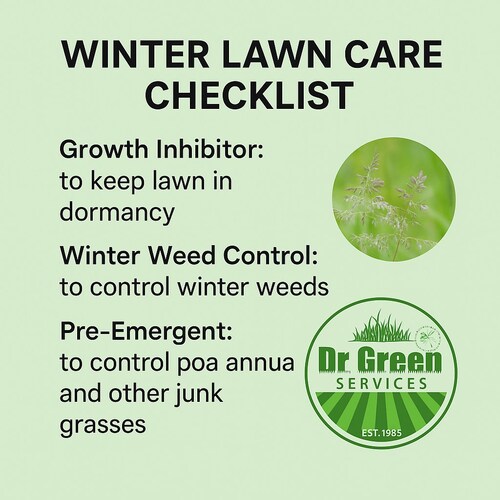
Warm periods can trigger turf respiration and slight "green-up." However, when temperatures plunge, the rapid freeze can damage plant cells and roots. Additionally, the region experiences extended winter dry spells, which increase dehydration and compound stress. Last winter, DFW recorded more than a dozen freeze/thaw cycles, highlighting the urgency of proper winter care.
The Role of Growth Inhibitors
Dr. Green Services applies winter growth inhibitors to help stabilize turf during these unpredictable temperature swings. These treatments keep grass in a consistent dormant state, preventing repeated transitions in and out of growth. This proactive approach reduces shock, conserves plant resources, and prevents turf decline that often becomes visible in early spring. This technique underscores Dr. Green Services' commitment to preventing damage before it occurs.
Challenges for Texas Turf Types
Bermuda, St. Augustine, and Zoysia grass varieties are especially vulnerable to freeze/thaw swings and drought conditions. Because these warm-season grasses are not adapted to rapid winter temperature fluctuations, they require additional protection during January and February.
Expert Insights
"Our unpredictable climate makes dormancy protection essential," said James Tatum, Director of Operations at Dr. Green Services. "Growth inhibitors give turf the stability it needs to survive winter stress and come back stronger in spring." With decades of local expertise, Dr. Green Services continues to help DFW homeowners protect their lawns from extreme weather patterns.
Recommended Actions for Homeowners
Homeowners can help reduce winter stress by lightly watering during extended warm spells, avoiding heavy foot traffic on frozen turf, and scheduling winter monitoring. Following Dr. Green Services' guidance can further reduce weather-related turf damage.
Dr. Green Services' Comprehensive Care
Beyond growth inhibitor applications, Dr. Green Services provides winter turf monitoring and region-specific programs designed around DFW's climate challenges.
Preventing Spring Damage
By taking preventive steps now, homeowners can avoid costly spring recovery and ensure healthier grass when temperatures rise. Dr. Green Services remains committed to protecting local lawns through expert guidance and proactive winter treatments.
Dr. Green Services Alerts Chicago Homeowners: Heavy Snow Cover Is Increasing Soil Compaction This Winter
Dec 11, 2025, 08:39 ET
Deep snowpack is impacting spring lawn health, and liquid aeration will be essential once the ground thaws.
CHICAGO, Dec. 11, 2025 /PRNewswire/ -- Dr. Green Services is alerting Chicago-area homeowners that this winter's heavy snow cover is causing significant soil compaction, putting spring lawn health at risk. With more than a foot of snow sitting on many Chicagoland lawns, experts warn that the added weight and persistent freeze/thaw cycles are tightening soil structure and limiting root activity.
How Heavy Snow Causes Soil Compaction
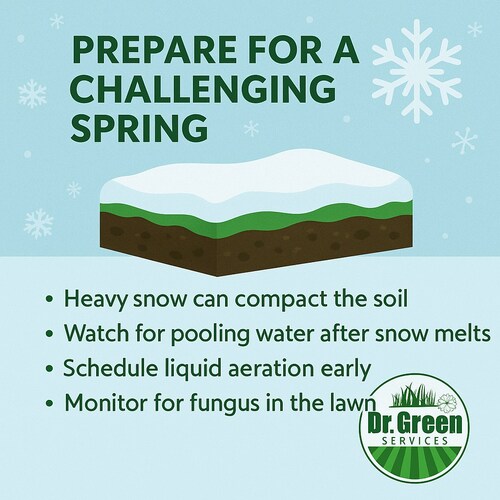
Deep snow and ice layers press down on the soil for long periods. As temperatures fluctuate, repeated freezing and thawing lock the soil even tighter. Foot traffic on snow-covered turf compounds the problem, restricting the flow of air, water, and nutrients that roots need for early spring recovery.
What Homeowners Will See After the Melt
Once the snow begins to thaw, homeowners may notice:
- Slow or uneven spring green-up
- Thin or patchy turf
- Pooling water
- Higher risk of spring lawn fungus
- Weak recovery from winter damage
These symptoms reflect underlying compaction that limits oxygen and moisture movement in the root zone.
Why Liquid Aeration Is Essential This Spring
Liquid aeration offers a clean and effective solution for reversing winter soil compaction. Unlike mechanical/core aeration—which struggles in muddy, waterlogged spring soil—liquid aeration works at the molecular level to expand and loosen compacted areas without leaving behind messy cores.
This treatment restores airflow to the root system, improves water absorption, and accelerates turf recovery after months of compression.
How Homeowners Can Protect Their Lawn
Dr. Green Services recommends that homeowners:
- Avoid walking on snow-covered turf
- Watch for pooling water as temperatures rise
- Schedule spring liquid aeration early
- Monitor for potential fungus as the lawn wakes up
Dr. Green Services' Spring Support
To help Chicago-area homeowners recover from this challenging winter, Dr. Green Services is offering free spring liquid aeration for all customers. With 40 years of Chicagoland expertise, the company provides trusted, science-backed solutions to ensure lawns bounce back strong this spring.
As a long-standing leader in Chicago lawn care, Dr. Green Services encourages homeowners to act early and take proactive steps to protect turf health as the snow begins to melt.
Dr. Green Services Urges Chicago Homeowners to Winterize Lawns Before the First Freeze
Nov 11, 2025, 08:37 ET
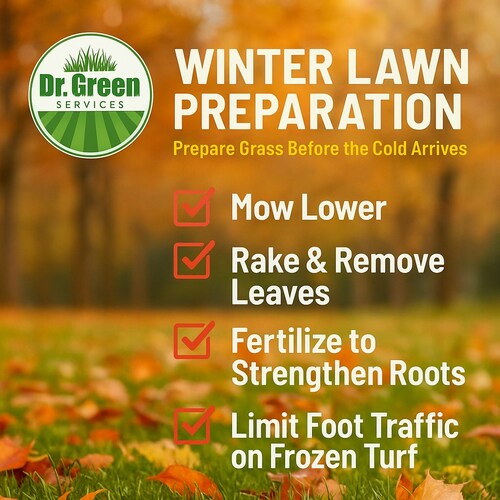
CHICAGO, Nov. 11, 2025 /PRNewswire/ -- With the first hard freeze just around the corner, Dr. Green Services is reminding Chicago-area homeowners to winterize their lawns now before freezing temperatures hit. Late fall is the final chance to fertilize, adjust mowing height, and prevent winter lawn diseases.
"Many people think lawn care stops when the grass stops growing," said Marc Harris, Dr. Green Services Operations Manager and horticulturist. "But what you do in late fall determines how your lawn looks in spring. A final fertilizer, balanced mowing height, and proper disease prevention make all the difference."
Prepare Before the Freeze
In northern Illinois, the first hard freeze typically arrives in early to mid-November. Applying a fall fertilizer before then helps grass store nutrients, strengthens roots, and encourages faster green-up in spring.
Preventing Winter Damage
Cold, damp conditions under snow can cause snow mold, a fungal disease that leaves grayish patches when the snow melts. Mowing slightly shorter before winter helps prevent it, while avoiding cuts that are too low prevents crown dehydration, which kills grass at its base.
"The goal is balance—short enough to reduce fungus, but tall enough to protect the crown," Harris explained.
Tailored Fertilization for Illinois Lawns
Dr. Green Services uses premium, region-specific fertilizers designed for Illinois soils and cold weather. These specialized blends promote root strength, nutrient retention, and winter resilience through Chicago's freeze-thaw cycles.
"Our programs are built for Midwest conditions," Harris added. "They help lawns survive winter stress and come back greener in spring."
Don't Wait Until It's Too Late
Dr. Green Services urges homeowners not to delay scheduling their cold weather lawn care. Proper fall preparation is the best defense against a thin, damaged lawn next year. Homeowners can contact Dr. Green Services today to schedule their late fall lawn treatment before freezing temperatures arrive.
Dr. Green Services Warns DFW Homeowners: Don't Skip Winter Pre-Emergent--Spring Weeds Start Now
Nov 11, 2025, 08:33 ET
DALLAS, Nov. 11, 2025 /PRNewswire/ -- As North Texas lawns begin their winter slowdown, Dr. Green Services is urging DFW homeowners not to overlook a critical step in seasonal lawn care. Even though grass growth has paused, weed seeds like poa annua and henbit are already germinating in Texas' mild winter soil—setting up a major weed invasion by spring if not treated in time.

"Many people think lawn care ends when the grass turns brown," said James Tatum, Dr. Green Services Operations Manager and horticulturist. "But this is actually the most important moment to act. Applying a winter pre-emergent in November stops cool-season weeds before they sprout, and a final premium fertilizer application helps lawns stay resilient through dormancy."
Stop Winter Weeds Before They Start
DFW's warm fall and early winter conditions create ideal germination temperatures for winter annual weeds. Without preventive treatment, those weed seeds develop roots now and emerge aggressively once temperatures rise.
"If you skip this step, you're not saving time—you're setting yourself up for a tougher, more expensive spring," Tatum explained.
The Importance of Winter Pre-Emergent
According to Dr. Green Services, applying a winter pre-emergent is essential to prevent poa annua, henbit, and other invasive weeds from taking over in early spring. These treatments form a barrier in the soil that stops weed seeds before they break through, keeping lawns cleaner and healthier year-round.
Strengthen Grass Before Dormancy
Dr. Green Services also applies a premium fertilizer designed for Texas lawns. This final application fortifies roots, improves nutrient storage, and boosts the turf's ability to recover quickly in spring with thicker, greener growth.
"Our Texas lawn care programs are tailored for local soil and weather patterns," Tatum added. "They ensure balanced protection and long-term strength through every season."
Stay Ahead of Seasonal Challenges
Dr. Green Services provides ongoing monitoring throughout the year to address weeds, insects, and drought stress before they become major issues.
"Our goal is simple," Tatum said. "We want our customers' lawns to wake up in spring already winning—not playing catch-up."
Stronger Roots, Fewer Weeds: Fall Lawn Care Tips for DFW Yards
Oct 09, 2025, 08:54 ET
DALLAS-FORT WORTH, Texas, Oct. 9, 2025 /PRNewswire/ -- Fall is the most important season for lawn care in North Texas. Dr. Green Services is reminding homeowners across the DFW area that now is the ideal time to strengthen lawns, prevent weeds, and repair summer damage.
"Fall is the key season for building strong roots before winter," said James Tatum, Operations Manager at Dr. Green Services. "Applying a pre-emergent treatment now stops crabgrass and poa annua from invading next spring, while fertilization helps repair lawns stressed by the summer heat and drought."
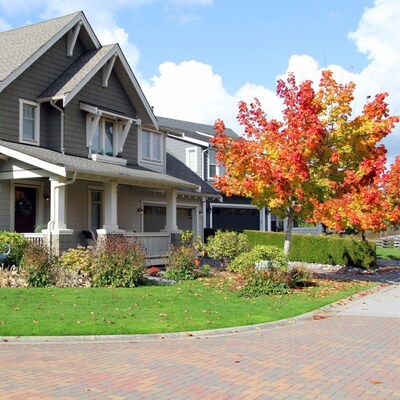
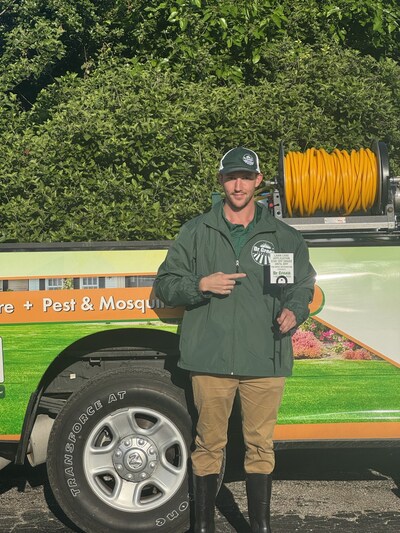
Many lawns in the DFW area show signs of summer stress, including thinning, discoloration, and lingering weeds. Dr. Green Services recommends a comprehensive fall lawn care program: fertilization to restore essential nutrients, targeted weed treatments for any surviving summer weeds, and pre-emergent applications to prevent new weed growth in spring.
Fall fertilization encourages deep root development, making turf more resilient through winter. Nutrients such as nitrogen and potassium replenish what summer heat depleted, while strengthening grass to withstand seasonal stress. Pre-emergent treatments applied in the fall act as a protective barrier against common spring weeds, such as crabgrass and poa annua, saving homeowners time and effort in the coming months.
"Proper fall lawn care is an investment in your lawn's future," Tatum added. "Addressing weeds, repairing drought damage, and strengthening roots now ensures a greener, healthier lawn in spring."
According to Texas A&M AgriLife Extension, fall is the most effective time for pre-emergent applications in North Texas due to the region's mild winters and long growing season. Homeowners in Dallas, Fort Worth, Plano, Frisco, Arlington, and surrounding communities are encouraged to schedule fall lawn care services early.
Taking action in the fall maximizes the benefits of pre-emergent treatments, repairs summer damage, and sets the stage for a lawn that thrives next year. For more information or to schedule a consultation, visit www.drgreenservices.com or call 800-465-2934.
About Dr. Green Services: Dr. Green Services provides professional lawn care throughout North Texas, combining science-based treatments with personalized service to maintain lawns that are healthy, green, and weed-free year-round.
Dr. Green Services Urges Chicago Homeowners to Repair Drought-Stressed Lawns with Fall Care
Sep 30, 2025, 08:33 ET
CHICAGO, Sept. 30, 2025 /PRNewswire/ -- After one of the hottest and driest summers in recent memory, many Chicago lawns are struggling with thin turf, brown patches, and weakened grass. According to Dr. Green Services, fall is the most important season to repair these issues and prepare lawns for success next spring.
"Chicago lawns suffered this summer, but fall is the perfect time to bring them back," said Marc Harris, Operations Manager at Dr. Green Services. "With the right care, homeowners can strengthen their grass before winter and enjoy a greener, healthier lawn next spring."
Fall is considered the recovery season for cool-season grasses common in Chicago. Cooler temperatures and increased rainfall provide the ideal conditions for root development. During this time, grass naturally shifts energy underground, making it the best opportunity for overseeding, fertilization, and aeration.
Dr. Green Services, a family-owned company with more than 40 years of local expertise, is encouraging homeowners to take advantage of these conditions. Their fall program includes premium fertilizer blends, targeted broadleaf weed control, and professional seeding services. To maximize results, they also provide free fall liquid aeration with every seeding service, improving the flow of water, oxygen, and nutrients to roots.
Unlike traditional core aeration, liquid aeration opens the soil without leaving messy plugs behind. This process promotes deeper root growth and better seed establishment. When combined with high-quality grass seed and custom fertilizer, it gives drought-stressed lawns the boost they need.
In addition, Dr. Green Services employs certified technicians who understand the challenges of Chicago's climate and soil. Their tailored approach ensures that each lawn receives the right balance of nutrients and care at the right time of year.
Homeowners who act this fall will benefit from stronger roots, thicker turf, and greener lawns once spring arrives.
Dr. Green Services Offers Expert Lawn Watering Tips for Chicago Homeowners Facing Dry Summer Conditions
Aug 07, 2025, 08:21 ET
Phone: 800-465-2934
Website: www.drgreenservices.com
Proper Watering Is Key to a Healthy Lawn This Summer in Chicago
CHICAGO, Aug. 7, 2025 /PRNewswire/ -- As the Chicago area continues to face a warm and dry summer, Dr. Green Services is offering expert advice to help residents maintain healthy lawns with smart, water-efficient practices.
"Watering correctly can make all the difference in lawn health during dry weather," says Marc Harris, Operations Manager at Dr. Green Services. "Understanding when and how to water helps homeowners protect their lawns, conserve water, and avoid common mistakes."
Simple Tips for Smart Lawn Watering
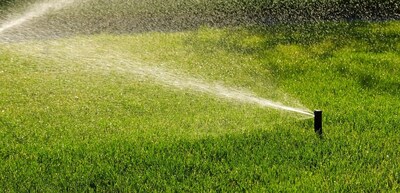
To help educate homeowners, Dr. Green Services has published a helpful article titled Watering Best Practices for Lawns. The blog outlines effective strategies tailored to Midwest climates:
- Water early in the morning—between 4 a.m. and 9 a.m.—to reduce evaporation and the risk of fungal growth
- Provide 1 to 1.5 inches of water per week, including rainfall
- Avoid daily light watering, which promotes shallow root systems
- Use a rain gauge or moisture meter to measure watering accurately
Understanding Lawn Dormancy
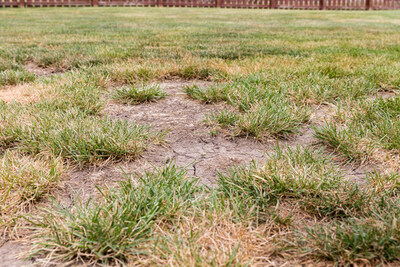
Brown or dry-looking lawns during the summer don't always mean the grass is dead. In many cases, it's simply in dormancy, a natural state that helps grass survive drought by slowing growth and turning brown temporarily.
"The key is staying calm and sticking to proven watering practices," explains Harris. "That's how homeowners can support strong roots and long-term lawn health."
Chicago's Trusted Lawn Experts
For over 30 years, Dr. Green Services has delivered customized lawn care solutions across Chicago, including fertilization, weed control, mosquito treatments, and seasonal watering advice based on local weather patterns.
As rainfall and soil conditions shift this summer, Dr. Green Services continues to monitor neighborhoods across the city to help homeowners make smart, informed decisions for both lawn health and water conservation.
To learn more or schedule a lawn evaluation, call 800-465-2934
Armyworms Threaten Texas Lawns: Dr. Green Services Responds to Rapid Outbreak in DFW Area
Aug 07, 2025, 08:15 ET
DALLAS and FORT WORTH, Texas, Aug. 7, 2025 /PRNewswire/ -- Dr. Green Services has issued an urgent alert for homeowners across North Texas as armyworms have been confirmed in the DFW region. These aggressive lawn pests can strip healthy grass down to the soil in as little as 48 hours.
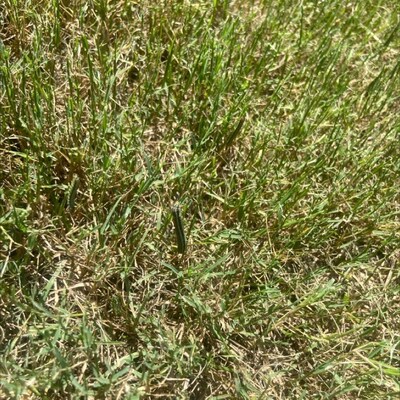
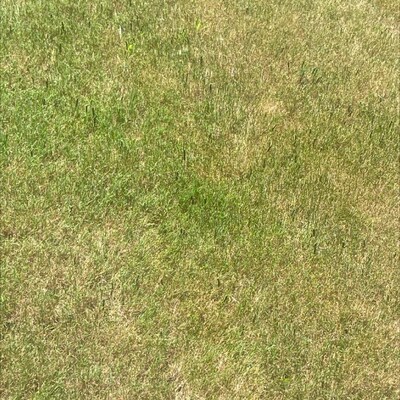
Fall armyworms (Spodoptera frugiperda) are the most common cause of turf damage in Texas, according to research from Texas A&M AgriLife. The larvae are known for their sudden invasions, moving in large numbers and feeding on bermudagrass, ryegrass, and fescue with shocking speed. Often mistaken for drought stress, the damage can quickly escalate from light thinning to widespread brown patches.
"Armyworm populations exploded this week, and we're already seeing serious damage in untreated lawns," said James Tatum, Director of Operations at Dr. Green Services. "We've mobilized our teams to begin immediate treatments and help protect our customers' grass before it's too late."
Armyworm larvae range in color from green to brown and are typically identified by a pale, inverted "Y" on their heads. Most feeding happens early in the morning and late in the evening, making it easy to miss the early stages of damage. By the time patches of grass turn brown, the heaviest feeding has often already occurred.
The experts at Dr. Green Services emphasize that quick action is crucial. Once larvae mature, they burrow into the soil to pupate and emerge as moths, continuing the cycle with multiple generations possible in a single season.
"Scouting and fast treatment are key to preventing major lawn loss," said Tatum. "Our technicians are trained to identify infestations early and apply targeted protection safely and effectively."
Dr. Green Services, a trusted, local, family-owned company with over 40 years of experience, is currently offering prioritized armyworm treatments to address the outbreak. Residents in the DFW area are encouraged to inspect their lawns for signs of caterpillar activity or sudden browning.
To learn more about identifying and controlling armyworms, call 800 465 2934
Dr. Green Services Issues Mosquito and Heartworm Alert for Dallas and Chicago Regions
Jun 16, 2025, 10:27 ET
DALLAS and CHICAGO, June 16, 2025 /PRNewswire/ -- As warm, wet weather sets in across Dallas, Texas, and Chicago, Illinois, Dr. Green Services is issuing an important public alert: residents should brace for a surge in mosquito activity and the related threat of heartworm disease in pets. With mosquito season peaking, professionals urge homeowners to take swift action to protect their families and animals.

Heartworm disease is a serious, potentially fatal condition transmitted through mosquito bites. It affects dogs, cats, and other mammals when larvae from infected mosquitoes enter the bloodstream and grow into adult worms that attack the heart and lungs.
"Conditions in both the Dallas-Fort Worth and Chicago metro areas have created a perfect storm for mosquito breeding," said James Tatum, Director of Operations, from Dr. Green Services, a leading provider of residential lawn care and pest control solutions. "Standing water from spring rain, rising temperatures, and lush vegetation all contribute to a spike in mosquito populations—and that brings real health concerns."
To combat the risk, Dr. Green Services offers a proven Mosquito Defense Program, now available to residents in Dallas, Chicago, and surrounding suburbs. The program uses targeted, environmentally responsible treatments to drastically reduce mosquito populations around homes and yards.
"Our professional treatments are designed to eliminate mosquitoes where they live and breed—near shrubs, shaded areas, and standing water," James Tatum, Director of Operations, explained. "Homeowners who want to enjoy their outdoor spaces without worrying about mosquito-borne illnesses or pet heartworm should act now."
In both cities, veterinarians strongly recommend year-round heartworm prevention for pets, especially during mosquito season. Monthly medications, annual testing, and minimizing mosquito exposure are critical steps in keeping animals healthy.
In addition to professional mosquito control services, Dr. Green Services advises homeowners in Texas and Illinois to take these additional measures:
- Remove standing water from containers, flower pots, and gutters.
- Trim grass and vegetation regularly to reduce mosquito resting spots.
- Use screens on windows and doors to keep mosquitoes outside.
- Avoid dusk and dawn walks with pets, when mosquitoes are most active.
Dr. Green Services reminds residents that mosquito control isn't just about comfort—it's about health and safety. Their Mosquito Defense Program is safe for children and pets once dry and can help reduce the threat of mosquito-borne illnesses for the entire season.
To learn more or schedule a Mosquito Defense consultation in Dallas, Chicago, or nearby areas, call 800 465 2934
Dr. Green Services Issues Mosquito Alert for Illinois and Northwest Indiana: Calls for Early Action
Jun 03, 2025, 08:45 ET
CHICAGO and JOLIET, Ind., June 3, 2025 /PRNewswire/ -- As spring rains soak lawns and temperatures rise across the Midwest, Dr. Green Services is warning homeowners in Illinois and Northwest Indiana to prepare for an early and aggressive mosquito season. With ideal breeding conditions already in place, the company reports a sharp increase in service calls and early mosquito activity—suggesting that infestations may peak sooner than usual in 2025.

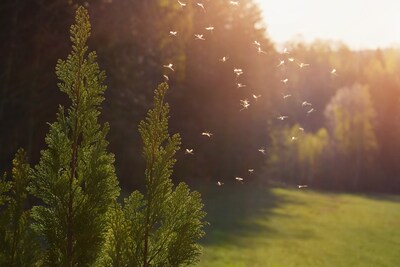
"Mosquito populations are on the rise much earlier than we've seen in previous years," said James Tatum, Operations Manager at Dr. Green Services. "It's not just about being uncomfortable in your backyard anymore. This is a growing public health concern, especially with illnesses like West Nile virus appearing earlier and more frequently."
Warm, Wet Conditions Driving Mosquito Surge
Mosquitoes thrive in humid environments—especially after heavy spring rains. Common backyard items like storm drains, clogged gutters, tarps, toys, and birdbaths often trap enough water to support thousands of mosquito larvae. In fact, female mosquitoes can lay up to 300 eggs in a bottle cap's worth of standing water, with hatching occurring within 48 hours.
Dr. Green Services has already seen a 20% increase in mosquito-related service requests across Cook, DuPage, and Lake Counties. Areas with dense tree cover, standing water, or poor drainage are particularly vulnerable.
"Prevention is always more effective than reaction," Tatum added. "Once mosquitoes settle in, it becomes much harder to reclaim your yard without professional intervention."
Four Essential Mosquito Prevention Strategies
To reduce mosquito populations around the home, Dr. Green Services recommends the following:
- Remove Standing Water: Check your property weekly. Dump water from flowerpots, toys, tires, birdbaths, and any container that collects rain.
- Protect Entry Points: Ensure doors and windows have tight-fitting screens without tears or gaps.
- Apply Repellent: Use EPA-approved mosquito repellent, especially around dawn and dusk when mosquito activity is highest.
- Schedule Professional Service: A seasonal mosquito control service can significantly reduce mosquito activity and help prevent future outbreaks.
Trusted Mosquito Control Service with Local Expertise
Dr. Green Services has served Illinois and Northwest Indiana for over 30 years. Their mosquito treatment program combines regional insight with eco-conscious solutions, including larvicide applications, barrier sprays, and breeding site identification—customized to each property's needs.
"Our treatments are child- and pet-friendly, and we focus on minimizing environmental impact while maximizing protection," said Ryan Van Haastrecht, President of Dr. Green Services. "Rather than simply spraying and leaving, our technicians educate homeowners, thoroughly inspect properties, and ensure consistent results."
Homeowners enrolled in Dr. Green Services' mosquito control programs benefit from routine follow-ups and guaranteed re-treatment options if issues arise between scheduled visits. As a result, outdoor spaces become safer, more enjoyable, and protected throughout the season.
For more information or to request a free mosquito inspection, call 800-465-2934.
Mosquito Populations Surge Across Texas: Dr. Green Services Urges Residents to Take Action
Jun 03, 2025, 08:33 ET
DALLAS, June 3, 2025 /PRNewswire/ -- With recent rainfall in parts of the Dallas-Fort Worth area and temperatures climbing rapidly, Dr. Green Services, a trusted provider of Dallas mosquito control, is sounding the alarm on an escalating mosquito surge across the state. From residential neighborhoods in Dallas and Fort Worth to rural areas and suburbs like Frisco and McKinney, mosquito populations are growing quickly—bringing not only discomfort but also serious health risks.

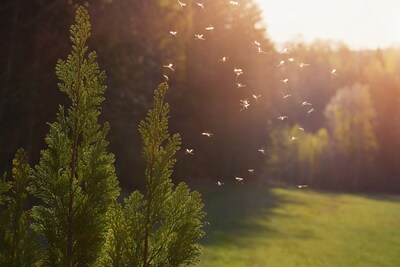
"Texans need to understand that mosquitoes are more than a backyard nuisance. They are vectors for serious diseases like West Nile virus, dengue fever, and other mosquito-borne illnesses that have a growing footprint in our state," said James Tatum, Director of Operations at Dr. Green Services.
According to Dr. Green's field reports, the perfect storm of moist conditions and consistent warmth is resulting in higher-than-usual hatch rates for mosquito eggs. Standing water—even just a tablespoon—can quickly become a breeding ground for hundreds of mosquitoes.
Why This Matters:
Mosquitoes are known to transmit dangerous viruses that can lead to severe health outcomes, especially among vulnerable groups such as children, the elderly, and individuals with compromised immune systems. In 2024 alone, Texas reported over 170 confirmed cases of mosquito-borne illness, a number expected to rise if intervention isn't prioritized.
James Tatum's Key Advice:
- Eliminate Water: Empty anything that holds standing water—including flowerpots, clogged gutters, birdbaths, and children's toys.
- Use Protection: Apply EPA-approved mosquito repellents and wear long sleeves and pants during peak mosquito hours (dawn and dusk).
- Maintain Barriers: Repair torn screens and keep doors and windows sealed.
- Seek Professional Help: Dr. Green's mosquito spraying service combines targeted barrier sprays and larvicide treatments tailored to Texas environments.
"DIY solutions may offer temporary relief, but mosquitoes are persistent," added Tatum. "Our Texas mosquito treatment program is built on decades of expertise in lawn and pest control. It's the most effective, long-term defense."
About Dr. Green Services:
Founded with a mission to protect outdoor environments and enhance the comfort and health of families, Dr. Green Services offers science-based mosquito control and lawn care services throughout Texas. Their environmentally responsible methods are safe for pets and children while being tough on pests.
Take Action Before Peak Mosquito Season
Dr. Green Services is encouraging all North Texas residents to act now before the mosquito problem worsens. Treatments are fast, effective, and designed specifically for Dallas-Fort Worth mosquito control challenges.
To learn more or to schedule a mosquito control treatment, call 1-800-465-2934.
Spring Soil Crisis? Dr. Green Services Launches Game-Changing Liquid Aeration Across North Texas
May 07, 2025, 08:52 ET
DALLAS and FORT WORTH, Texas, May 7, 2025 /PRNewswire/ -- With the Texas heat already building and another dry summer forecast on the horizon, Dr. Green Services has announced the launch of its advanced liquid aeration system for residential lawns throughout Dallas–Fort Worth, and surrounding areas.
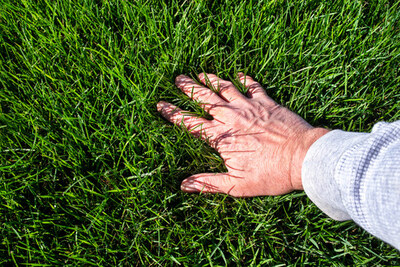

Tailored to the region's infamously dense clay soils and erratic climate, this innovation offers Texas homeowners a powerful alternative to traditional core aeration—no machinery, no soil plugs, and no downtime. "Our Texas customers face a perfect storm of drought stress, heavy soil, and shallow roots," said James Tatum, Operations Manager and Certified Horticulturist at Dr. Green Services. "This new liquid aeration solution is safe, efficient, and deeper than mechanical methods—keeping lawns healthy even in the toughest conditions." Liquid Aeration: The Superior Alternative to Core Aeration
A Modern Answer to an Old Texas Problem
Texas lawns have long suffered from compacted clay soils, which limit oxygen flow and trap water at the surface, especially during periods of low rainfall. Add in foot traffic, heat stress, and rapid weather swings; you've got a recipe for patchy, stressed turf.
Dr. Green's liquid aeration formula uses biodegradable surfactants and organic acids to loosen compacted soil down to the root zone. Unlike traditional plug aeration, which reaches just 2 to 3 inches deep and treats only part of the lawn, liquid aeration delivers 100% coverage—activating root growth across the entire yard. "This is more than a cosmetic fix," said Tatum. "It's soil science in action. Healthier soil equals a stronger, more drought-resistant lawn—without the mess or hassle."
Why It Matters Now
April through June is peak lawn aeration season in North Texas, when warm season grasses like Bermuda and St. Augustine are actively growing and best able to recover. With record drought conditions predicted, improving water and nutrient retention in the soil is more critical than ever.
As outlined in Dr. Green's educational blog on the subject:
Lawn Aeration Services Explained
Liquid Aeration Advantages:
- Full-lawn coverage (vs. 10–15% with core aeration)
- No soil plugs, holes, or machine tracks
- Improves water absorption and nutrient uptake
- Safe for pets and children once dry
- Boosts soil biology using humic and fulvic acids
Now Serving the Entire DFW Metroplex
Dr. Green's liquid aeration service is available immediately in:
- Dallas
- Fort Worth
- Arlington
- Plano
- Frisco
- Garland
- Irving
- Grand Prairie
- And surrounding North Texas communities
For pricing, scheduling, or to learn more about whether your lawn is a good candidate, call us at 800 465 2934
Spring Turf Trouble? Dr. Green Services Launches Liquid Aeration to Revive Lawns Across Illinois and Northwest Indiana
May 07, 2025, 08:33 ET
JOLIET, Ill., May 7, 2025 /PRNewswire/ -- As lawns across Illinois and Northwest Indiana recover from winter and brace for a soggy spring, Dr. Green Services is stepping in with a cleaner, more effective solution to one of the region's toughest turf challenges: soil compaction. The company's new liquid aeration service is now available in key markets, helping homeowners prepare their lawns for a healthier, greener summer.
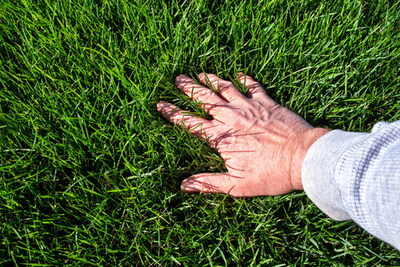

Now serving areas including Chicago, Naperville, Joliet, Merrillville, Valparaiso, and surrounding communities, Dr. Green's launch comes at the ideal time—spring is peak aeration season, and homeowners are increasingly looking for hassle-free, science-backed ways to boost lawn health.
"Lawns in this region take a beating year-round," said James Tatum, Operations Manager and certified technician at Dr. Green Services. "Between heavy foot traffic, freeze-thaw cycles, and saturated spring soil, compaction is a major issue. Liquid aeration solves that—without the mess or machinery."
Why Midwest Lawns Struggle with Compaction
Lawns in Illinois and Northwest Indiana often sit on dense clay soil, which holds water but limits airflow. After winter, this soil becomes waterlogged. Come summer, it dries out and hardens—making it hard for roots to access oxygen and nutrients.
This cycle weakens grass, causes bare patches, and creates conditions for disease. According to the University of Illinois Extension, soil compaction is one of the leading causes of turf decline in the state.
Dr. Green Services breaks that cycle with liquid aeration—a treatment that uses a custom blend of humic acids and organic surfactants to loosen soil beneath the surface. It creates pathways for air, water, and nutrients to reach the root zone, improving both short- and long-term lawn health.
Why Choose Liquid Over Core Aeration?
Liquid aeration offers key advantages over traditional core aeration:
- Full-lawn coverage (not just plugs)
- No machinery or lawn damage
- Safe for pets and children after drying
- Same-day lawn access
- Boosts microbial activity in the soil
- Can be applied across more of the growing season
"We've had homeowners say their lawn looked greener within days," Tatum said. "It's not just a seasonal fix—it's a long-term investment in soil health."
Service Areas
Liquid aeration is now available in:
Illinois
Chicago, Naperville, Aurora, Elgin, Joliet, Orland Park, Oak Lawn, and surrounding suburbs
Northwest Indiana
Hammond, Merrillville, Valparaiso, Crown Point, Highland, and nearby communities
Perfect Timing for Healthier Lawns
Spring and early summer are ideal for aeration in the Midwest—especially before the intense summer heat arrives. With rainfall already saturating local soils, now is the time to open up the root zone without tearing up your turf.
Spring Surge: Dr. Green Services Alerts Homeowners to Rising Weed Activity This Spring in Chicago-North Indiana
Apr 08, 2025, 08:52 ET
CHICAGO, April 8, 2025 /PRNewswire/ -- As spring begins to awaken the Chicago-North Indiana area, residents are witnessing a rapid resurgence of weeds. The combination of mild temperatures and moisture in March and April has created an ideal environment for various weed species, prompting local experts to issue guidance on effective management techniques.
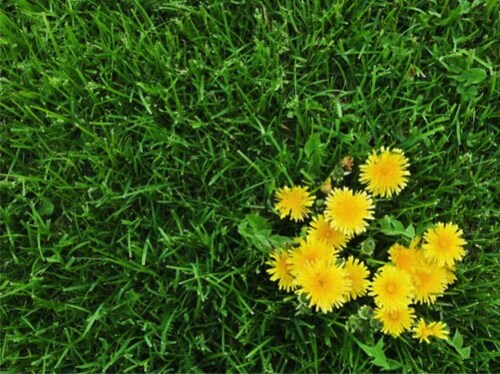
Common weeds such as dandelions, crabgrass, and clovers are making their presence known across lawns and gardens. The University of Illinois Extension warns that unchecked weed growth can increase competition for nutrients and water, ultimately harming existing plants. "Now is the time for homeowners to take action against weeds," said James Tatum, Director of Operations and horticulturist with Dr. Green Services. "By understanding the types of weeds prevalent in our area and acting swiftly, residents can maintain healthy and attractive lawns throughout the spring."
To manage the burgeoning weed population, experts recommend several strategies:
- Regular Mowing: Maintaining the grass at an appropriate height can inhibit weed growth and promote a healthy lawn.
- Mulching: A layer of mulch around flower beds and shrubs can block sunlight and prevent weed seeds from germinating.
- Pre-emergent Herbicides: Applying these herbicides in early spring can stop weed seeds from sprouting and taking hold.
- Hand Pulling: For smaller infestations, manually removing weeds can be effective, especially when the soil is moist.
- Healthy Soil Practices: Regular aeration and the use of organic fertilizers can improve soil health, allowing desirable grass to thrive and outcompete weeds.
Local gardening centers host workshops to educate residents on best practices for weed management. Community members are encouraged to take proactive steps to ensure their lawns and gardens flourish this spring.
For further information on weed management strategies, please contact Dr. Green Services at 800-465-2934
Spring Awakening: Dr. Green Services Highlights Seasonal Weed Growth in the Dallas-Fort Worth Area
Apr 08, 2025, 08:52 ET
DALLAS, April 8, 2025 /PRNewswire/ -- As the Dallas- Fort Worth area transitions into spring, residents and landscapers are noticing an alarming increase in weed growth. The mild winter and warm temperatures have created perfect conditions for various weeds to emerge, prompting experts to advise homeowners on effective management strategies.
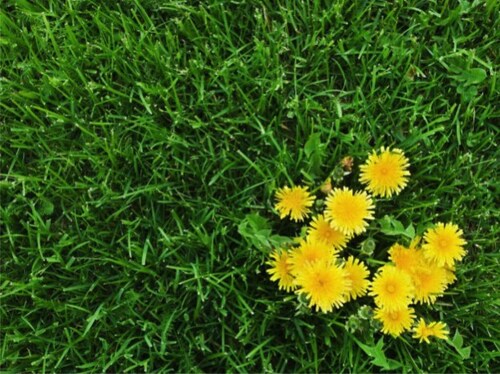
From dandelions and clovers to chickweed and henbit, weeds are not only unsightly but can also compete with desirable plants for nutrients and water. The Texas A&M AgriLife Extension Service warns that these invasive plants can quickly take over lawns and gardens, diminishing their aesthetic appeal and health if left unchecked.
"March and April are critical months for weed management in our region," said James Tatum, a horticulturist with Dr Green Services. "Understanding the types of weeds that thrive in this climate and addressing them can save homeowners time and resources in the long run."
To combat weed proliferation, experts recommend several strategies:
- Regular Mowing: Keeping grass at a healthy height can prevent weeds from establishing themselves.
- Mulching: Applying a layer of mulch around plants can suppress weed growth by blocking sunlight.
- Pre-emergent Herbicides: These can be applied in early spring to prevent weed seeds from germinating.
- Hand Pulling: Removing weeds can be effective for smaller areas, especially when the soil is moist.
- Soil Health: Maintaining healthy soil through aeration and appropriate fertilization can promote strong plants that outcompete weeds.
Local garden centers offer workshops and resources to educate the community on best practices for weed management. Residents are encouraged to take proactive steps in their gardens to ensure a beautiful and thriving landscape this spring.
For more information on weed management, please get in touch with Dr Green Services at 800-465-2934
Dr. Green Services Advises Texas Homeowners: March Is the Critical Window to Strengthen Lawns and Stop Spring Weeds
Mar 23, 2026, 08:33 ET
CARROLLTON, Texas, March 23, 2026 /PRNewswire/ -- As temperatures begin rising across North Texas, lawns are starting to emerge from winter dormancy. According to lawn care experts at Dr. Green Services, March is one of the most important months for homeowners to strengthen grass roots, prevent weeds, and prepare lawns for the extreme heat of the Texas summer.
During winter dormancy, turfgrass slows its growth and conserves energy. However, as soil temperatures rise into the mid-50s and 60s, warm-season grasses such as Bermuda and St. Augustine begin to wake up and rebuild their root systems. At the same time, aggressive spring weeds like crabgrass, goosegrass, and spurge also begin germinating.
Because of this overlap, early spring lawn treatments play a major role in determining how a lawn performs throughout the growing season.
"March is when lawns begin rebuilding their root systems," said James Tatum, Director of Operations for the Texas region at Dr. Green Services. "When homeowners strengthen roots early and prevent weeds before they emerge, lawns are much better prepared to handle summer heat, drought, and stress."
Dr. Green Services recommends a three-step strategy for Texas lawns during early spring.
First, liquid aeration helps loosen compacted soil so oxygen, water, and nutrients can reach developing roots more effectively. Unlike mechanical core aeration, liquid aeration works throughout the soil profile without pulling plugs or disturbing turf that is just coming out of dormancy. More information about the differences between these methods is available here:
https://drgreenservices.com/liquid-aeration-vs-core-aeration/
Second, balanced fertilizer applications provide essential nutrients that help grass rebuild energy reserves after winter. Proper fertilization encourages deeper root development and promotes thicker, healthier turf.
Third, pre-emergent weed control helps stop invasive weeds before they have a chance to grow. When applied at the correct time, pre-emergent treatments form a protective barrier in the soil that prevents many common spring weeds from germinating. A detailed explanation of these treatments can be found here:
https://drgreenservices.com/pre-emergent-vs-post-emergent/
By combining aeration, fertilization, and weed prevention early in the season, lawns are able to establish stronger roots and thicker turf before weeds and summer stress arrive.
Dr. Green Services has provided professional lawn care for more than 40 years. The company works directly with leading manufacturers to develop custom fertilizer blends designed specifically for regional soil conditions and climate.
Illinois and Northwest Indiana Lawns Begin Spring Transition as Experts Recommend Slow-Release Nitrogen Fertilizer
Mar 23, 2026, 08:32 ET
CHICAGO, March 23, 2026 /PRNewswire/ -- As March temperatures gradually rise across Illinois and Northwest Indiana, lawns are beginning the natural transition out of winter dormancy. While many yards still appear pale or thin early in the season, lawn care experts at Dr. Green Services say proper fertilization can help turf recover more quickly once grass is ready to grow.
According to turf professionals, one of the most important steps during this early spring period is applying a slow-release, high-nitrogen fertilizer. Nitrogen is the primary nutrient responsible for chlorophyll production, which gives grass its green color and fuels new growth.
Because cool-season grasses common throughout the Midwest — including Kentucky bluegrass and perennial ryegrass — rely heavily on nitrogen during spring growth, properly timed fertilization helps turf green up faster while encouraging stronger development.
Research on fertilizer programs consistently shows that slow-release nitrogen feeds lawns gradually, allowing grass plants to absorb nutrients over time rather than all at once. As a result, turf grows more evenly and develops healthier roots. Additional information explaining the differences between fertilizer types can be found in Dr. Green Services' guide to slow-release vs. quick-release fertilizer:
https://drgreenservices.com/slow-release-vs-quick-release-fertilizer/
"Early spring is when lawns begin shifting from dormancy to active growth," said Marc Harris, Operations Manager for the Chicago and Indiana regions at Dr. Green Services. "A slow-release nitrogen fertilizer provides nutrients right when turf becomes ready to grow."
In addition to improving color and growth, early nitrogen fertilization helps turf become thicker and more competitive. As grass fills in, it naturally limits the open space where weeds typically establish.
"When grass grows thicker in spring, weeds have fewer opportunities to take hold," Harris explained. "Encouraging new grass growth early helps lawns stay healthier throughout the season."
Timing remains essential. Lawn care professionals recommend fertilizing once soil temperatures approach the mid-50-degree range, which signals the beginning of active turf growth in the Midwest.
For homeowners across Illinois and Northwest Indiana, this early spring window represents a key opportunity to strengthen lawns before summer stress arrives. More information about the science of nitrogen fertilizer and how it supports turf development can be found here:
https://drgreenservices.com/nitrogen-fertilizer-science/
Research also shows that proper fertilization supports deeper grass root growth, which helps lawns withstand drought, heat, and seasonal stress later in the year. Additional details about this process are available here:
https://drgreenservices.com/grass-root-growth-science/
As lawn care season begins, experts say applying the right fertilizer at the right time can make a significant difference in how quickly turf greens up and how well it resists weeds throughout the growing season.
Dr. Green Services Explains Why February Planning Leads to Healthier Lawns in Chicagoland
Feb 16, 2026, 08:56 ET
Local lawn care experts urge homeowners to prepare now for spring weeds, grub control, and stronger turf
CHICAGO, Feb. 16, 2026 /PRNewswire/ -- While winter still grips Chicagoland, the foundation for a healthy summer lawn is already being set. Dr. Green Services, a local, family-owned lawn care service, is encouraging homeowners to view February as a critical planning month. Even though lawns remain dormant, Northern Illinois soil and weather conditions demand early, science-based preparation to achieve strong, resilient turf in spring.
Why Waiting Until Spring Is Often Too Late
Many homeowners wait for warmer weather before thinking about lawn care. However, by the time grass turns green, key treatment windows are already closing. Soil temperatures can rise quickly during late winter warm spells, triggering early biological activity below the surface.
Pre-emergent weed control depends on precise timing. Once soil temperatures reach key thresholds, weeds like crabgrass begin to germinate. If treatments are not planned in advance, weeds can establish before prevention is possible. Similarly, effective grub control requires foresight. Reactive treatments later in the season often come after damage has already occurred. Missed timing frequently results in thin turf that struggles with weeds, heat stress, and drought.
What Dr. Green Services Prepares in February
Dr. Green Services uses February to develop customized lawn care plans tailored to each property. This includes selecting fertilizer blends designed for Illinois turf, scheduling treatments around local weather patterns, and coordinating technician routes to ensure consistent service when spring arrives. Planning ahead allows treatments to be applied at the exact moment lawns need them most.
Why Local Chicagoland Expertise Matters
Chicagoland lawns face unique challenges. Freeze-thaw cycles can compact soil and stress root systems, while heavy clay soils often prevent nutrients from reaching turf roots. National, one-size-fits-all programs rarely account for these conditions, leading to uneven results across Illinois lawns.
"In Chicagoland, the transition from frozen ground to active growth happens fast," said Marc Harris, Operations Manager at Dr. Green Services. "By the time weeds are visible, the opportunity for prevention is already shrinking. February planning allows us to get the science and timing right before the ground even thaws."
Plan Now for a Healthier Spring Lawn
Homeowners are encouraged to plan early and avoid the spring rush. With decades of local experience and a science-based approach, Dr. Green Services helps Chicagoland lawns start the season strong. Homeowners can also explore seasonal tips and expert guidance by visiting the company's lawn care resources page at https://drgreenservices.com/lawn-care-resources/
Dr. Green Services Warns Texas Homeowners: February Lawn Care Timing Is Critical
Feb 16, 2026, 08:42 ET
Early action helps prevent spring weeds and promotes stronger turf across North Texas
DALLAS and FORT WORTH, Texas, Feb. 16, 2026 /PRNewswire/ -- While much of the country remains focused on winter weather, Dr. Green Services is drawing attention to an important reality for Texas homeowners: lawns across North Texas are already beginning to wake up. Unlike northern regions where turf remains dormant well into spring, Texas lawns respond earlier to rising soil temperatures, making February a critical month for proactive lawn care planning.
As soil temperatures steadily increase, turfgrass begins shifting from dormancy to early root activity weeks sooner than many homeowners expect. This early biological movement creates a narrow window to prevent weed pressure and establish a strong foundation for spring growth, while still accounting for the risk of late-season freeze damage that can impact Texas lawns
(https://drgreenservices.com/freeze-damage-in-texas/).
Waiting until April to think about lawn care often leads to season-long challenges in Texas. Common weeds can begin germinating as soon as soil temperatures reach consistent thresholds, and pre-emergent weed control depends heavily on precise timing. Once weeds emerge, preventative options become far less effective. At the same time, root systems are actively seeking nutrients needed to support spring growth and withstand summer heat, even when lawns still appear dormant above the surface.
Effective February lawn care focuses on biology rather than appearance. During this period, Dr. Green Services emphasizes early weed control planning, careful fertilization timing, and monitoring for grubs and turf-damaging insects as soil conditions become favorable. These early steps help protect turf before spring growth accelerates and before weed pressure becomes difficult to manage.
Texas lawns also require customized strategies. Soil composition, sun exposure, and turf types such as Bermuda, St. Augustine, and Zoysia vary widely across North Texas, making generic, national lawn care programs ineffective.
"The biggest mistake we see Texas homeowners make is following a national lawn care calendar," said James Tatum, Director of Operations at Dr. Green Services. "In Texas, if you wait for the grass to turn green before planning weed control, you've already missed the most effective window. February allows us to be proactive, which is critical for protecting lawns before summer heat arrives."
Dr. Green Services encourages homeowners to schedule early-season planning through its North Texas lawn care services before spring demand peaks.
Dr. Green Services Expands Chicago Lawn Care Resource Center to Help Homeowners Make Smarter Lawn Care Decisions
Jan 15, 2026, 08:51 ET
CHICAGO, Jan. 15, 2026 /PRNewswire/ -- Dr. Green Services, a local and family-owned lawn care service with more than 40 years of experience, has expanded its Chicago Lawn Care Resource Center to provide homeowners with clear, science-based guidance tailored to the Chicagoland region.
The expanded resource center serves as an educational hub covering a wide range of lawn care topics, including fertilization, weed control, grub control, aeration, lawn fungus, seeding, and mosquito control. Each resource focuses on the specific challenges faced by Chicago-area lawns, where weather swings, soil conditions, and cool-season turf types require precise timing and proven treatment strategies.
Unlike generic lawn care advice found online, the Chicago Lawn Care Resource Center emphasizes regional accuracy. Articles explain how local climate patterns affect grass growth, pest activity, and disease pressure throughout the year. As a result, homeowners gain a clearer understanding of why certain lawn problems occur and how professional lawn care services address them effectively.
"Many lawn problems homeowners face are caused by timing or treatments that do not match local conditions," said Marc Harris, operations manager at Dr. Green Services. "The goal of the resource center is to help homeowners understand what is happening in their lawn and why certain approaches work better in this region."
Dr. Green Services developed the resource center to help homeowners cut through misinformation. Many lawn issues stem from treatments applied too early, too late, or without addressing the underlying cause. The guides break down complex topics into easy-to-read explanations, while still offering depth for those who want to understand the science behind lawn care.
Content within the resource center reflects decades of hands-on experience. Topics include how premium fertilizer supports root development, how turf-damaging insects impact lawns below the surface, and how lawn fungus spreads during periods of environmental stress. Each article is written to be practical, factual, and accessible to a broad audience.
The resource center will continue to grow as new lawn care challenges emerge. Dr. Green Services plans to regularly publish additional guides based on seasonal conditions, homeowner questions, and ongoing research.
Additional lawn care education resources and guides are available through the Dr. Green Services Lawn Care Resource Center:
Dr. Green Services Expands Lawn Care Resource Center to Support Science-Based Lawn Care Education
Jan 15, 2026, 08:49 ET
DALLAS, Jan. 15, 2026 /PRNewswire/ -- Dr. Green Services, a local and family-owned lawn care service with more than 40 years of experience, has expanded its Lawn Care Resource Center to provide homeowners with reliable, science-based information designed to improve long-term lawn health.
The resource center brings together a growing collection of educational guides that address core lawn care topics such as fertilization, weed control, grub control, aeration, lawn fungus, seeding, and mosquito control. Each article focuses on how environmental conditions, grass types, and seasonal stressors influence lawn performance throughout the year.
Rather than offering one-size-fits-all advice, the Lawn Care Resource Center explains the biological and environmental factors that affect turf health. Topics explore how heat and drought stress weaken lawns, why insects and disease become more active during certain seasons, and how nutrient management supports root strength and recovery.
"Many lawn problems start below the surface long before homeowners see visible damage," said James Tatum, director of operations at Dr. Green Services. "Education helps people understand how soil conditions, moisture, and timing all work together, which leads to better outcomes and fewer recurring issues."
Dr. Green Services developed the resource center to help homeowners better understand the science behind professional lawn care services. Misinformation and generalized advice often lead to ineffective treatments or unnecessary applications. The guides focus on explaining how and why proven approaches work, helping homeowners make informed decisions.
The content is built on decades of field experience and ongoing research. Articles break down complex subjects such as nutrient uptake, turf-damaging insect life cycles, and disease development in a clear, easy-to-read format. This approach allows homeowners to gain practical insight without needing a technical background.
The Lawn Care Resource Center will continue to expand as new challenges arise and seasonal conditions change. Dr. Green Services plans to regularly add new resources based on real-world observations, customer questions, and evolving lawn care science.
By expanding its Lawn Care Resource Center, Dr. Green Services strengthens its commitment to education, transparency, and responsible lawn care. The company believes informed homeowners are better prepared to protect their lawns and understand the value of science-driven lawn care services.
Additional lawn care education resources and guides are available through the Dr. Green Services Lawn Care Resource Center:
Dr. Green Services Alerts DFW Homeowners to Winter Lawn Damage from January Freeze/Thaw Cycles
Dec 11, 2025, 08:39 ET
Local experts explain how rapid freeze/thaw swings can stress turf and why winter protection steps matter now.
DALLAS, Dec. 11, 2025 /PRNewswire/ -- Winter in the Dallas-Fort Worth area is known for erratic temperature swings that place significant stress on local lawns. This year, homeowners have already seen afternoons in the 60s followed by overnight drops into the 20s. These sudden shifts cause turf to briefly "wake up" before being hit by freezing temperatures again, resulting in widespread winter injury.
Understanding Seasonal Turf Stress
Warm periods can trigger turf respiration and slight "green-up." However, when temperatures plunge, the rapid freeze can damage plant cells and roots. Additionally, the region experiences extended winter dry spells, which increase dehydration and compound stress. Last winter, DFW recorded more than a dozen freeze/thaw cycles, highlighting the urgency of proper winter care.
The Role of Growth Inhibitors
Dr. Green Services applies winter growth inhibitors to help stabilize turf during these unpredictable temperature swings. These treatments keep grass in a consistent dormant state, preventing repeated transitions in and out of growth. This proactive approach reduces shock, conserves plant resources, and prevents turf decline that often becomes visible in early spring. This technique underscores Dr. Green Services' commitment to preventing damage before it occurs.
Challenges for Texas Turf Types
Bermuda, St. Augustine, and Zoysia grass varieties are especially vulnerable to freeze/thaw swings and drought conditions. Because these warm-season grasses are not adapted to rapid winter temperature fluctuations, they require additional protection during January and February.
Expert Insights
"Our unpredictable climate makes dormancy protection essential," said James Tatum, Director of Operations at Dr. Green Services. "Growth inhibitors give turf the stability it needs to survive winter stress and come back stronger in spring." With decades of local expertise, Dr. Green Services continues to help DFW homeowners protect their lawns from extreme weather patterns.
Recommended Actions for Homeowners
Homeowners can help reduce winter stress by lightly watering during extended warm spells, avoiding heavy foot traffic on frozen turf, and scheduling winter monitoring. Following Dr. Green Services' guidance can further reduce weather-related turf damage.
Dr. Green Services' Comprehensive Care
Beyond growth inhibitor applications, Dr. Green Services provides winter turf monitoring and region-specific programs designed around DFW's climate challenges.
Preventing Spring Damage
By taking preventive steps now, homeowners can avoid costly spring recovery and ensure healthier grass when temperatures rise. Dr. Green Services remains committed to protecting local lawns through expert guidance and proactive winter treatments.
Dr. Green Services Alerts Chicago Homeowners: Heavy Snow Cover Is Increasing Soil Compaction This Winter
Dec 11, 2025, 08:39 ET
Deep snowpack is impacting spring lawn health, and liquid aeration will be essential once the ground thaws.
CHICAGO, Dec. 11, 2025 /PRNewswire/ -- Dr. Green Services is alerting Chicago-area homeowners that this winter's heavy snow cover is causing significant soil compaction, putting spring lawn health at risk. With more than a foot of snow sitting on many Chicagoland lawns, experts warn that the added weight and persistent freeze/thaw cycles are tightening soil structure and limiting root activity.
How Heavy Snow Causes Soil Compaction
Deep snow and ice layers press down on the soil for long periods. As temperatures fluctuate, repeated freezing and thawing lock the soil even tighter. Foot traffic on snow-covered turf compounds the problem, restricting the flow of air, water, and nutrients that roots need for early spring recovery.
What Homeowners Will See After the Melt
Once the snow begins to thaw, homeowners may notice:
- Slow or uneven spring green-up
- Thin or patchy turf
- Pooling water
- Higher risk of spring lawn fungus
- Weak recovery from winter damage
These symptoms reflect underlying compaction that limits oxygen and moisture movement in the root zone.
Why Liquid Aeration Is Essential This Spring
Liquid aeration offers a clean and effective solution for reversing winter soil compaction. Unlike mechanical/core aeration—which struggles in muddy, waterlogged spring soil—liquid aeration works at the molecular level to expand and loosen compacted areas without leaving behind messy cores.
This treatment restores airflow to the root system, improves water absorption, and accelerates turf recovery after months of compression.
How Homeowners Can Protect Their Lawn
Dr. Green Services recommends that homeowners:
- Avoid walking on snow-covered turf
- Watch for pooling water as temperatures rise
- Schedule spring liquid aeration early
- Monitor for potential fungus as the lawn wakes up
Dr. Green Services' Spring Support
To help Chicago-area homeowners recover from this challenging winter, Dr. Green Services is offering free spring liquid aeration for all customers. With 40 years of Chicagoland expertise, the company provides trusted, science-backed solutions to ensure lawns bounce back strong this spring.
As a long-standing leader in Chicago lawn care, Dr. Green Services encourages homeowners to act early and take proactive steps to protect turf health as the snow begins to melt.
Dr. Green Services Urges Chicago Homeowners to Winterize Lawns Before the First Freeze
Nov 11, 2025, 08:37 ET
CHICAGO, Nov. 11, 2025 /PRNewswire/ -- With the first hard freeze just around the corner, Dr. Green Services is reminding Chicago-area homeowners to winterize their lawns now before freezing temperatures hit. Late fall is the final chance to fertilize, adjust mowing height, and prevent winter lawn diseases.
"Many people think lawn care stops when the grass stops growing," said Marc Harris, Dr. Green Services Operations Manager and horticulturist. "But what you do in late fall determines how your lawn looks in spring. A final fertilizer, balanced mowing height, and proper disease prevention make all the difference."
Prepare Before the Freeze
In northern Illinois, the first hard freeze typically arrives in early to mid-November. Applying a fall fertilizer before then helps grass store nutrients, strengthens roots, and encourages faster green-up in spring.
Preventing Winter Damage
Cold, damp conditions under snow can cause snow mold, a fungal disease that leaves grayish patches when the snow melts. Mowing slightly shorter before winter helps prevent it, while avoiding cuts that are too low prevents crown dehydration, which kills grass at its base.
"The goal is balance—short enough to reduce fungus, but tall enough to protect the crown," Harris explained.
Tailored Fertilization for Illinois Lawns
Dr. Green Services uses premium, region-specific fertilizers designed for Illinois soils and cold weather. These specialized blends promote root strength, nutrient retention, and winter resilience through Chicago's freeze-thaw cycles.
"Our programs are built for Midwest conditions," Harris added. "They help lawns survive winter stress and come back greener in spring."
Don't Wait Until It's Too Late
Dr. Green Services urges homeowners not to delay scheduling their cold weather lawn care. Proper fall preparation is the best defense against a thin, damaged lawn next year. Homeowners can contact Dr. Green Services today to schedule their late fall lawn treatment before freezing temperatures arrive.
Dr. Green Services Warns DFW Homeowners: Don't Skip Winter Pre-Emergent--Spring Weeds Start Now
Nov 11, 2025, 08:33 ET
DALLAS, Nov. 11, 2025 /PRNewswire/ -- As North Texas lawns begin their winter slowdown, Dr. Green Services is urging DFW homeowners not to overlook a critical step in seasonal lawn care. Even though grass growth has paused, weed seeds like poa annua and henbit are already germinating in Texas' mild winter soil—setting up a major weed invasion by spring if not treated in time.
"Many people think lawn care ends when the grass turns brown," said James Tatum, Dr. Green Services Operations Manager and horticulturist. "But this is actually the most important moment to act. Applying a winter pre-emergent in November stops cool-season weeds before they sprout, and a final premium fertilizer application helps lawns stay resilient through dormancy."
Stop Winter Weeds Before They Start
DFW's warm fall and early winter conditions create ideal germination temperatures for winter annual weeds. Without preventive treatment, those weed seeds develop roots now and emerge aggressively once temperatures rise.
"If you skip this step, you're not saving time—you're setting yourself up for a tougher, more expensive spring," Tatum explained.
The Importance of Winter Pre-Emergent
According to Dr. Green Services, applying a winter pre-emergent is essential to prevent poa annua, henbit, and other invasive weeds from taking over in early spring. These treatments form a barrier in the soil that stops weed seeds before they break through, keeping lawns cleaner and healthier year-round.
Strengthen Grass Before Dormancy
Dr. Green Services also applies a premium fertilizer designed for Texas lawns. This final application fortifies roots, improves nutrient storage, and boosts the turf's ability to recover quickly in spring with thicker, greener growth.
"Our Texas lawn care programs are tailored for local soil and weather patterns," Tatum added. "They ensure balanced protection and long-term strength through every season."
Stay Ahead of Seasonal Challenges
Dr. Green Services provides ongoing monitoring throughout the year to address weeds, insects, and drought stress before they become major issues.
"Our goal is simple," Tatum said. "We want our customers' lawns to wake up in spring already winning—not playing catch-up."
Stronger Roots, Fewer Weeds: Fall Lawn Care Tips for DFW Yards
Oct 09, 2025, 08:54 ET
DALLAS-FORT WORTH, Texas, Oct. 9, 2025 /PRNewswire/ -- Fall is the most important season for lawn care in North Texas. Dr. Green Services is reminding homeowners across the DFW area that now is the ideal time to strengthen lawns, prevent weeds, and repair summer damage.
"Fall is the key season for building strong roots before winter," said James Tatum, Operations Manager at Dr. Green Services. "Applying a pre-emergent treatment now stops crabgrass and poa annua from invading next spring, while fertilization helps repair lawns stressed by the summer heat and drought."
Many lawns in the DFW area show signs of summer stress, including thinning, discoloration, and lingering weeds. Dr. Green Services recommends a comprehensive fall lawn care program: fertilization to restore essential nutrients, targeted weed treatments for any surviving summer weeds, and pre-emergent applications to prevent new weed growth in spring.
Fall fertilization encourages deep root development, making turf more resilient through winter. Nutrients such as nitrogen and potassium replenish what summer heat depleted, while strengthening grass to withstand seasonal stress. Pre-emergent treatments applied in the fall act as a protective barrier against common spring weeds, such as crabgrass and poa annua, saving homeowners time and effort in the coming months.
"Proper fall lawn care is an investment in your lawn's future," Tatum added. "Addressing weeds, repairing drought damage, and strengthening roots now ensures a greener, healthier lawn in spring."
According to Texas A&M AgriLife Extension, fall is the most effective time for pre-emergent applications in North Texas due to the region's mild winters and long growing season. Homeowners in Dallas, Fort Worth, Plano, Frisco, Arlington, and surrounding communities are encouraged to schedule fall lawn care services early.
Taking action in the fall maximizes the benefits of pre-emergent treatments, repairs summer damage, and sets the stage for a lawn that thrives next year. For more information or to schedule a consultation, visit www.drgreenservices.com or call 800-465-2934.
About Dr. Green Services: Dr. Green Services provides professional lawn care throughout North Texas, combining science-based treatments with personalized service to maintain lawns that are healthy, green, and weed-free year-round.
Dr. Green Services Urges Chicago Homeowners to Repair Drought-Stressed Lawns with Fall Care
Sep 30, 2025, 08:33 ET
CHICAGO, Sept. 30, 2025 /PRNewswire/ -- After one of the hottest and driest summers in recent memory, many Chicago lawns are struggling with thin turf, brown patches, and weakened grass. According to Dr. Green Services, fall is the most important season to repair these issues and prepare lawns for success next spring.
"Chicago lawns suffered this summer, but fall is the perfect time to bring them back," said Marc Harris, Operations Manager at Dr. Green Services. "With the right care, homeowners can strengthen their grass before winter and enjoy a greener, healthier lawn next spring."
Fall is considered the recovery season for cool-season grasses common in Chicago. Cooler temperatures and increased rainfall provide the ideal conditions for root development. During this time, grass naturally shifts energy underground, making it the best opportunity for overseeding, fertilization, and aeration.
Dr. Green Services, a family-owned company with more than 40 years of local expertise, is encouraging homeowners to take advantage of these conditions. Their fall program includes premium fertilizer blends, targeted broadleaf weed control, and professional seeding services. To maximize results, they also provide free fall liquid aeration with every seeding service, improving the flow of water, oxygen, and nutrients to roots.
Unlike traditional core aeration, liquid aeration opens the soil without leaving messy plugs behind. This process promotes deeper root growth and better seed establishment. When combined with high-quality grass seed and custom fertilizer, it gives drought-stressed lawns the boost they need.
In addition, Dr. Green Services employs certified technicians who understand the challenges of Chicago's climate and soil. Their tailored approach ensures that each lawn receives the right balance of nutrients and care at the right time of year.
Homeowners who act this fall will benefit from stronger roots, thicker turf, and greener lawns once spring arrives.
Dr. Green Services Offers Expert Lawn Watering Tips for Chicago Homeowners Facing Dry Summer Conditions
Aug 07, 2025, 08:21 ET
Phone: 800-465-2934
Website: www.drgreenservices.com
Proper Watering Is Key to a Healthy Lawn This Summer in Chicago
CHICAGO, Aug. 7, 2025 /PRNewswire/ -- As the Chicago area continues to face a warm and dry summer, Dr. Green Services is offering expert advice to help residents maintain healthy lawns with smart, water-efficient practices.
"Watering correctly can make all the difference in lawn health during dry weather," says Marc Harris, Operations Manager at Dr. Green Services. "Understanding when and how to water helps homeowners protect their lawns, conserve water, and avoid common mistakes."
Simple Tips for Smart Lawn Watering
To help educate homeowners, Dr. Green Services has published a helpful article titled Watering Best Practices for Lawns. The blog outlines effective strategies tailored to Midwest climates:
- Water early in the morning—between 4 a.m. and 9 a.m.—to reduce evaporation and the risk of fungal growth
- Provide 1 to 1.5 inches of water per week, including rainfall
- Avoid daily light watering, which promotes shallow root systems
- Use a rain gauge or moisture meter to measure watering accurately
Understanding Lawn Dormancy
Brown or dry-looking lawns during the summer don't always mean the grass is dead. In many cases, it's simply in dormancy, a natural state that helps grass survive drought by slowing growth and turning brown temporarily.
"The key is staying calm and sticking to proven watering practices," explains Harris. "That's how homeowners can support strong roots and long-term lawn health."
Chicago's Trusted Lawn Experts
For over 30 years, Dr. Green Services has delivered customized lawn care solutions across Chicago, including fertilization, weed control, mosquito treatments, and seasonal watering advice based on local weather patterns.
As rainfall and soil conditions shift this summer, Dr. Green Services continues to monitor neighborhoods across the city to help homeowners make smart, informed decisions for both lawn health and water conservation.
To learn more or schedule a lawn evaluation, call 800-465-2934
Armyworms Threaten Texas Lawns: Dr. Green Services Responds to Rapid Outbreak in DFW Area
Aug 07, 2025, 08:15 ET
DALLAS and FORT WORTH, Texas, Aug. 7, 2025 /PRNewswire/ -- Dr. Green Services has issued an urgent alert for homeowners across North Texas as armyworms have been confirmed in the DFW region. These aggressive lawn pests can strip healthy grass down to the soil in as little as 48 hours.
Fall armyworms (Spodoptera frugiperda) are the most common cause of turf damage in Texas, according to research from Texas A&M AgriLife. The larvae are known for their sudden invasions, moving in large numbers and feeding on bermudagrass, ryegrass, and fescue with shocking speed. Often mistaken for drought stress, the damage can quickly escalate from light thinning to widespread brown patches.
"Armyworm populations exploded this week, and we're already seeing serious damage in untreated lawns," said James Tatum, Director of Operations at Dr. Green Services. "We've mobilized our teams to begin immediate treatments and help protect our customers' grass before it's too late."
Armyworm larvae range in color from green to brown and are typically identified by a pale, inverted "Y" on their heads. Most feeding happens early in the morning and late in the evening, making it easy to miss the early stages of damage. By the time patches of grass turn brown, the heaviest feeding has often already occurred.
The experts at Dr. Green Services emphasize that quick action is crucial. Once larvae mature, they burrow into the soil to pupate and emerge as moths, continuing the cycle with multiple generations possible in a single season.
"Scouting and fast treatment are key to preventing major lawn loss," said Tatum. "Our technicians are trained to identify infestations early and apply targeted protection safely and effectively."
Dr. Green Services, a trusted, local, family-owned company with over 40 years of experience, is currently offering prioritized armyworm treatments to address the outbreak. Residents in the DFW area are encouraged to inspect their lawns for signs of caterpillar activity or sudden browning.
To learn more about identifying and controlling armyworms, call 800 465 2934
Dr. Green Services Issues Mosquito and Heartworm Alert for Dallas and Chicago Regions
Jun 16, 2025, 10:27 ET
DALLAS and CHICAGO, June 16, 2025 /PRNewswire/ -- As warm, wet weather sets in across Dallas, Texas, and Chicago, Illinois, Dr. Green Services is issuing an important public alert: residents should brace for a surge in mosquito activity and the related threat of heartworm disease in pets. With mosquito season peaking, professionals urge homeowners to take swift action to protect their families and animals.
Heartworm disease is a serious, potentially fatal condition transmitted through mosquito bites. It affects dogs, cats, and other mammals when larvae from infected mosquitoes enter the bloodstream and grow into adult worms that attack the heart and lungs.
"Conditions in both the Dallas-Fort Worth and Chicago metro areas have created a perfect storm for mosquito breeding," said James Tatum, Director of Operations, from Dr. Green Services, a leading provider of residential lawn care and pest control solutions. "Standing water from spring rain, rising temperatures, and lush vegetation all contribute to a spike in mosquito populations—and that brings real health concerns."
To combat the risk, Dr. Green Services offers a proven Mosquito Defense Program, now available to residents in Dallas, Chicago, and surrounding suburbs. The program uses targeted, environmentally responsible treatments to drastically reduce mosquito populations around homes and yards.
"Our professional treatments are designed to eliminate mosquitoes where they live and breed—near shrubs, shaded areas, and standing water," James Tatum, Director of Operations, explained. "Homeowners who want to enjoy their outdoor spaces without worrying about mosquito-borne illnesses or pet heartworm should act now."
In both cities, veterinarians strongly recommend year-round heartworm prevention for pets, especially during mosquito season. Monthly medications, annual testing, and minimizing mosquito exposure are critical steps in keeping animals healthy.
In addition to professional mosquito control services, Dr. Green Services advises homeowners in Texas and Illinois to take these additional measures:
- Remove standing water from containers, flower pots, and gutters.
- Trim grass and vegetation regularly to reduce mosquito resting spots.
- Use screens on windows and doors to keep mosquitoes outside.
- Avoid dusk and dawn walks with pets, when mosquitoes are most active.
Dr. Green Services reminds residents that mosquito control isn't just about comfort—it's about health and safety. Their Mosquito Defense Program is safe for children and pets once dry and can help reduce the threat of mosquito-borne illnesses for the entire season.
To learn more or schedule a Mosquito Defense consultation in Dallas, Chicago, or nearby areas, call 800 465 2934
Dr. Green Services Issues Mosquito Alert for Illinois and Northwest Indiana: Calls for Early Action
Jun 03, 2025, 08:45 ET
CHICAGO and JOLIET, Ind., June 3, 2025 /PRNewswire/ -- As spring rains soak lawns and temperatures rise across the Midwest, Dr. Green Services is warning homeowners in Illinois and Northwest Indiana to prepare for an early and aggressive mosquito season. With ideal breeding conditions already in place, the company reports a sharp increase in service calls and early mosquito activity—suggesting that infestations may peak sooner than usual in 2025.
"Mosquito populations are on the rise much earlier than we've seen in previous years," said James Tatum, Operations Manager at Dr. Green Services. "It's not just about being uncomfortable in your backyard anymore. This is a growing public health concern, especially with illnesses like West Nile virus appearing earlier and more frequently."
Warm, Wet Conditions Driving Mosquito Surge
Mosquitoes thrive in humid environments—especially after heavy spring rains. Common backyard items like storm drains, clogged gutters, tarps, toys, and birdbaths often trap enough water to support thousands of mosquito larvae. In fact, female mosquitoes can lay up to 300 eggs in a bottle cap's worth of standing water, with hatching occurring within 48 hours.
Dr. Green Services has already seen a 20% increase in mosquito-related service requests across Cook, DuPage, and Lake Counties. Areas with dense tree cover, standing water, or poor drainage are particularly vulnerable.
"Prevention is always more effective than reaction," Tatum added. "Once mosquitoes settle in, it becomes much harder to reclaim your yard without professional intervention."
Four Essential Mosquito Prevention Strategies
To reduce mosquito populations around the home, Dr. Green Services recommends the following:
- Remove Standing Water: Check your property weekly. Dump water from flowerpots, toys, tires, birdbaths, and any container that collects rain.
- Protect Entry Points: Ensure doors and windows have tight-fitting screens without tears or gaps.
- Apply Repellent: Use EPA-approved mosquito repellent, especially around dawn and dusk when mosquito activity is highest.
- Schedule Professional Service: A seasonal mosquito control service can significantly reduce mosquito activity and help prevent future outbreaks.
Trusted Mosquito Control Service with Local Expertise
Dr. Green Services has served Illinois and Northwest Indiana for over 30 years. Their mosquito treatment program combines regional insight with eco-conscious solutions, including larvicide applications, barrier sprays, and breeding site identification—customized to each property's needs.
"Our treatments are child- and pet-friendly, and we focus on minimizing environmental impact while maximizing protection," said Ryan Van Haastrecht, President of Dr. Green Services. "Rather than simply spraying and leaving, our technicians educate homeowners, thoroughly inspect properties, and ensure consistent results."
Homeowners enrolled in Dr. Green Services' mosquito control programs benefit from routine follow-ups and guaranteed re-treatment options if issues arise between scheduled visits. As a result, outdoor spaces become safer, more enjoyable, and protected throughout the season.
For more information or to request a free mosquito inspection, call 800-465-2934.
Mosquito Populations Surge Across Texas: Dr. Green Services Urges Residents to Take Action
Jun 03, 2025, 08:33 ET
DALLAS, June 3, 2025 /PRNewswire/ -- With recent rainfall in parts of the Dallas-Fort Worth area and temperatures climbing rapidly, Dr. Green Services, a trusted provider of Dallas mosquito control, is sounding the alarm on an escalating mosquito surge across the state. From residential neighborhoods in Dallas and Fort Worth to rural areas and suburbs like Frisco and McKinney, mosquito populations are growing quickly—bringing not only discomfort but also serious health risks.
"Texans need to understand that mosquitoes are more than a backyard nuisance. They are vectors for serious diseases like West Nile virus, dengue fever, and other mosquito-borne illnesses that have a growing footprint in our state," said James Tatum, Director of Operations at Dr. Green Services.
According to Dr. Green's field reports, the perfect storm of moist conditions and consistent warmth is resulting in higher-than-usual hatch rates for mosquito eggs. Standing water—even just a tablespoon—can quickly become a breeding ground for hundreds of mosquitoes.
Why This Matters:
Mosquitoes are known to transmit dangerous viruses that can lead to severe health outcomes, especially among vulnerable groups such as children, the elderly, and individuals with compromised immune systems. In 2024 alone, Texas reported over 170 confirmed cases of mosquito-borne illness, a number expected to rise if intervention isn't prioritized.
James Tatum's Key Advice:
- Eliminate Water: Empty anything that holds standing water—including flowerpots, clogged gutters, birdbaths, and children's toys.
- Use Protection: Apply EPA-approved mosquito repellents and wear long sleeves and pants during peak mosquito hours (dawn and dusk).
- Maintain Barriers: Repair torn screens and keep doors and windows sealed.
- Seek Professional Help: Dr. Green's mosquito spraying service combines targeted barrier sprays and larvicide treatments tailored to Texas environments.
"DIY solutions may offer temporary relief, but mosquitoes are persistent," added Tatum. "Our Texas mosquito treatment program is built on decades of expertise in lawn and pest control. It's the most effective, long-term defense."
About Dr. Green Services:
Founded with a mission to protect outdoor environments and enhance the comfort and health of families, Dr. Green Services offers science-based mosquito control and lawn care services throughout Texas. Their environmentally responsible methods are safe for pets and children while being tough on pests.
Take Action Before Peak Mosquito Season
Dr. Green Services is encouraging all North Texas residents to act now before the mosquito problem worsens. Treatments are fast, effective, and designed specifically for Dallas-Fort Worth mosquito control challenges.
To learn more or to schedule a mosquito control treatment, call 1-800-465-2934.
Spring Soil Crisis? Dr. Green Services Launches Game-Changing Liquid Aeration Across North Texas
May 07, 2025, 08:52 ET
DALLAS and FORT WORTH, Texas, May 7, 2025 /PRNewswire/ -- With the Texas heat already building and another dry summer forecast on the horizon, Dr. Green Services has announced the launch of its advanced liquid aeration system for residential lawns throughout Dallas–Fort Worth, and surrounding areas.
Tailored to the region's infamously dense clay soils and erratic climate, this innovation offers Texas homeowners a powerful alternative to traditional core aeration—no machinery, no soil plugs, and no downtime. "Our Texas customers face a perfect storm of drought stress, heavy soil, and shallow roots," said James Tatum, Operations Manager and Certified Horticulturist at Dr. Green Services. "This new liquid aeration solution is safe, efficient, and deeper than mechanical methods—keeping lawns healthy even in the toughest conditions." Liquid Aeration: The Superior Alternative to Core Aeration
A Modern Answer to an Old Texas Problem
Texas lawns have long suffered from compacted clay soils, which limit oxygen flow and trap water at the surface, especially during periods of low rainfall. Add in foot traffic, heat stress, and rapid weather swings; you've got a recipe for patchy, stressed turf.
Dr. Green's liquid aeration formula uses biodegradable surfactants and organic acids to loosen compacted soil down to the root zone. Unlike traditional plug aeration, which reaches just 2 to 3 inches deep and treats only part of the lawn, liquid aeration delivers 100% coverage—activating root growth across the entire yard. "This is more than a cosmetic fix," said Tatum. "It's soil science in action. Healthier soil equals a stronger, more drought-resistant lawn—without the mess or hassle."
Why It Matters Now
April through June is peak lawn aeration season in North Texas, when warm season grasses like Bermuda and St. Augustine are actively growing and best able to recover. With record drought conditions predicted, improving water and nutrient retention in the soil is more critical than ever.
As outlined in Dr. Green's educational blog on the subject:
Lawn Aeration Services Explained
Liquid Aeration Advantages:
- Full-lawn coverage (vs. 10–15% with core aeration)
- No soil plugs, holes, or machine tracks
- Improves water absorption and nutrient uptake
- Safe for pets and children once dry
- Boosts soil biology using humic and fulvic acids
Now Serving the Entire DFW Metroplex
Dr. Green's liquid aeration service is available immediately in:
- Dallas
- Fort Worth
- Arlington
- Plano
- Frisco
- Garland
- Irving
- Grand Prairie
- And surrounding North Texas communities
For pricing, scheduling, or to learn more about whether your lawn is a good candidate, call us at 800 465 2934
Spring Turf Trouble? Dr. Green Services Launches Liquid Aeration to Revive Lawns Across Illinois and Northwest Indiana
May 07, 2025, 08:33 ET
JOLIET, Ill., May 7, 2025 /PRNewswire/ -- As lawns across Illinois and Northwest Indiana recover from winter and brace for a soggy spring, Dr. Green Services is stepping in with a cleaner, more effective solution to one of the region's toughest turf challenges: soil compaction. The company's new liquid aeration service is now available in key markets, helping homeowners prepare their lawns for a healthier, greener summer.
Now serving areas including Chicago, Naperville, Joliet, Merrillville, Valparaiso, and surrounding communities, Dr. Green's launch comes at the ideal time—spring is peak aeration season, and homeowners are increasingly looking for hassle-free, science-backed ways to boost lawn health.
"Lawns in this region take a beating year-round," said James Tatum, Operations Manager and certified technician at Dr. Green Services. "Between heavy foot traffic, freeze-thaw cycles, and saturated spring soil, compaction is a major issue. Liquid aeration solves that—without the mess or machinery."
Why Midwest Lawns Struggle with Compaction
Lawns in Illinois and Northwest Indiana often sit on dense clay soil, which holds water but limits airflow. After winter, this soil becomes waterlogged. Come summer, it dries out and hardens—making it hard for roots to access oxygen and nutrients.
This cycle weakens grass, causes bare patches, and creates conditions for disease. According to the University of Illinois Extension, soil compaction is one of the leading causes of turf decline in the state.
Dr. Green Services breaks that cycle with liquid aeration—a treatment that uses a custom blend of humic acids and organic surfactants to loosen soil beneath the surface. It creates pathways for air, water, and nutrients to reach the root zone, improving both short- and long-term lawn health.
Why Choose Liquid Over Core Aeration?
Liquid aeration offers key advantages over traditional core aeration:
- Full-lawn coverage (not just plugs)
- No machinery or lawn damage
- Safe for pets and children after drying
- Same-day lawn access
- Boosts microbial activity in the soil
- Can be applied across more of the growing season
"We've had homeowners say their lawn looked greener within days," Tatum said. "It's not just a seasonal fix—it's a long-term investment in soil health."
Service Areas
Liquid aeration is now available in:
Illinois
Chicago, Naperville, Aurora, Elgin, Joliet, Orland Park, Oak Lawn, and surrounding suburbs
Northwest Indiana
Hammond, Merrillville, Valparaiso, Crown Point, Highland, and nearby communities
Perfect Timing for Healthier Lawns
Spring and early summer are ideal for aeration in the Midwest—especially before the intense summer heat arrives. With rainfall already saturating local soils, now is the time to open up the root zone without tearing up your turf.
Spring Surge: Dr. Green Services Alerts Homeowners to Rising Weed Activity This Spring in Chicago-North Indiana
Apr 08, 2025, 08:52 ET
CHICAGO, April 8, 2025 /PRNewswire/ -- As spring begins to awaken the Chicago-North Indiana area, residents are witnessing a rapid resurgence of weeds. The combination of mild temperatures and moisture in March and April has created an ideal environment for various weed species, prompting local experts to issue guidance on effective management techniques.
Common weeds such as dandelions, crabgrass, and clovers are making their presence known across lawns and gardens. The University of Illinois Extension warns that unchecked weed growth can increase competition for nutrients and water, ultimately harming existing plants. "Now is the time for homeowners to take action against weeds," said James Tatum, Director of Operations and horticulturist with Dr. Green Services. "By understanding the types of weeds prevalent in our area and acting swiftly, residents can maintain healthy and attractive lawns throughout the spring."
To manage the burgeoning weed population, experts recommend several strategies:
- Regular Mowing: Maintaining the grass at an appropriate height can inhibit weed growth and promote a healthy lawn.
- Mulching: A layer of mulch around flower beds and shrubs can block sunlight and prevent weed seeds from germinating.
- Pre-emergent Herbicides: Applying these herbicides in early spring can stop weed seeds from sprouting and taking hold.
- Hand Pulling: For smaller infestations, manually removing weeds can be effective, especially when the soil is moist.
- Healthy Soil Practices: Regular aeration and the use of organic fertilizers can improve soil health, allowing desirable grass to thrive and outcompete weeds.
Local gardening centers host workshops to educate residents on best practices for weed management. Community members are encouraged to take proactive steps to ensure their lawns and gardens flourish this spring.
For further information on weed management strategies, please contact Dr. Green Services at 800-465-2934
Spring Awakening: Dr. Green Services Highlights Seasonal Weed Growth in the Dallas-Fort Worth Area
Apr 08, 2025, 08:52 ET
DALLAS, April 8, 2025 /PRNewswire/ -- As the Dallas- Fort Worth area transitions into spring, residents and landscapers are noticing an alarming increase in weed growth. The mild winter and warm temperatures have created perfect conditions for various weeds to emerge, prompting experts to advise homeowners on effective management strategies.
From dandelions and clovers to chickweed and henbit, weeds are not only unsightly but can also compete with desirable plants for nutrients and water. The Texas A&M AgriLife Extension Service warns that these invasive plants can quickly take over lawns and gardens, diminishing their aesthetic appeal and health if left unchecked.
"March and April are critical months for weed management in our region," said James Tatum, a horticulturist with Dr Green Services. "Understanding the types of weeds that thrive in this climate and addressing them can save homeowners time and resources in the long run."
To combat weed proliferation, experts recommend several strategies:
- Regular Mowing: Keeping grass at a healthy height can prevent weeds from establishing themselves.
- Mulching: Applying a layer of mulch around plants can suppress weed growth by blocking sunlight.
- Pre-emergent Herbicides: These can be applied in early spring to prevent weed seeds from germinating.
- Hand Pulling: Removing weeds can be effective for smaller areas, especially when the soil is moist.
- Soil Health: Maintaining healthy soil through aeration and appropriate fertilization can promote strong plants that outcompete weeds.
Local garden centers offer workshops and resources to educate the community on best practices for weed management. Residents are encouraged to take proactive steps in their gardens to ensure a beautiful and thriving landscape this spring.
For more information on weed management, please get in touch with Dr Green Services at 800-465-2934
Dr. Green Services: Warmer Chicagoland Winters Increase Need for Strategic Lawn Fertilization
Feb 27, 2025, 10:42 ET
JOLIET, Ill., Feb. 27, 2025 /PRNewswire/ -- The Chicagoland area is experiencing a clear warming trend, with 2024 officially marking its warmest year on record. According to Block Club Chicago, the region's average temperature reached between 54.8°F and 55°F, surpassing the previous record of 54.5°F set in 2012. By November, the area had already recorded an average temperature of 57°F—higher than the prior record of 56.4°F from 1921. A Borderless Heat study found that eight of the city's warmest years have occurred within the past 26 years, signaling a major shift in climate patterns.
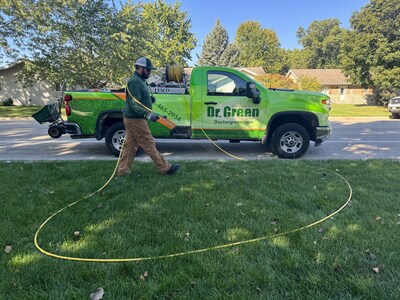
How Warmer Weather Impacts Lawns
Homeowners in the Chicagoland area, including communities such as Plainfield, Naperville, Shorewood, New Lenox, Joliet, Channahon, Minooka, Morris, and Lockport, are already seeing the effects of these rising temperatures on their lawns. Warmer conditions can lead to extended growing seasons, increased weed and pest activity, and higher water stress for turfgrass. Unseasonably warm winter days may also trigger early grass growth, leaving lawns vulnerable to sudden cold snaps.
As temperature patterns continue to change, proper lawn maintenance becomes more critical. Longer growing seasons mean more frequent mowing, watering, and fertilization to keep grass healthy and resilient.
The Role of Fertilization in Lawn Health
Lawn fertilization plays a crucial role in helping grass withstand these challenges. Essential nutrients such as nitrogen, phosphorus, and potassium strengthen turfgrass in different ways:
- Nitrogen promotes lush, green growth.
- Phosphorus supports strong root development.
- Potassium enhances resistance to disease and environmental stressors.
Without the right fertilization strategy, grass can become weak, patchy, and more susceptible to extreme weather fluctuations. Warmer temperatures also accelerate nutrient depletion in the soil, making regular fertilization even more important.
Why Strategic Fertilization Matters
Not all fertilization is created equal. Overuse or improper application can lead to nutrient runoff, water pollution, and environmental concerns such as algal blooms. That's why precision fertilization—using the right blend of nutrients at the correct time—is essential for maintaining thick, green, and resilient turf.
As a trusted lawn care company serving the Chicagoland area for over 40 years, Dr. Green Services specializes in customized fertilization programs tailored to local climate conditions. Their team of certified technicians applies scientifically backed treatments that deliver nutrients at optimal times, ensuring lawns remain strong and healthy year-round.
With the 2025 lawn care season approaching, homeowners in Plainfield, Naperville, Shorewood, New Lenox, Joliet, Channahon, Minooka, Morris, Lockport, and surrounding areas should prepare for the effects of a warming climate. By partnering with Dr. Green Services, residents can maintain lush, green lawns that thrive despite changing weather conditions.
As climate patterns shift, adapting lawn care strategies is more important than ever. Dr. Green Services provides expert fertilization programs to keep lawns vibrant and resilient. Homeowners looking for a reliable lawn care service can contact Dr. Green Services today to prepare for a healthier lawn in 2025.
Dr. Green Services Warns: Winter Freeze Causes Widespread Turfgrass Damage in North Texas
Feb 27, 2025, 10:33 ET
DALLAS-FORTH WORTH, Texas, Feb. 27, 2025 /PRNewswire/ -- The recent winter freeze has severely impacted lawns across North Texas, leaving homeowners and businesses concerned about turfgrass recovery. As the region prepares for spring, it's crucial to assess winter damage and take proactive steps to restore lawn health.
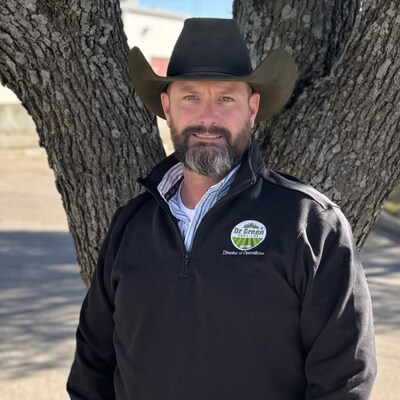
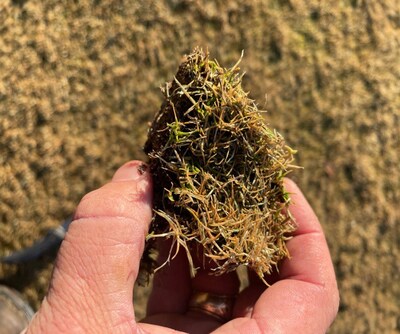
Dr. Green Services, a trusted lawn care company, urges property owners to inspect their turf for signs of freeze stress. James Tatum, Director of Operations, explains that early intervention can prevent long-term damage. With nearly 30 years of experience in lawn care service and a background in Plant and Soil Sciences with an emphasis in Horticulture and Turfgrass from Texas Tech, Tatum specializes in helping Texas lawns recover from extreme weather.
How Winter Freeze Affects Turfgrass
Extreme cold can cause several issues, including:
- Frozen Root Systems – Prolonged freezing reduces water and nutrient absorption, weakening the lawn.
- Winter Desiccation – Dry air and frozen soil strip moisture, leading to brown or discolored grass.
- Winter Kill – Severe damage can result in dead patches requiring reseeding or replacement.
- Frost Heave – Fluctuating temperatures cause soil to expand and contract, uprooting grass.
- Snow Mold – Fungal disease develops under prolonged snow cover, leaving matted, dead patches.
Steps to Help Lawns Recover
Dr. Green Services recommends the following strategies for restoring turf after a freeze:
- Assess Lawn Health – Look for gray or brown patches, which may indicate winter kill.
- Avoid Overwatering – Too much water can promote mold and increase stress.
- Delay Mowing – Allow grass to recover before cutting it.
- Apply Premium Fertilizer – Using a balanced, slow-release fertilizer can boost root regeneration.
- Consider Aeration – Aerating the soil can improve oxygen flow and promote new growth.
According to Dr. Ben Wherley, Ph.D., a turfgrass ecologist at Texas A&M, warm-season grasses have some natural tolerance for cold, but extended freezes pose serious risks. In an article by AgriLife Today, he emphasized that turfgrass damage often results from prolonged exposure to low temperatures, suffocation under ice, and dry winter conditions.
Professional Lawn Care Services for Recovery
To ensure proper recovery, Dr. Green Services offers freeze recovery lawn care services tailored to combat winter damage. Their team provides expert lawn assessments and customized recovery plans to restore turf health and prepare for the growing season.
About Dr. Green Services
Dr. Green Services is a premier lawn care company serving North Texas. With a focus on sustainable, science-backed treatments, they help homeowners and businesses maintain healthy, green lawns year-round.
For more information or to schedule a lawn assessment, visit, call (800) 465-2934.
Dr. Green Services Launches New U.S.-Focused Brand with Enhanced Website
Jan 16, 2025, 08:38 ET
DALLAS-FORT WORTH, Texas, Jan. 16, 2025 /PRNewswire/ -- Dr. Green Services is excited to announce the launch of its newly designed website, complete with an updated logo and brand identity, specifically focusing on its U.S. operations. This milestone marks a significant step in the company's journey to provide high-quality lawn care services tailored exclusively to Chicagoland, Dallas-Fort Worth, and Northwest Indiana residents.
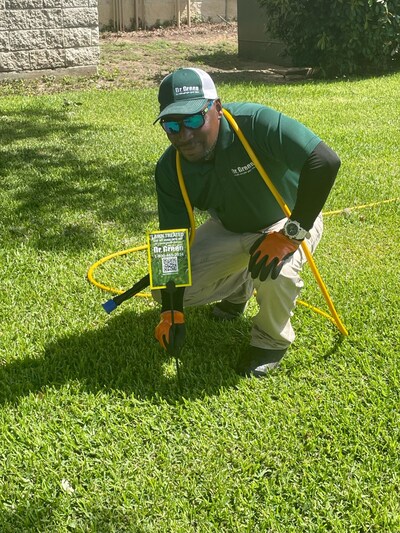
The newly launched website provides an intuitive platform for customers to access information about their services easily, benefit from seasonal promotions, and take advantage of special offers like free grub control and aeration. Homeowners are encouraged to explore their service offerings and take the first step in creating the lawn of their dreams. To learn more, visit drgreenservices.com.
The separation from the Doctor Green family, primarily catering to the Canadian market, allows Dr. Green Services to concentrate wholly on delivering the best lawn, mosquito and pest control services within the United States. This substantial change was made to reinforce their dedication to American homeowners and to highlight their expertise in the unique conditions of U.S. lawns. With over 40 years of experience, Dr. Green Services is committed to enriching local lawns, ensuring they remain green, lush, and pest-free. Their focus on local service means they are deeply attuned to each community's needs, cultivating long-lasting client relationships. This dedication to quality has made them a trusted name in lawn care across multiple regions.
Dr. Green Services offers an extensive range of services tailored to meet the specific needs of their clients. Their Very Best Lawn Care program includes top-tier treatments such as premium fertilizer, guaranteed weed control, complimentary aeration, grub control, and fungicide application. Their certified technicians bring local expertise to every project, ensuring each lawn receives customized care considering the area's climate and soil conditions. Combining professional knowledge with the latest technology and eco-friendly practices, they help homeowners achieve vibrant outdoor spaces. This comprehensive approach enhances curb appeal and promotes a healthier environment for families.
As Dr. Green Services embarks on this new chapter, they remain committed to extensive customer satisfaction and exceptional results. They aim not just to meet but exceed expectations through tailored lawn care programs. The team leverages its extensive expertise to address each unique lawn challenge, helping homeowners create the outdoor spaces of their dreams. By fostering open communication and personalized service, Dr. Green Services ensures that every client's needs are met with care and attention.
About Dr. Green Services
Dr. Green Services has been a leading lawn care and pest control solution provider since 1985, operating with a family-owned ethos. The company prides itself on its commitment to eco-friendly practices and provides clients with comprehensive, tailored solutions for their outdoor spaces. Trust Dr. Green Services to help you achieve the beautiful, healthy lawn you deserve!
For a Limited Time
Get Started Today and Enjoy Our Special Offer: Free Grub Control, Free Aeration, Free Fungicide, and Free Turf-Damaging Insect Control! Plus, Save 10% When You Prepay!
Your Local Lawn Care Experts
Dallas-Fort Worth
Address
3333 Earhart Dr., Suite 200
Carrollton, TX 75006
Phone Number
1-800-465-2934
Ready to elevate your lawn care game?
Get a free quote today.