
Fusarium Blight Disease Science
Fusarium blight disease is a stress-related lawn fungus that primarily affects cool-season grasses. Instead of appearing randomly, this disease develops when turf systems weaken under environmental pressure. Understanding the underlying science helps explain why lawns suddenly thin, fade, or decline even when routine care appears unchanged—patterns explored further in lawn care science.
Rather than functioning as an aggressive invader, fusarium organisms exploit predictable stress responses in turfgrass. These stresses include heat, soil limitations, and reduced root performance. As a result, visible damage often appears after internal plant systems are already compromised, a concept that aligns closely with broader principles explained in lawn fungus science.
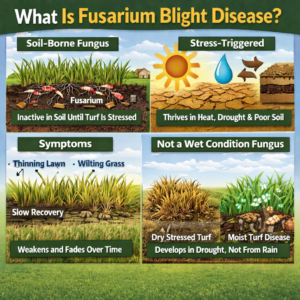
What Is Fusarium Blight Disease?
Fusarium blight disease originates from soil-dwelling fungi within the Fusarium group. These organisms are naturally present in many lawns and usually remain inactive. However, when turf becomes stressed, they can shift into a disease-causing role.
Historically, several turf diseases were grouped under Fusarium-related classifications before fungal taxonomy became more precise. For example, conditions now identified separately, such as Microdochium patch, were once discussed alongside fusarium-related blight in turfgrass research, as documented by Penn State Extension.
This condition most often affects cool-season grasses such as Kentucky bluegrass. Symptoms typically emerge during warmer periods when grass growth slows and recovery capacity declines. Because of this, disease development reflects turf vulnerability rather than sudden infection.
Fusarium Blight Disease and Turf Stress Biology
The biology behind fusarium blight centers on turf stress response. Healthy grass relies on balanced growth, strong roots, and efficient nutrient uptake to maintain resistance. When environmental pressure disrupts these systems, natural defenses weaken.
Heat stress reduces photosynthesis and energy production. At the same time, root growth often slows, limiting water and nutrient absorption. As stress accumulates, soilborne fungi gain access to weakened tissue, allowing disease activity to increase.
Soil Conditions That Influence Fusarium Blight Disease
Soil structure plays a major role in disease expression. Compacted soils restrict oxygen flow and root expansion, increasing physiological stress within the plant. Poor drainage can further worsen these conditions by encouraging shallow root systems.
Soil temperature also influences fungal activity. Warmer soils increase biological activity, including that of Fusarium species. When root systems cannot meet the demands placed on the turf canopy, disease pressure rises.
How Fusarium Blight Disease Damages Grass Plants
Damage associated with fusarium blight begins internally. The fungus interferes with water movement and nutrient transport, reducing the plant’s ability to regulate growth and hydration.
Early symptoms often appear as thinning or uneven color rather than sharply defined patches. Over time, weakened areas expand as stress continues. Because internal damage occurs first, visible decline often appears later in the disease process.
Environmental Triggers Linked to Fusarium Blight Disease
Several environmental factors increase disease risk. Extended heat, inconsistent moisture, and compacted soil all elevate turf stress levels. Rapid temperature changes can also interrupt recovery cycles, further weakening grass plants.
Excessive nitrogen during warm periods may worsen susceptibility. Rapid top growth increases demand for water and nutrients, placing additional strain on already stressed roots. When supply cannot meet demand, turf resilience declines.
Fusarium Blight Disease vs Other Lawn Fungus Types
This disease behaves differently from many moisture-driven lawn fungi. Instead of thriving in constantly wet conditions, fusarium-related decline often appears during dry or heat-stressed periods. This distinction helps separate it from diseases such as dollar spot disease, which follows different moisture and growth patterns.
In addition, damage typically develops as gradual thinning rather than distinct lesions. Recognizing these differences also helps distinguish fusarium blight from conditions like brown patch fungus and reinforces the importance of stress management in turf health.
Why Fusarium Blight Disease Often Returns
Recurring outbreaks usually indicate unresolved stress factors. While turf may temporarily recover, underlying issues such as compaction, shallow roots, or nutrient imbalance often remain.
Because Fusarium organisms persist naturally in soil, complete elimination is unrealistic. Long-term suppression depends on restoring turf balance. When grass regains stable growth and stronger root systems, disease pressure naturally declines.
Fusarium Blight Disease Science and Long-Term Lawn Health
Fusarium blight disease science highlights a core turf principle: disease follows stress. Rather than appearing unpredictably, this condition exploits weakened growth systems during periods of environmental pressure, which is why professional fungus control services focus on reducing stress instead of reacting only to symptoms.
Lawns with balanced nutrition, deep root development, and consistent seasonal growth are far less vulnerable. Viewing fusarium blight through a biological lens connects this disease to broader lawn care resources that explain how long-term turf health supports natural disease resistance over time.
Hear What Our Happy Customers Have to Say!
For a Limited Time
Get Started Today and Enjoy Our Special Offer: Free Grub Control, Free Aeration, Free Fungicide, and Free Turf-Damaging Insect Control! Plus, Save 10% When You Prepay!
Your Local Lawn Care Experts
Dallas-Fort Worth
Address
3333 Earhart Dr., Suite 200
Carrollton, TX 75006
Phone Number
1-800-465-2934
Ready to elevate your lawn care game?
Get a free quote today.