
Heat and Moisture Stress in Lawns
Heat and moisture stress is one of the most important environmental factors influencing lawn fungus development. While fungal spores exist naturally in soil and thatch, disease only takes hold when turfgrass becomes physiologically stressed — a core principle explained throughout lawn care science. High temperatures combined with excess or poorly managed moisture create conditions where grass defenses weaken and fungi gain a competitive advantage.
Understanding how heat and moisture stress affects turfgrass biology helps explain why lawn fungus appears suddenly, spreads quickly, and often returns during the same seasonal windows each year, a pattern explored in greater depth within lawn fungus science.
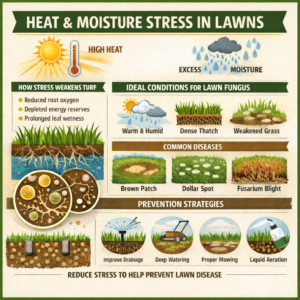
What Is Heat and Moisture Stress in Turfgrass?
Heat and moisture stress occurs when turfgrass experiences prolonged high temperatures alongside excessive surface moisture, humidity, or poor soil drainage. During these conditions, grass struggles to regulate water loss, oxygen exchange, and energy production.
As temperatures rise, turfgrass increases respiration to maintain basic cellular functions. At the same time, saturated soil limits oxygen availability to roots. Together, these stresses reduce root efficiency and slow recovery from daily wear, mowing, and environmental pressure.
Over time, this imbalance weakens the plant’s natural defense system, making it far more susceptible to fungal infection. University turfgrass research shows that prolonged heat, excess moisture, and poor drainage consistently weaken turfgrass systems and increase vulnerability to disease.
How Heat and Moisture Stress Weakens Grass Physiology
Heat and moisture stress disrupts several critical turfgrass processes at once. First, elevated nighttime temperatures increase respiration, which depletes stored carbohydrates faster than photosynthesis can replace them. This energy loss limits growth and repair.
Second, prolonged moisture on leaf surfaces interferes with normal gas exchange. When leaves remain wet overnight, stomata function poorly, and internal stress compounds. Meanwhile, root systems operating in saturated soil absorb less oxygen, reducing nutrient uptake and overall vigor.
As a result, grass becomes thinner, slower to recover, and less capable of resisting pathogens that are already present in the lawn environment.
Heat and Moisture Stress and Lawn Fungus Development
Heat and moisture stress creates ideal conditions for lawn fungus by aligning plant weakness with fungal growth requirements. Most turf pathogens thrive in warm, humid environments where leaf wetness persists for extended periods.
Fungi take advantage of stressed grass tissue, entering through weakened leaf blades, crowns, or roots. Because turf recovery slows under stress, infected areas expand faster than the lawn can repair itself.
This relationship explains why many lawn diseases peak during hot, humid stretches rather than appearing randomly throughout the season.
Why Excess Moisture Increases Disease Pressure
Moisture alone does not cause lawn fungus, but excess moisture dramatically increases disease pressure when combined with heat. Standing water, compacted soil, and frequent shallow watering all prolong surface wetness and limit oxygen availability.
These conditions favor fungal spore germination and mycelial growth. At the same time, roots operating in low-oxygen soil lose efficiency, further weakening turf resilience.
When moisture remains trapped near the surface, disease cycles accelerate and recovery slows, leading to visible outbreaks that often worsen quickly.
Heat and Moisture Stress Versus Healthy Turf Balance
Healthy turfgrass tolerates short periods of heat or moisture without lasting damage. Problems arise when stress becomes chronic rather than temporary. Lawns with strong root systems, proper airflow, and balanced growth recover faster between stress events.
In contrast, turf already weakened by compaction, shallow roots, or inconsistent watering enters high-risk territory during warm, humid weather. Once that threshold is crossed, fungal organisms gain an opportunity to dominate.
Maintaining balance, rather than reacting to symptoms, is the key distinction between resilient lawns and recurring disease problems.
Seasonal Patterns of Heat and Moisture Stress
Heat and moisture stress follows predictable seasonal patterns, especially in cool-season lawns. Late spring transitions into summer often bring rising nighttime temperatures, increased humidity, and heavier irrigation demands.
During these periods, lawns experience compounded stress even when they appear green on the surface. Root systems may already be struggling below ground, setting the stage for sudden disease outbreaks such as fusarium blight once conditions align.
Understanding this timing helps explain why lawn fungus often appears “out of nowhere” during mid-summer despite consistent maintenance.
Managing Heat and Moisture Stress to Reduce Lawn Fungus
Reducing heat and moisture stress focuses on improving turf resilience rather than eliminating fungi entirely. Proper watering depth, improved drainage, correct mowing height, and airflow all reduce prolonged leaf wetness and root stress — conditions commonly associated with diseases such as brown patch and dollar spot.
Aeration, when timed correctly, improves oxygen movement into the root zone and helps water penetrate evenly instead of pooling near the surface. Balanced nutrition also supports steady growth without forcing excessive top growth during high-stress periods, which helps limit disease pressure during peak summer months.
When stress is managed effectively, turfgrass regains its ability to suppress disease naturally.
Why Heat and Moisture Stress Explains Recurring Fungus Issues
Recurring lawn fungus is rarely the result of a single missed treatment or isolated weather event. Instead, it reflects repeated exposure to heat and moisture stress without addressing the underlying turf response.
When lawns remain in a stressed state year after year, fungal pressure compounds and recovery windows shrink. Understanding this cycle explains why long-term results depend on correcting environmental stress rather than reacting only when symptoms appear, even when fungicide treatments are used.
This science-based perspective forms the foundation of effective lawn fungus prevention and sustainable turf health, supported by consistent lawn care practices and professional guidance available through our lawn care resources.
Hear What Our Happy Customers Have to Say!
For a Limited Time
Get Started Today and Enjoy Our Special Offer: Free Grub Control, Free Aeration, Free Fungicide, and Free Turf-Damaging Insect Control! Plus, Save 10% When You Prepay!
Your Local Lawn Care Experts
Dallas-Fort Worth
Address
3333 Earhart Dr., Suite 200
Carrollton, TX 75006
Phone Number
1-800-465-2934
Ready to elevate your lawn care game?
Get a free quote today.