
Lawn Fungus Science: How Lawn Diseases Develop and Spread
Lawn fungus science explains why turf disease damages lawns so quickly and why most homeowners notice problems only after damage has already begun. Under the right environmental conditions, fungal pathogens infect grass tissue at the blade, crown, and root level at the same time. Timing matters because infection often begins below the surface, which means visible symptoms appear much later.
What Is Lawn Fungus and Why Does It Damage Turf?
Naturally occurring fungal pathogens cause lawn fungus and live in soil, thatch, and plant debris throughout the lawn. During normal conditions, these organisms remain dormant and cause no harm in most cases. Once favorable moisture and temperature patterns develop, fungal growth accelerates, making turf tissue more vulnerable.
Unlike weeds or insects, fungal disease attacks the systems that keep grass alive from the inside out. Over time, weakened roots and crowns reduce the lawn’s ability to recover from stress. Different lawn diseases behave differently, which is why brown patch fungus, dollar spot fungus, and red thread fungus each appear under specific environmental conditions.
Why Lawn Fungus Develops in Certain Lawns
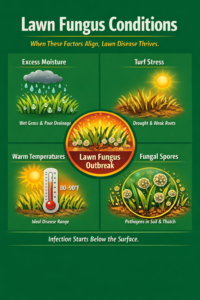
Not all lawns experience fungal disease at the same intensity for this reason. Disease pressure increases when environmental factors combine with weakened turf health at the same time.
Moisture Creates the Perfect Environment
Extended leaf wetness allows fungal spores to germinate and infect turf more easily. Poor drainage, compacted soil, excessive thatch, and nighttime watering all contribute to trapped moisture, which means lawns stay wet longer. As a result, infection becomes much more likely.
Temperature Controls Disease Activity
Every fungal disease prefers a specific temperature range by nature. Disease activity increases rapidly when daily temperatures remain within that window, especially during seasonal shifts. For this reason, lawn fungus often appears suddenly at certain times of the year. Turfgrass diseases follow well-documented biological patterns tied to temperature and moisture, which is why university turfgrass research consistently emphasizes environmental monitoring and proper timing in disease prevention.
Stressed Turf Is Easy to Infect
Grass under stress has weaker natural defenses overall. Drought stress, nutrient imbalance, shallow roots, and compacted soil all increase susceptibility, therefore infection spreads faster. As turf growth slows, fungal activity accelerates even more.
How Lawn Fungus Spreads Through a Lawn
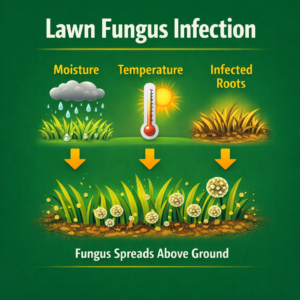
Once established, lawn fungus spreads quickly and often without early warning in many cases. Infection frequently expands before symptoms appear, which explains why outbreaks seem sudden.
Fungal spores travel through wind, rainfall, irrigation, and foot traffic throughout the yard. Mowing wet grass further increases spread by transferring spores across the lawn, therefore disease coverage expands rapidly. Consequently, discoloration usually appears after infection is already widespread.
Why Lawn Fungus Is Difficult to Control
Effective control is challenging because lawn fungus begins causing damage below the surface first. Visible symptoms appear only after internal injury has already occurred, which limits early intervention.
Infection Starts Before Symptoms Appear
Most fungal diseases infect the crown or root system first rather than leaf tissue. Yellowing, thinning, or browning turf indicates that essential plant functions have already been disrupted by that point.
Late Treatments Limit Results
Fungicide applications made after visible damage slow additional spread in most situations. Existing injury, however, cannot be reversed, which means recovery takes time. Turf improvement depends on new growth and improved growing conditions moving forward.
Lawn Fungicide Science: How Treatments Work
Lawn fungicide science focuses on interrupting fungal growth at specific stages of development within the disease cycle. Rather than killing fungus instantly, treatments prevent infection or slow reproduction over time.
Preventative applications protect healthy grass before disease becomes active, while curative treatments suppress existing infections. As a result, overall disease pressure declines gradually.
Preventative vs Curative Fungicide Applications
Fungicide success depends heavily on timing in practice. Because disease pressure rises and falls with seasonal lawn growth cycles, preventative applications work best when turf enters high-risk periods before visible symptoms appear.
Why Preventative Fungicides Work Best
Preventative fungicides are applied before infection reaches peak activity during high-risk periods. A protective barrier forms within the turf, therefore disease establishment becomes far less likely.
Why Curative Fungicides Have Limits
Curative fungicides reduce active disease pressure effectively. Turf repair, however, still requires new growth, favorable weather, and reduced stress levels after treatment.
Why Professional Fungicide Programs Are More Effective
Professional lawn care programs rely on timing, monitoring, and precision rather than reaction by design. Weather trends and seasonal disease pressure guide application decisions, which improves outcomes.
Proper equipment ensures even coverage and accurate application rates across the lawn. Missed areas where fungus could survive are minimized. Because timing and coverage are critical, professional fungicide applications are far more effective than reactive treatments applied after damage appears.
Healthier Lawns Resist Lawn Fungus
A science-based lawn care approach reduces turf stress and strengthens natural disease resistance over time. When turf grows consistently and remains healthy, lawn fungus has fewer opportunities to establish and spread.
Balanced fertilization supports thicker, more resilient grass tissue, while aeration improves drainage and airflow. Together, these practices reduce excess moisture and disease pressure significantly. They also limit turf stress caused by pests, which is why understanding turf-damaging insect science helps explain how insects and disease often work together to weaken lawns.
Lawn Fungus Science Leads to Better Lawn Care Decisions
Lawn fungus science shows that turf disease follows predictable patterns tied to weather and plant stress year after year. Because of this, understanding how fungus develops allows earlier action before damage becomes severe, which helps protect turf health. As a result, science-based care supports stronger, healthier, and more resilient lawns. Beyond turf, these same stress-driven disease patterns also affect ornamentals, which are explained in tree and shrub care science.
Hear What Our Happy Customers Have to Say!
For a Limited Time
Get Started Today and Enjoy Our Special Offer: Free Grub Control, Free Aeration, Free Fungicide, and Free Turf-Damaging Insect Control! Plus, Save 10% When You Prepay!
Your Local Lawn Care Experts
Dallas-Fort Worth
Address
3333 Earhart Dr., Suite 200
Carrollton, TX 75006
Phone Number
1-800-465-2934
Ready to elevate your lawn care game?
Get a free quote today.