
Preventative Lawn Care Science: How Proactive Treatments Protect Your Lawn
Preventative lawn care science explains why the healthiest lawns are protected long before problems become visible. While many homeowners react after weeds appear or grass turns brown, science shows that lawn damage almost always starts weeks—or even months—earlier below the surface.
At Dr. Green Services, this prevention-first approach focuses on stopping stress, pests, weeds, and disease before they gain momentum. Because turf follows predictable biological patterns explained by lawn care science, proactive treatments work with nature instead of chasing damage after it spreads. As a result, lawns stay thicker, greener, and more resilient throughout the season.
What Preventative Lawn Care Really Means
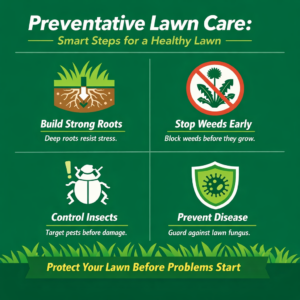
Preventative lawn care means acting before damage occurs, not reacting after symptoms appear. Rather than applying products without purpose, this approach relies on timing, biology, and risk reduction.
Grass constantly responds to environmental pressure. Changes in temperature, moisture, soil structure, insects, and nutrition all affect turf health. When multiple stressors overlap, lawns decline quickly. Because of this, preventative lawn care follows the same principles outlined in integrated pest management, which focuses on monitoring conditions and reducing risk early. Therefore, prevention works by limiting stress before visible damage develops.
Reactive lawn care often treats surface problems while roots remain compromised. In contrast, prevention-based strategies protect turf at its foundation.
Why Preventative Lawn Care Starts Before You See Problems
Most lawn problems begin underground, long before homeowners notice changes above the soil. By the time grass thins or discolors, damage has already progressed.
Weeds begin germinating before they emerge. Insects feed on roots weeks before turf collapses. Disease pathogens exist in soil and thatch well before brown patches appear. Because of this, waiting for visible signs puts lawns at a disadvantage.
Lawn care science prioritizes timing over appearance. When treatments align with biological activity, turf stays stronger and recovers faster from seasonal stress.
Preventative Lawn Care and Root Protection
Healthy roots support everything a lawn needs to survive stress. However, roots remain hidden, which makes them easy to overlook.
A science-based prevention strategy supports root systems by improving soil conditions, managing compaction, and delivering nutrients when grass can absorb them efficiently. As roots grow deeper and stronger, turf handles heat, drought, and foot traffic more effectively.
In addition, strong roots help lawns recover faster after stress. Instead of thinning out, grass maintains density and color through challenging conditions.
Preventative Lawn Care for Weed Prevention
Weed control is most effective when it begins early. Weed control science shows that stopping weeds before emergence delivers far better results than treating mature plants.
Many common weeds germinate once soil temperatures reach specific thresholds. Because this timing is predictable, early applications interrupt growth before weeds compete with turfgrass. The crabgrass growth cycle is a clear example of how soil temperature drives emergence long before weeds are visible.
As a result, lawns stay thicker and healthier. Dense turf naturally shades the soil surface, making it harder for new weeds to establish.
Preventative Lawn Care for Insect Management
Turf-damaging insects often cause severe damage without immediate warning. Many species feed below the surface, attacking roots that support water and nutrient uptake. Grub control science explains why this underground feeding causes lawn damage long before symptoms appear.
Preventative lawn care targets insects during vulnerable life stages. Instead of reacting after damage appears, treatments disrupt life cycles early. Consequently, insect populations stay under control before turf suffers extensive injury.
This proactive strategy also reduces the need for corrective treatments later in the season.
Preventative Lawn Care and Lawn Disease Prevention
Lawn disease rarely develops overnight. In most cases, fungal pathogens already exist in soil and thatch, waiting for favorable conditions.
Preventative lawn care reduces disease risk by managing moisture, improving airflow, and maintaining balanced nutrition. When turf grows steadily—not too fast and not too weak—it resists disease more effectively.
In addition, preventative fungicide strategies protect turf during high-risk periods instead of responding after damage spreads.
Nutrition and Preventative Lawn Care
Nutrition plays a critical role in lawn protection. However, more fertilizer does not always produce better results. Mistimed or excessive applications can stress turf and lead to preventable fertilizer damage.
Lawn care science emphasizes balanced, well-timed nutrition. Nitrogen supports steady growth, while potassium strengthens cell walls and improves stress tolerance. When applied correctly, nutrients build resilience instead of forcing excessive growth.
Because of this approach, grass remains healthier and less vulnerable to weeds, insects, and disease.
Soil Health and Preventative Care
Soil health supports every prevention strategy. Compacted soil restricts oxygen, water movement, and root expansion. As a result, turf weakens and becomes more susceptible to stress.
Preventative lawn care improves soil structure over time. Better soil allows roots to grow deeper, beneficial microbes to thrive, and nutrients to move efficiently. Consequently, lawns become more self-sustaining and resilient.
Why Preventative Lawn Care Delivers Better Long-Term Results
Lawn care works because it aligns with how grass naturally grows. Instead of reacting to damage, it reduces the conditions that cause problems in the first place.
Over time, lawns managed proactively require fewer corrective treatments. They recover faster from weather extremes and maintain consistent color and density. Most importantly, they stay healthier from the ground up.
At Dr. Green Services, lawn care decisions follow science—not guesswork. Certified technicians monitor seasonal patterns, soil conditions, and turf growth to apply treatments when they matter most.
Preventative Lawn Care Is the Smarter Way to Protect Your Lawn
Preventative lawn care science proves that proactive treatments protect turf more effectively than reactive solutions. By focusing on roots, soil health, nutrition, and timing, lawns stay healthier year after year.
Dr. Green Services builds every lawn care service around prevention first. This science-driven approach keeps lawns greener, thicker, and more resilient throughout every season.
Hear What Our Happy Customers Have to Say!
For a Limited Time
Get Started Today and Enjoy Our Special Offer: Free Grub Control, Free Aeration, Free Fungicide, and Free Turf-Damaging Insect Control! Plus, Save 10% When You Prepay!
Your Local Lawn Care Experts
Dallas-Fort Worth
Address
3333 Earhart Dr., Suite 200
Carrollton, TX 75006
Phone Number
1-800-465-2934
Ready to elevate your lawn care game?
Get a free quote today.