
How Weeds Germinate and Spread
Weeds do not appear randomly in lawns. Instead, their growth follows predictable biological patterns tied to soil conditions, moisture levels, temperature, and seed behavior. By understanding how weeds germinate and spread, it becomes clear why early prevention consistently outperforms reactive treatments in modern lawn care science.
As a result, weed control science focuses on what happens below the surface long before weeds become visible.
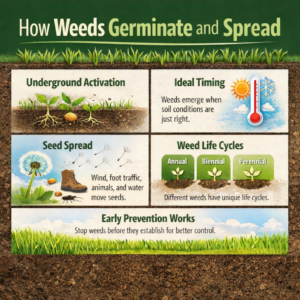
How Weeds Germinate Below the Soil Surface
Weed germination begins underground when dormant seeds receive the right environmental signals. In most lawns, weed seeds already exist in the soil, sometimes by the thousands per square foot. This reserve is commonly referred to as the soil seed bank, a concept well documented in university weed science research.
Once moisture, temperature, and oxygen align, seeds activate and begin root and shoot development beneath the soil surface. Because this early growth happens invisibly, lawns may still appear healthy while weeds are already establishing below ground.
How Weeds Germinate Based on Soil Temperature
Soil temperature plays a central role in determining how weeds germinate and when they emerge. Different weed species activate at specific temperature thresholds, making their growth timing highly predictable.
For instance, many summer annual weeds germinate once soil warms consistently. In contrast, cool-season weeds activate earlier while soil temperatures remain lower. Because of this pattern, weed outbreaks tend to occur at similar times each year.
Therefore, effective weed prevention follows soil conditions rather than calendar dates.
How Weeds Germinate With Moisture and Oxygen
Water triggers seed activation, but oxygen sustains early growth. When soil structure allows proper air movement, germinating weeds develop roots more quickly and establish more successfully.
However, compacted soil changes this balance. In some cases, compaction slows germination slightly. More often, it weakens turf roots while weeds adapt more easily. Consequently, stressed lawns experience increased weed pressure over time.
How Weeds Spread After Germination
After weeds successfully germinate and mature, spread becomes the next challenge. Weed spread occurs through several pathways, often at the same time. Broadleaf weeds like dandelions rely heavily on seed production, which is why dandelion weed control focuses on stopping spread before seed release.
Common spread methods include:
-
Wind-carried seeds
-
Foot traffic and mowing equipment
-
Animals and insects
-
Water movement following rainfall
Because each mature weed can produce hundreds or even thousands of seeds, unchecked growth quickly multiplies future problems. Over time, a single season of weeds can contribute to infestations that last for years.
How Weeds Germinate and Complete Their Life Cycle
Weeds follow specific life cycles that influence how easily they can be controlled. Understanding these cycles helps explain why some weeds return even after removal.
-
Annual weeds complete their life cycle in one season and depend heavily on seed production, which is clearly illustrated by the crabgrass growth cycle
-
Biennial weeds spread over two growing seasons
-
Perennial weeds survive for multiple years and regenerate from roots
As a result, control methods must align with weed biology rather than surface appearance alone.
How Weeds Germinate and Why Early Prevention Works
Research consistently shows that preventing weed germination produces better long-term results than treating mature weeds. Once weeds establish roots and produce seeds, control becomes more difficult and less efficient.
By interrupting growth before emergence:
-
Turf faces less competition
-
Root systems remain stronger
-
Fewer seeds enter the soil seed bank
Over time, this proactive approach steadily reduces weed pressure and supports thicker, healthier turf.
How Weed Germination Science Supports Stronger Lawns
Ultimately, healthy turf remains the most effective long-term defense against weeds. Dense grass naturally shades the soil surface, which limits the light exposure weed seeds need to germinate. This relationship is a core principle of long-term lawn care resources built on turf biology.
When lawn care decisions follow weed biology instead of reacting to visible symptoms, results last longer and require fewer corrective treatments. At Dr. Green Services, professional weed control service strategies are guided by how weeds germinate, seasonal growth patterns, and turf response — not guesswork.
Hear What Our Happy Customers Have to Say!
For a Limited Time
Get Started Today and Enjoy Our Special Offer: Free Grub Control, Free Aeration, Free Fungicide, and Free Turf-Damaging Insect Control! Plus, Save 10% When You Prepay!
Your Local Lawn Care Experts
Dallas-Fort Worth
Address
3333 Earhart Dr., Suite 200
Carrollton, TX 75006
Phone Number
1-800-465-2934
Ready to elevate your lawn care game?
Get a free quote today.