
Seasonal Weed Growth Patterns: What Weeds Grow and When
Weeds do not appear randomly. Instead, weed emergence follows predictable biological patterns tied to soil temperature, daylight length, and moisture availability. Understanding these seasonal growth patterns explains why certain weeds dominate at different times of the year and why timing plays a critical role in weed control science.
When lawn care science guides decisions instead of reacting to visible symptoms, results become more consistent and long-lasting.
Seasonal Weed Growth Begins with Soil Temperature
Weed growth starts underground. Long before weeds appear above the surface, seeds respond to soil temperature thresholds that signal safe conditions for germination. University weed identification resources show how early growth traits help distinguish emerging weeds before they fully develop.
Each species has a specific temperature range that triggers growth. When soil reaches that range, germination begins regardless of calendar date. This explains why weed emergence can shift earlier or later depending on spring conditions.
Because soil temperature changes gradually, weed pressure often builds before lawns show visible signs of invasion.
Spring Weed Growth Patterns Favor Cool-Season Weeds
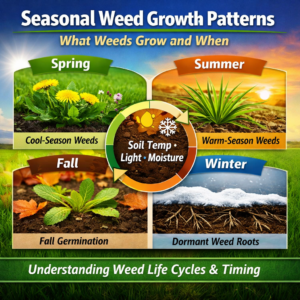
Spring introduces the first major flush of weed activity. Cool-season weeds germinate early because they tolerate lower soil temperatures and take advantage of reduced turf competition.
Common spring weeds include dandelion, chickweed, and henbit. Many of these weeds overwinter as seeds or young plants, allowing rapid growth as soon as conditions improve.
Lawns with thin turf or limited root development experience higher pressure during this stage because grass has not yet reached peak growth.
Seasonal Weed Growth Shifts During Summer Heat
As temperatures rise, growth shifts toward warm-season weeds that thrive in heat and drought conditions.
Grassy weeds such as crabgrass dominate summer months. These weeds spread aggressively and exploit open soil created by thinning turf, compaction, or heat stress. Because cool-season grass slows growth during extreme heat, weeds gain a competitive advantage.
Summer weed pressure often increases in lawns struggling with poor moisture retention or compacted soil.
Fall Weed Establishment Extends Seasonal Weed Growth
Weed activity does not stop when summer fades. Fall provides ideal conditions for many weeds to establish root systems before winter dormancy.
Broadleaf weeds frequently germinate or regrow during cooler temperatures. Because turf growth slows, weeds face less competition and can store energy for rapid growth the following spring.
This process explains why fall weeds often go unnoticed until lawns green up again.
Weed Life Cycles Shape Seasonal Growth Patterns
Weed behavior changes based on life cycle classification. Annual weeds complete their life cycle in one season, while biennials and perennials persist across multiple years.
Annual weeds rely heavily on successful germination timing. If early growth goes uninterrupted, they mature and spread quickly. Perennial weeds prioritize root strength, allowing repeated regrowth even after visible removal.
Recognizing these differences helps explain why some weeds disappear after one season while others return repeatedly.
Seasonal Weed Growth Explains Why Timing Matters
Weed control is most effective when treatments align with vulnerable growth stages. Early intervention disrupts germination and root development before weeds compete with turf.
Late intervention often removes visible weeds without addressing future pressure. As a result, lawns may appear improved temporarily while underlying problems remain.
Aligning weed control with biological timing produces longer-lasting results and reduces the need for repeated corrections.
Environmental Factors Influence Weed Pressure
Weather patterns strongly influence weed behavior. Rainfall, drought, and temperature swings can accelerate or delay emergence depending on conditions.
Extended moisture supports rapid germination, while drought-stressed turf creates openings for weeds to establish. Shaded areas and compacted zones often experience heavier pressure because grass struggles to compete.
These environmental influences explain why weed outbreaks vary even between neighboring lawns.
Lawn Conditions Affect Long-Term Weed Resistance
While biology determines when weeds emerge, lawn health determines how successfully they spread. Dense turf shades the soil surface and limits light exposure needed for weed seeds to germinate.
Strong root systems absorb water and nutrients efficiently, leaving fewer resources available for weeds. Over time, healthy turf naturally suppresses weed establishment and reduces seasonal pressure.
This relationship highlights why turf improvement remains a core component of long-term weed management.
Seasonal Weed Growth Supports Preventative Lawn Care
Seasonal weed growth reinforces the value of preventative lawn care. Preventing weeds before emergence reduces reliance on reactive treatments and minimizes turf stress.
When weed control strategies follow biological timing and turf response, lawns grow thicker, recover faster, and resist future infestations more effectively. At Dr. Green Services, weed control decisions integrate weed biology, seasonal conditions, and turf performance to deliver predictable, science-backed results.
Homeowners interested in applying these principles can explore professional weed control service options or continue learning through our lawn care resources.
Hear What Our Happy Customers Have to Say!
For a Limited Time
Get Started Today and Enjoy Our Special Offer: Free Grub Control, Free Aeration, Free Fungicide, and Free Turf-Damaging Insect Control! Plus, Save 10% When You Prepay!
Your Local Lawn Care Experts
Dallas-Fort Worth
Address
3333 Earhart Dr., Suite 200
Carrollton, TX 75006
Phone Number
1-800-465-2934
Ready to elevate your lawn care game?
Get a free quote today.