
Why Fertilizer Burns Grass
Fertilizer burn is one of the most common and frustrating lawn problems. In many cases, damage appears quickly, even though the goal was to improve turf health. To understand why fertilizer burns grass, it helps to look at how nutrients behave once they reach the soil.
Dr. Green Services approaches lawn fertilization through science, not trial and error. When fertilizer burn occurs, it usually signals an imbalance in nutrient concentration, timing, or application method rather than a problem with the grass itself.
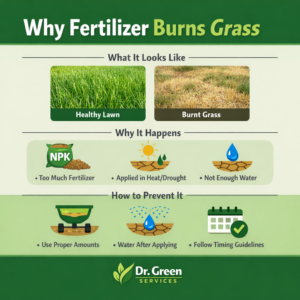
Why Fertilizer Burns Grass When Nutrient Levels Are Too High
Excess nutrients remain one of the leading reasons fertilizer damages turf. Lawn fertilizer science shows that nitrogen fuels growth but causes stress when applied in large amounts. Fertilizer contains salts, and high salt levels pull moisture away from grass roots. University turfgrass research explains that overapplying fertilizer increases salt concentration in the soil, which can damage grass instead of helping it grow.
As a result, this moisture loss weakens plant cells. Grass blades lose color, dry out, and may die back in severe cases. Lawn care science explains that these symptoms often follow the exact pattern of application, making fertilizer burn easy to trace back to overuse.
Why Fertilizer Burns Grass Through Moisture Loss
Fertilizer burn often occurs because nutrients disrupt how grass absorbs water. Grass roots depend on balanced moisture levels to stay hydrated. When fertilizer salts build up in the soil, they reverse the normal flow of water.
Instead of drawing moisture inward, roots lose water to the surrounding soil. This stress limits nutrient uptake, slows recovery, and leaves turf vulnerable to heat and drought.
Why Fertilizer Burns Grass When Applied at the Wrong Time
Grass growth cycles play a critical role in how turf handles nutrients. During periods of heat, drought, or dormancy, grass slows its metabolism to protect itself. Applying fertilizer during these times overwhelms the plant.
Because roots cannot absorb nutrients efficiently, fertilizer remains concentrated in the soil. That concentration increases stress rather than supporting growth, leading to visible damage soon after application.
Why Fertilizer Burns Grass Without Enough Water
Water helps move nutrients safely into the root zone. When fertilizer is applied without proper moisture, salts remain near the soil surface where grass blades and shallow roots absorb them too quickly.
This rapid exposure damages leaf tissue and roots alike. Proper watering dilutes nutrients, distributes them evenly, and allows grass to absorb what it needs without injury.
Why Fertilizer Burns Grass Due to Uneven Application
Uneven application creates nutrient hot spots that stress turf. Overlapping spreader passes, inconsistent spray patterns, or clogged equipment all cause some areas to receive too much fertilizer.
These concentrated areas burn while surrounding turf remains healthy. Precision and calibration prevent this problem by delivering nutrients evenly across the lawn.
Why Fertilizer Burns Grass More Often with Quick-Release Products
Some fertilizers release nutrients immediately after application. While fast results may seem appealing, rapid nutrient availability increases stress on grass. This difference between slow-release vs quick-release fertilizers affects how safely grass absorbs nutrients.
Roots struggle to absorb large nutrient doses at once. As salts accumulate, moisture moves away from plant tissue, increasing the likelihood of burn. Controlled nutrient delivery helps grass grow steadily without shock.
Why Fertilizer Burns Grass Less with Science-Based Programs
Science-based programs focus on how grass actually grows. Instead of forcing rapid growth, they support steady nutrient uptake that aligns with seasonal conditions. Preventative lawn care focuses on anticipating problems like fertilizer burn before they occur, rather than reacting after damage appears.
Dr. Green Services designs fertilizer plans around growth cycles, soil response, and weather patterns. This approach reduces stress and promotes healthier, more resilient turf.
Why Fertilizer Burns Grass When Nutrients Are Out of Balance
Fertilizer burn doesn’t only come from applying too much product. It can also occur when nutrients are out of balance. Nitrogen drives growth, but phosphorus and potassium support root development and stress tolerance.
When fertilizer contains the wrong nutrient ratio for current lawn conditions, grass struggles to use what it receives. As a result, stress increases and damage becomes more likely. Understanding how different nutrients function together helps prevent fertilizer burn and supports steady, healthy growth.
How Dr. Green Services Prevents Fertilizer Burn
Dr. Green Services prevents fertilizer burn by applying nutrients precisely and responsibly. Certified technicians monitor weather, turf condition, and seasonal growth before every application.
This attention to detail ensures grass receives nutrition when it can use it safely. Proper rates, accurate coverage, and thoughtful timing protect turf while improving long-term health.
The Science Behind Healthy Fertilization
Healthy fertilization supports grass without overwhelming it. When nutrients match growth demand, grass builds stronger roots, maintains consistent color, and recovers faster from stress. Professional lawn fertilizer services focus on applying nutrients safely and effectively to support long-term turf health.
Understanding how fertilization works allows lawns to thrive instead of struggle. The lawn care resources from Dr. Green Services explain the science behind proper fertilization and other practices that protect turf year-round. At Dr. Green Services, lawn fertilizer science ensures every treatment strengthens turf while avoiding unnecessary risk.
Hear What Our Happy Customers Have to Say!
For a Limited Time
Get Started Today and Enjoy Our Special Offer: Free Grub Control, Free Aeration, Free Fungicide, and Free Turf-Damaging Insect Control! Plus, Save 10% When You Prepay!
Your Local Lawn Care Experts
Dallas-Fort Worth
Address
3333 Earhart Dr., Suite 200
Carrollton, TX 75006
Phone Number
1-800-465-2934
Ready to elevate your lawn care game?
Get a free quote today.