
How Lawn Fertilizer Science Explains Nutrient Balance
Lawn fertilizer science focuses on how grass absorbs and uses nutrients at different stages of growth. While nitrogen drives blade growth, phosphorus and potassium influence root development and stress response. Therefore, nutrient balance matters more than nutrient quantity.
Because these nutrients affect long-term health, understanding how they work together is critical for sustainable lawn care.
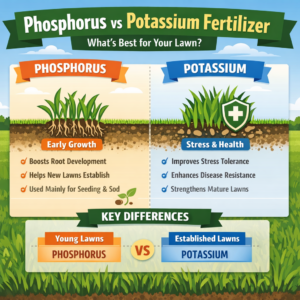
Phosphorus vs Potassium Fertilizer: The Role of Phosphorus in Lawns
Phosphorus supports root development and early plant establishment. For example, it helps grass convert energy, form new roots, and establish after seeding or sod installation. Because of this, phosphorus is most valuable when grass is young or actively establishing. Because phosphorus directly affects how roots form and expand, its role is best explained through grass root growth science, which details how healthy roots support long-term turf performance.
Key Phosphorus Benefits
-
First, it encourages root growth in new grass
-
In addition, it supports seed germination and early development
-
Finally, it helps plants store and transfer energy
However, mature lawns rarely benefit from added phosphorus. In fact, excess phosphorus does not improve color or thickness. Instead, it can move into waterways and create environmental issues. How quickly fertilizer releases nutrients also affects how much phosphorus moves beyond the root zone, which is explained further in fertilizer release rate science. Therefore, many regions restrict its use unless lawns are newly seeded. Because excess phosphorus can move into waterways and provide little benefit to established lawns, many states regulate its use—an approach supported by university turfgrass research.
Phosphorus vs Potassium Fertilizer: The Role of Potassium in Lawns
Potassium works differently than phosphorus. Instead of promoting growth, it strengthens the plant internally. According to lawn fertilizer science, potassium improves how grass handles stress.
For instance, this includes heat, drought, disease pressure, and heavy foot traffic. As a result, potassium fertilizer often provides greater value for established lawns.
Key Potassium Benefits
-
First, it improves heat and drought tolerance
-
Additionally, it strengthens plant cell walls
-
Moreover, it enhances disease resistance
-
As a result, it helps lawns recover faster after stress
Key Differences Between Phosphorus and Potassium Fertilizer
Although both nutrients support turf health, their purposes are not interchangeable. Because of this, understanding their differences is essential.
Phosphorus
-
Primarily, supports early root development
-
Therefore, it is best for new lawns or overseeding
-
However, it offers limited benefit for mature turf
Potassium
-
In contrast, improves durability and stress tolerance
-
Because of this, it benefits established lawns
-
Ultimately, it supports long-term health and recovery
Why Phosphorus vs Potassium Fertilizer Matters for Established Lawns
Most residential lawns already have developed root systems. Because of that, additional phosphorus often provides little benefit. Instead, potassium helps lawns endure summer heat, disease pressure, and seasonal stress.
As growth slows, environmental demands increase. Therefore, potassium strengthens turf during the most challenging periods. For this reason, professional lawn care programs emphasize potassium for ongoing maintenance.
How Professionals Apply Nutrients Based on Lawn Fertilizer Science
Professional fertilizer programs rely on timing, turf biology, and climate—not guesswork. At Dr. Green Services, nutrient selection considers grass type, seasonal stress patterns, and local conditions. This science-based approach helps prevent common issues caused by improper fertilization, including fertilizer burn and avoidable turf damage.
Rather than applying unnecessary nutrients, treatments focus on what grass can actually absorb and use. As a result, lawns build stronger roots, resist disease better, and recover faster. When soil is compacted, nutrients struggle to move through the root zone, which helps explain why soil compaction and oxygen science plays a key role in nutrient efficiency.
The Bottom Line on Phosphorus vs Potassium Fertilizer
Phosphorus vs potassium fertilizer is not about choosing one nutrient over the other. Instead, it is about using the right nutrient at the right time.
Phosphorus supports early establishment and root growth. Meanwhile, potassium strengthens lawns against stress and damage. When applied correctly, each nutrient plays a specific role in lawn health.
Ultimately, Dr. Green Services uses lawn fertilizer science to guide these decisions. Because of this, lawns stay healthier and deliver more consistent results throughout the year. For homeowners who want nutrients applied correctly throughout the year, a professional fertilizer service ensures timing, nutrient balance, and application methods align with lawn fertilizer science. For additional guidance, the lawn care resources page offers science-based explanations that help homeowners understand how fertilization fits into overall lawn health.
Hear What Our Happy Customers Have to Say!
For a Limited Time
Get Started Today and Enjoy Our Special Offer: Free Grub Control, Free Aeration, Free Fungicide, and Free Turf-Damaging Insect Control! Plus, Save 10% When You Prepay!
Your Local Lawn Care Experts
Dallas-Fort Worth
Address
3333 Earhart Dr., Suite 200
Carrollton, TX 75006
Phone Number
1-800-465-2934
Ready to elevate your lawn care game?
Get a free quote today.