
Freeze Damage in Texas Lawns: How Dormancy Protects Grass
Freeze damage in Texas lawns often happens long before homeowners see visible brown patches or thinning grass. Unlike colder regions, Texas winters bring sudden temperature swings that repeatedly push lawns in and out of dormancy. This constant stress drains energy from turf and weakens grass before spring even arrives.
Understanding why this happens—and how dormancy protects your lawn—requires looking at the biology behind grass growth, which is explained in lawn care science. For homeowners across North Texas, especially those managing lawns in the Dallas–Fort Worth area, working with a DFW lawn care provider that understands these seasonal patterns can make a meaningful difference in preventing long-term damage.
Why Freeze Damage in Texas Is Different
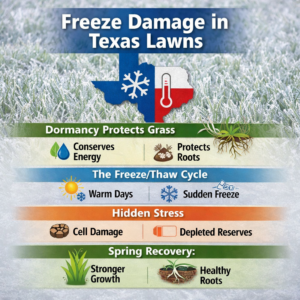
Texas winters rarely stay consistently cold. Instead, warm afternoons in the 60s can be followed by overnight freezes in the 20s. These rapid shifts confuse warm-season grasses and disrupt their natural dormancy cycle. According to Texas A&M AgriLife Extension, repeated freeze and thaw cycles increase the risk of winter injury in warm-season turfgrasses across Texas.
When grass briefly warms up, it begins low-level metabolic activity as part of its seasonal growth cycle. Then, when temperatures drop suddenly, plant cells and roots experience stress from rapid freezing. Over time, repeated freeze/thaw cycles increase the risk of winter injury, dehydration, and root damage.
Freeze Damage in Texas and How Dormancy Works
Dormancy is a protective survival state. During true dormancy, grass slows respiration, conserves carbohydrates, and redirects energy to protect crown tissue and roots, which plays a critical role in long-term grass root growth.
Warm-season grasses common in Texas—such as Bermuda, St. Augustine, and Zoysia—depend on uninterrupted dormancy to survive winter safely. When dormancy remains stable, grass preserves stored energy needed for spring green-up and root repair.
How Freeze Damage in Texas Occurs When Dormancy Breaks
Each time temperatures rise, grass partially “wakes up.” Respiration increases, moisture moves within plant cells, and stored carbohydrates are consumed. When freezing temperatures return, the grass has less protection and fewer reserves.
This repeated cycle causes:
-
Cellular damage from rapid freezing
-
Increased moisture loss during winter dry spells
-
Reduced carbohydrate storage
-
Weakened roots and crowns
By late winter, lawns may look dormant on the surface but are already stressed underground.
Preventing Freeze Damage in Texas Through Dormancy Stability
Spring growth depends entirely on energy stored during winter. Grass that repeatedly breaks dormancy enters spring with depleted reserves. As a result, green-up is slower, roots remain shallow, and turf struggles to recover from early-season stress.
In contrast, grass that stays dormant longer:
-
Conserves energy through winter
-
Protects crown tissue from freeze injury
-
Develops stronger spring root growth
-
Recovers faster as temperatures stabilize
Texas Turf Types Most Affected by Freeze Damage
Warm-season grasses dominate Texas lawns, and each responds differently to winter stress.
Bermuda grass is resilient but vulnerable to repeated freeze/thaw cycles that damage stolons and crowns.
St. Augustine grass is highly sensitive to dehydration and freeze injury, especially during extended dry winters.
Zoysia grass tolerates cold better but still suffers when dormancy repeatedly breaks.
Because these grasses are not adapted to erratic winter swings, they require extra protection during January and February.
Managing Freeze Damage in Texas with Winter Growth Regulation
Stabilizing dormancy reduces the metabolic ups and downs that lead to freeze damage in Texas lawns. By keeping grass in a consistent resting state, turf avoids unnecessary energy loss and cellular stress.
This science-based approach focuses on prevention, not repair. Lawns protected during winter enter spring healthier, stronger, and better prepared for active growth.
What Homeowners Can Do to Reduce Freeze Damage in Texas
Homeowners can reduce winter stress by:
-
Lightly watering during extended warm, dry periods
-
Avoiding foot traffic on frozen or brittle turf
-
Skipping unnecessary winter fertilization
-
Monitoring lawns during temperature swings
These steps help support dormancy and reduce stress before spring arrives. In addition, applying nutrients at the wrong time can unintentionally trigger growth during warm spells, making grass more vulnerable when temperatures drop again. This is why following proper seasonal fertilizer timing is critical, especially during Texas winters when dormancy stability matters most.
Preventing Freeze Damage in Texas Before It Appears
Freeze damage often becomes visible weeks or months after winter ends. By understanding how dormancy works and why repeated temperature swings harm turf, homeowners can take proactive steps to protect their lawns with the help of a professional lawn care service.
Freeze damage in Texas is not caused by cold alone—it is caused by instability. Preserving dormancy allows grass to conserve energy, protect roots, and emerge stronger when spring truly begins.
Hear What Our Happy Customers Have to Say!
For a Limited Time
Get Started Today and Enjoy Our Special Offer: Free Grub Control, Free Aeration, Free Fungicide, and Free Turf-Damaging Insect Control! Plus, Save 10% When You Prepay!
Your Local Lawn Care Experts
Dallas-Fort Worth
Address
3333 Earhart Dr., Suite 200
Carrollton, TX 75006
Phone Number
1-800-465-2934
Ready to elevate your lawn care game?
Get a free quote today.