
Grub Damage Timing: When Lawn Damage Is Most Severe
Grub damage timing explains when white grubs cause the most harm below the soil surface, a core principle in grub control science. While grubs remain hidden, their feeding activity changes throughout development. As a result, lawn damage does not occur evenly all season. Instead, it peaks during specific biological windows.
Understanding this timing helps explain why some lawns collapse suddenly and why early prevention is far more effective than reacting after damage appears, a concept supported by broader lawn care science focused on root protection and biological timing.
What Grub Damage Timing Really Means
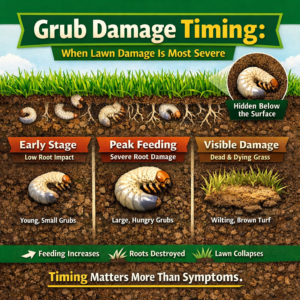
Grub damage timing refers to periods when feeding intensity increases and roots suffer the greatest stress. Grubs do not damage lawns equally at all times. Early stages cause limited disruption, while later stages create rapid and widespread root loss, a pattern well documented in university research on white grub feeding behavior and seasonal damage.
Because damage happens underground, turf often looks healthy until root systems weaken beyond recovery. By the time symptoms show above ground, the most damaging phase has often already passed.
Grub Damage Timing During Early Development
During early development, newly hatched grubs feed lightly on fine roots. At this stage, grass can usually tolerate limited feeding without visible stress.
Although damage is minimal, this phase is critical. Interrupting grub development early prevents grubs from reaching the stage where damage accelerates. This relationship is explained further in grub development stages, which outlines how feeding behavior changes as larvae mature.
Grub Damage Timing Peaks as Grubs Grow Larger
Grub damage becomes most severe as larvae grow and feeding demand increases. Larger grubs consume more root tissue each day. Consequently, root systems lose their ability to anchor turf and absorb water.
This is when lawns begin to fail structurally. Research on how grubs damage grass roots shows that advanced feeding disrupts nutrient uptake, reduces drought tolerance, and weakens turf stability.
At this point, damage progresses faster than lawns can recover on their own.
Seasonal Patterns That Influence Grub Damage Timing
Seasonal conditions strongly influence grub damage. Warm soil temperatures and adequate moisture accelerate grub growth and feeding activity.
During these conditions, root loss compounds quickly. Lawns may appear thin, wilted, or spongy underfoot. Because roots are already compromised, stress from heat or drought intensifies visible damage.
This seasonal overlap explains why lawn decline often seems sudden, even though feeding began weeks earlier.
Why Visible Lawn Damage Appears Late
One of the most misunderstood aspects of grub damage timing is when symptoms appear. Above-ground damage lags behind underground feeding.
Grass can mask root loss temporarily. However, once roots drop below a critical threshold, turf collapses rapidly. At that stage, curative treatments may stop feeding but cannot restore lost roots quickly.
This delay is why timing matters more than appearance in effective grub control.
How Grub Damage Timing Supports Preventative Control
Grub damage timing directly supports the science behind preventative grub control. Preventative treatments target grubs before they reach peak feeding stages.
By stopping larvae early, grass roots remain intact. Preserved root systems maintain water absorption, nutrient flow, and turf stability throughout the season.
This proactive approach protects lawns before stress compounds, rather than attempting recovery after damage is already severe.
Protecting Lawns Before Peak Damage Occurs
Unchecked feeding during peak grub damage timing can permanently weaken lawns. However, professional grub control interrupts the feeding cycle before root systems collapse.
When roots remain healthy, turf recovers faster, tolerates stress better, and maintains consistent growth. This science-based approach aligns with proven lawn care resources that emphasize root preservation as the foundation of long-term turf health.
For long-term results, grub control decisions must follow biological timing, not surface symptoms alone.
Hear What Our Happy Customers Have to Say!
For a Limited Time
Get Started Today and Enjoy Our Special Offer: Free Grub Control, Free Aeration, Free Fungicide, and Free Turf-Damaging Insect Control! Plus, Save 10% When You Prepay!
Your Local Lawn Care Experts
Dallas-Fort Worth
Address
3333 Earhart Dr., Suite 200
Carrollton, TX 75006
Phone Number
1-800-465-2934
Ready to elevate your lawn care game?
Get a free quote today.