
Grub Development Stages Explained
Grub development stages explain why grub control science focuses on timing rather than surface damage alone. Grubs are the immature, underground form of beetles, and the stages that impact turf health occur entirely below the soil surface, where roots grow and nutrients are absorbed.
During certain stages, grubs actively feed on grassroots. This feeding disrupts the plant’s ability to take in water and nutrients, which helps explain why lawns can decline rapidly even when conditions above ground look normal. In contrast, other stages involve little or no feeding and cause no direct lawn damage.
From a broader lawn care science perspective, this difference is critical. Effective lawn care depends on understanding what is happening beneath the soil before symptoms appear on the surface. Without that knowledge, treatments may be mistimed and far less effective.
Because grub activity is hidden, early infestations often go unnoticed by homeowners. Lawn care science fills that gap by explaining how underground insect development impacts root health long before visible turf damage occurs.
Grub Development Stages Explained
Grubs are the immature, underground form of beetles commonly found in residential lawns, as documented by university extension research on white grubs. While adult beetles live above ground, the damaging stage happens entirely below the soil surface.
During certain periods of development, grubs feed on grassroots. As a result, lawns can weaken quickly when populations grow unchecked. However, not every stage poses the same level of risk to turf health.
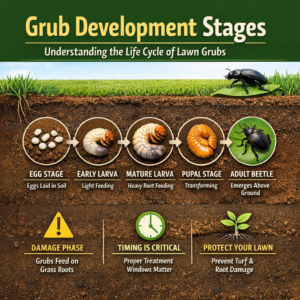
Overview of Grub Development Stages
Grub development follows a predictable biological pattern. Each phase influences when lawns are most vulnerable and when treatments are most effective.
The development process includes:
-
Egg stage
-
Early larval stage
-
Mature larval stage
-
Pupal stage
-
Adult beetle stage
Understanding how these stages progress explains why professional grub control focuses on timing rather than surface symptoms alone.
Grub Development Stages: Egg Stage
The process begins when adult beetles lay eggs beneath the soil surface, usually in early to mid-summer.
At this point, no visible lawn damage occurs. Turf often looks healthy and unaffected. However, this stage quietly sets the foundation for future problems if eggs survive and hatch.
Grub Development Stages: Early Larval Feeding
Once eggs hatch, young grubs begin feeding close to the soil surface. During this early phase, damage is usually minimal and easy to miss.
Grass often appears healthy, which is why infestations commonly go unnoticed. From a lawn care science standpoint, this stage represents a key opportunity for prevention.
Grub Development Stages: Mature Larval Damage
As grubs grow larger, feeding intensifies. This is when lawn damage becomes most noticeable.
Roots are eaten aggressively, causing thinning grass, yellow patches, and areas that lift easily from the soil. Wildlife activity often increases as animals search for grubs near the surface.
This phase causes the most severe turf injury.
Grub Development Stages: Pupal Transition
After completing their feeding phase, grubs enter the pupal stage. During this transition, feeding stops completely.
Although no new damage occurs, lawns do not immediately recover. Root systems weakened earlier may continue to struggle without proper lawn care support.
Adult Beetles and the Grub Development Cycle
Following pupation, adult beetles emerge and return above ground. While adult beetles rarely damage turf, they restart the cycle by laying eggs.
Because of this, lawns without consistent management often experience recurring grub problems from year to year.
Why Grub Development Stages Matter for Grub Control
Grub control is not equally effective at every point in development. Treatments work best when they align with insect biology.
Preventative approaches target early stages before feeding begins. Curative treatments focus on periods of active root feeding when grubs are present and vulnerable.
This is why science-based lawn care prioritizes timing over visual damage.
Grub Development Stages and Lawn Care Science
Lawn care science relies on soil temperatures, seasonal patterns, and insect behavior to guide treatment decisions.
Rather than reacting to visible lawn injury, professional programs aim to interrupt the most damaging phases before turf loss occurs. This approach protects roots and reduces long-term lawn stress.
Grub Development Stages and Long-Term Lawn Health
Repeated grub activity weakens root systems over time. As roots decline, lawns become more susceptible to drought, heat stress, and weed pressure.
Understanding how grubs develop explains why well-timed control plays such an important role in maintaining healthy turf.
Professional Grub Control Based on Grub Development Stages
At Dr. Green Services, grub control decisions are guided by lawn care science, not calendar dates or surface symptoms alone. By aligning treatments with biological timing, our certified technicians help prevent damage before it starts and support stronger, more resilient lawns season after season.
To learn more about professional grub control services or explore additional lawn care resources, Dr. Green Services offers science-driven guidance designed to protect your lawn long term.
Hear What Our Happy Customers Have to Say!
For a Limited Time
Get Started Today and Enjoy Our Special Offer: Free Grub Control, Free Aeration, Free Fungicide, and Free Turf-Damaging Insect Control! Plus, Save 10% When You Prepay!
Your Local Lawn Care Experts
Dallas-Fort Worth
Address
3333 Earhart Dr., Suite 200
Carrollton, TX 75006
Phone Number
1-800-465-2934
Ready to elevate your lawn care game?
Get a free quote today.