
How Grub Root Damage Weakens Lawns From the Ground Up
Grub root damage develops below the soil surface, often long before visible lawn problems appear. While grass blades may stay green at first, feeding larvae disrupt the root system that supports every part of the plant, a process explained in grub control science. Over time, this underground activity weakens turf structure, reduces stress tolerance, and sets the stage for rapid decline.
Understanding what happens beneath the soil explains why early, science-based intervention plays such a critical role in long-term lawn health and is a core principle of lawn care science.
What Causes Grub Root Damage in Lawns
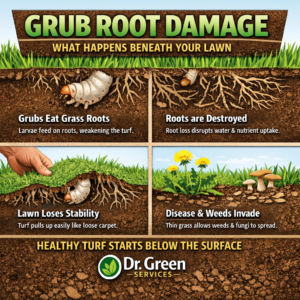
The damage begins when beetle larvae hatch and migrate into the root zone. At this stage, grubs depend on grassroots as their primary food source, a feeding pattern well documented in university research on white grub feeding behavior. Because roots anchor plants and supply water and nutrients, feeding pressure directly compromises turf stability.
As larvae mature, their size and consumption rate increase. Consequently, feeding intensifies during mid to late development stages, especially in soils with adequate moisture and organic material. This shift in feeding intensity directly follows the grub development stages, which explains how larvae progress through stages that increase root consumption over time.
How Grub Root Damage Disrupts Root Function
Root systems perform several vital tasks at once. They absorb water, move nutrients upward, store energy, and secure turf to the soil. When feeding insects sever or chew through these structures, those functions slow or stop entirely. Healthy lawns depend on continuous root development, a process explained in grass root growth science, which shows how roots expand, branch, and recover when soil conditions support growth.
Even partial root loss reduces overall efficiency. Shallow, damaged roots dry out faster, struggle during heat stress, and recover poorly after mowing or foot traffic.
Why Grub Root Damage Weakens the Entire Lawn
Below-ground feeding rarely stays confined to a single spot. Larvae move through the soil in search of new food sources, which creates expanding zones of weakened turf. Over time, these areas connect and form larger patches of instability.
Because roots are responsible for anchoring grass plants, affected turf loses its grip on the soil. This is why compromised sections often lift easily, even when grass blades still appear intact.
Grub Root Damage and Water Stress
Root injury dramatically alters how lawns manage moisture. With fewer functional roots, grass cannot absorb water efficiently, even when rainfall or irrigation is sufficient. As a result, turf may wilt or discolor despite regular watering.
In addition, damaged roots store less moisture. This causes faster dehydration during warm weather and uneven recovery after dry periods.
How Grub Root Damage Increases Disease and Weed Pressure
Healthy turf relies on dense root systems to outcompete weeds and resist disease. When underground feeding reduces root mass, grass thins and sunlight reaches the soil surface more easily. This creates ideal conditions for weed germination.
At the same time, stressed plants become more vulnerable to fungal pathogens. Reduced root support limits the plant’s ability to defend itself, especially during periods of heat and humidity.
Why Grub Root Damage Often Goes Unnoticed
Early stages of underground feeding produce few surface clues. Grass blades can remain green for weeks while roots steadily disappear. Because visible symptoms lag behind root loss, homeowners often miss the optimal treatment window.
By the time thinning, yellowing, or dead patches appear, extensive below-ground injury has already occurred. At that point, recovery takes longer and requires more intensive lawn care.
Preventing Grub Root Damage With Lawn Care Science
Effective prevention focuses on biology, not surface appearance. This approach aligns with preventative lawn care, which focuses on stopping problems before visible damage occurs rather than reacting after turf health declines.
Treatments must align with vulnerable stages of larval development and favorable soil conditions. When timing matches insect behavior, control measures protect roots before significant feeding begins.
At Dr. Green Services, certified technicians follow lawn care science rather than guesswork. By monitoring seasonal development patterns, they help safeguard root systems and maintain turf stability.
Why Professional Grub Control Protects Roots Long-Term
Unchecked underground feeding can permanently weaken lawns. However, professional grub control service interrupts the feeding cycle before root systems collapse. Preserved roots allow turf to recover faster, tolerate stress better, and maintain consistent seasonal growth.
This proactive approach supports stronger lawns year after year instead of reacting after visible damage appears and reflects the principles found throughout our lawn care resources.
Hear What Our Happy Customers Have to Say!
For a Limited Time
Get Started Today and Enjoy Our Special Offer: Free Grub Control, Free Aeration, Free Fungicide, and Free Turf-Damaging Insect Control! Plus, Save 10% When You Prepay!
Your Local Lawn Care Experts
Dallas-Fort Worth
Address
3333 Earhart Dr., Suite 200
Carrollton, TX 75006
Phone Number
1-800-465-2934
Ready to elevate your lawn care game?
Get a free quote today.