
Grub Control Science: How Lawn Grubs Damage Roots and How to Stop Them
Grub control science explains why lawn grubs cause so much damage and why timing matters more than most homeowners realize. Grubs feed below the surface, attacking grass roots that support water uptake, nutrient absorption, and overall turf strength. When roots fail, the entire lawn struggles.
Because grub activity follows a predictable life cycle, effective control depends on applying the right treatment at the right time. Preventative grub control stops damage before it starts, while poorly timed treatments often come too late. Dr. Green Services uses science-based timing and professional applications to protect roots early and keep lawns healthier all season.
What Are Lawn Grubs and Why Are They So Destructive?
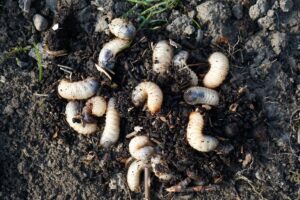
Lawn grubs are the larval stage of several common beetles, including Japanese beetles, June beetles, and masked chafers. While adult beetles are mostly a nuisance, their larvae cause serious damage underground. Because grubs live below the surface, problems often go unnoticed at first.
Grubs feed directly on grass roots. As a result, turf quickly loses its ability to absorb water and nutrients. Even well-watered lawns can suddenly turn yellow, thin out, or die back completely. Over time, this damage becomes harder to reverse.
Common signs of grub damage include:
-
Wilting grass despite regular watering
-
Thinning or patchy turf
-
Spongy soil that lifts easily
-
Increased activity from birds, skunks, or raccoons
Once roots are damaged, recovery becomes slow and unreliable.
The Grub Life Cycle and Why Timing Matters
Grub control science depends on understanding how grubs develop throughout the year. Because each stage behaves differently, timing plays a critical role in success. According to university research on white grubs, treatments are most effective when applied during early larval stages, before root feeding causes visible turf damage.
Egg Stage: Early to Mid-Summer
During early summer, adult beetles lay eggs in warm, moist soil. These eggs hatch quickly. Therefore, this stage offers a narrow but important treatment window. When addressed early, control measures can stop damage before it begins.
Larval Stage: Mid-Summer Through Fall
After hatching, young grubs begin feeding aggressively. At this point, root damage accelerates. However, grubs are still vulnerable during this stage. For that reason, preventative grub control works best here.
Overwintering Stage: Late Fall Through Spring
As temperatures drop, grubs move deeper into the soil. Meanwhile, feeding slows and treatment options become limited. As a result, damage that occurred earlier often becomes visible the following spring.
Because of this life cycle, early prevention consistently produces better results than late reactions. In addition, understanding seasonal lawn growth cycles helps explain why root damage becomes more visible at certain times of year, even when feeding occurred weeks earlier.
Preventative Grub Control vs. Curative Treatments
Not all grub treatments work the same way. Instead, success depends on when and why a product is applied.
Preventative Grub Control
Preventative treatments target young grubs before they damage roots. Specifically, these products disrupt development and stop larvae from feeding.
As a result, benefits include:
-
Season-long protection
-
Reduced turf stress
-
Fewer visible symptoms
-
Stronger root systems
In contrast to reactive methods, prevention protects lawns before problems appear. For homeowners who want consistent protection, professional grub control ensures treatments are timed correctly and applied evenly across the lawn.
Curative Grub Control
Curative treatments target mature grubs after damage is visible. While effective, these applications must be timed precisely. Otherwise, results can be inconsistent. In addition, stressed turf may recover more slowly.
For this reason, Dr. Green Services prioritizes prevention whenever possible. This preventive approach follows proven turf-damaging insect science, which shows that stopping insects early protects roots before irreversible lawn damage occurs.
How Grubs Disrupt the Entire Lawn System
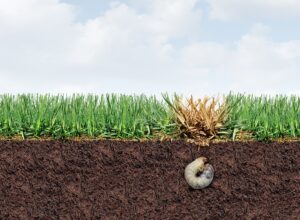
Grub damage affects more than just roots. In fact, it disrupts the entire lawn ecosystem.
When roots are compromised:
-
Water absorption decreases
-
Fertilizer becomes less effective
-
Soil structure weakens
-
Lawn fungus pressure increases
Consequently, weakened turf becomes more vulnerable to weeds and disease. Over time, multiple problems begin stacking together. This is why grub control plays such an important role in overall lawn care science, where root health supports every part of turf performance.
Why Professional Grub Control Is More Effective
Many DIY grub products fail because they are applied too late. In addition, uneven coverage often limits results. Without understanding soil temperature and beetle activity, even the right product can underperform.
Professional grub control, however, provides:
-
Treatments timed to local beetle pressure
-
Correct application rates
-
Even lawn coverage
-
Reduced impact on beneficial organisms
Because Dr. Green Services monitors regional conditions, treatments are applied when they work best.
How Grub Control Supports Healthier Roots and Soil
Strong roots help lawns withstand heat, drought, and stress. By stopping grubs early, grass can focus on growth instead of survival. When roots remain intact, fertilizer science becomes more effective because nutrients can be absorbed instead of lost in damaged soil.
As a result:
-
Roots grow deeper
-
Turf recovers faster
-
Water use becomes more efficient
-
Soil health improves
When combined with aeration and premium fertilizer, these benefits become even stronger.
How Grub Control Fits Into a Complete Lawn Care Strategy
Grub control does not work in isolation. Instead, it strengthens every other lawn care service. In addition, pairing grub control with aeration science improves soil airflow and strengthens root recovery throughout the season.
For example, it supports:
-
Fertilization programs that build roots
-
Aeration that improves airflow
-
Fungus prevention for stressed turf
-
Weed control supported by thicker grass
Ultimately, this creates a lawn that resists damage rather than reacting to it.
Why Dr. Green Services Uses a Science-First Approach to Grub Control
Dr. Green Services bases grub control on insect biology, turf response, and regional timing. Because treatments are applied proactively, lawns stay protected before damage appears. At the same time, reducing soil-dwelling pests supports broader prevention strategies outlined in exterior pest control science, which focuses on limiting pest pressure around the home.
Similarly, the principles behind fire ant control science show why targeting underground activity early helps prevent surface problems from developing later. Together, these science-based approaches reduce pest populations before they cause widespread damage.
Hear What Our Happy Customers Have to Say!
For a Limited Time
Get Started Today and Enjoy Our Special Offer: Free Grub Control, Free Aeration, Free Fungicide, and Free Turf-Damaging Insect Control! Plus, Save 10% When You Prepay!
Your Local Lawn Care Experts
Dallas-Fort Worth
Address
3333 Earhart Dr., Suite 200
Carrollton, TX 75006
Phone Number
1-800-465-2934
Ready to elevate your lawn care game?
Get a free quote today.