
Pre-Emergent vs. Post-Emergent Weed Control
Weeds do not appear randomly. They follow predictable biological patterns tied to soil temperature, moisture, and seasonal growth cycles. Understanding pre emergent vs post emergent weed control explains why weed control works best when it targets weeds at the correct stage of development, a principle rooted in weed control science rather than reactionary treatment.
Understanding pre emergent vs post emergent weed control also shows why some treatments prevent weeds entirely, while others address visible growth after it appears. When these strategies are paired with consistent lawn care science, turf becomes stronger, more competitive, and naturally resistant to future weed pressure.
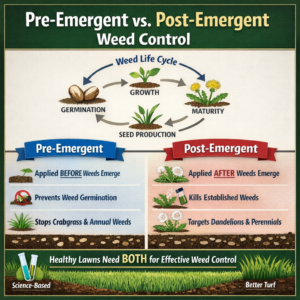
Pre-Emergent vs. Post-Emergent Weed Control and Weed Growth Stages
Every weed follows a life cycle. While timing varies by species, the sequence remains consistent.
Weed seeds rest in the soil until environmental conditions trigger germination. After germination, shoots emerge above the surface. Mature weeds then produce seeds, restarting the cycle.
Because each stage responds differently to treatment, effective weed control must align with weed biology rather than reacting to visible weeds alone, a process well documented in turfgrass weed control research from Purdue University.
How Pre-Emergent Weed Control Works
Pre-emergent weed control targets weeds before they break through the soil surface. These treatments form a protective barrier in the upper layer of soil.
When weed seeds begin to germinate, that barrier disrupts early root and shoot development. As a result, weeds fail to establish and never become visible, which is especially important for fast-germinating annual weeds like crabgrass that follow a predictable crabgrass growth cycle.
Pre-emergent applications do not affect existing weeds. Instead, they focus entirely on prevention by interrupting the earliest stage of the weed life cycle.
This method is especially effective against annual weeds that rely solely on seed germination to spread.
Pre-Emergent vs. Post-Emergent Weed Control Explained for Existing Weeds
Post-emergent weed control addresses weeds that have already emerged and begun active growth.
These treatments enter the plant through leaves or stems and disrupt essential functions such as photosynthesis, nutrient movement, or cell division. Once absorbed, growth slows and the weed declines.
Post-emergent control is necessary for managing visible weeds, particularly perennial species with established root systems such as dandelions, which require targeted dandelion weed control after emergence. However, it does not prevent new weeds from germinating later in the season.
Pre-Emergent vs. Post-Emergent Weed Control: Key Differences
Although both strategies are important, they serve very different roles.
Pre-emergent weed control focuses on prevention. It stops weeds before they compete with turf for water, nutrients, and sunlight by interrupting the earliest stages of how weeds germinate and spread.
Post-emergent weed control focuses on correction. It removes weeds that have already gained a foothold.
Because of this difference, relying only on post-emergent treatments often leads to recurring weed pressure. Prevention reduces problems before turf damage begins.
Why Timing Matters in Pre-Emergent vs. Post-Emergent Weed Control
Weed germination begins when soil temperatures reach specific thresholds. While those thresholds vary by species, they remain consistent each year and align closely with seasonal lawn growth cycles.
Pre-emergent applications must be made before germination occurs. Once weeds emerge, prevention for that growth cycle is no longer possible.
Post-emergent treatments perform best when weeds are young and actively growing. Mature weeds are harder to control and may require repeated intervention.
For this reason, effective weed control depends more on biological timing than calendar dates.
Pre-Emergent vs. Post-Emergent Weed Control and Lawn Health
Healthy turf naturally suppresses weeds. Dense grass shades the soil surface, limiting light exposure needed for weed seeds to germinate.
Strong root systems also absorb water and nutrients more efficiently, a process driven by consistent grass root growth. When turf uses available resources effectively, fewer remain for weeds.
When weed control strategies support turf health instead of stressing it, weed pressure declines over time through preventative lawn care rather than reactive treatment.
This relationship explains why weed control science and lawn care science must work together.
Why Pre-Emergent Weed Control Delivers Longer-Lasting Results
Post-emergent treatments address immediate problems, but they do not change the conditions that allowed weeds to grow.
Pre-emergent weed control reduces weed pressure earlier in the season. With fewer weeds emerging, turf faces less competition and recovers more easily.
Over time, lawns managed with prevention require fewer corrective treatments and maintain more consistent density.
This is why prevention forms the foundation of long-term weed control strategies.
Science-Based Pre-Emergent vs. Post-Emergent Weed Control at Dr. Green Services
At Dr. Green Services, weed control decisions follow weed biology, seasonal timing, and turf response rather than guesswork, forming the foundation of our professional weed control service.
By combining pre-emergent prevention with targeted post-emergent treatments, certified technicians address both current weeds and future pressure using proven lawn care resources rooted in science.
This science-driven approach supports healthier lawns, fewer outbreaks, and more predictable results season after season.
Hear What Our Happy Customers Have to Say!
For a Limited Time
Get Started Today and Enjoy Our Special Offer: Free Grub Control, Free Aeration, Free Fungicide, and Free Turf-Damaging Insect Control! Plus, Save 10% When You Prepay!
Your Local Lawn Care Experts
Dallas-Fort Worth
Address
3333 Earhart Dr., Suite 200
Carrollton, TX 75006
Phone Number
1-800-465-2934
Ready to elevate your lawn care game?
Get a free quote today.