
Fleas and Pets: How Outdoor Environments Drive Exposure and Infestations
Fleas are not just a pet problem. They are an environmental pest whose activity begins outdoors and often goes unnoticed until pets bring them closer to home. Understanding how fleas interact with yards, wildlife, and pets is essential for reducing exposure and preventing infestations before they escalate—especially when viewed through the lens of exterior pest control science, which focuses on how outdoor conditions influence pest activity.
This page explains the science behind fleas and pets, focusing on outdoor flea biology, environmental conditions, and how exterior pest control disrupts the flea life cycle at its source. These principles closely align with mosquito control science, which also emphasizes habitat management, moisture control, and life cycle disruption to reduce pest pressure before it reaches people or pets.
Fleas and Pets: Why Outdoor Exposure Comes First
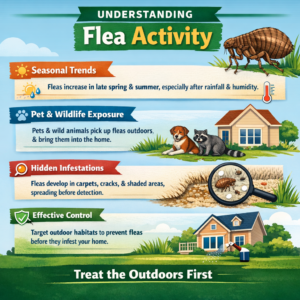
Most flea problems begin outside. Fleas naturally live in shaded, protected areas where moisture and organic material support development. As pets walk, rest, and play in these spaces, fleas sense movement and body heat and quickly attach. According to the CDC’s overview of the flea life cycle, fleas spend most of their development stages off the host, relying heavily on outdoor environments for survival.
Rather than seeking pets specifically, fleas respond to opportunity. As a result, pets become exposed simply by using their yard. Over time, repeated outdoor exposure increases the chance that fleas travel indoors, even when pets receive regular care.
Because fleas spend most of their life off the host, outdoor exposure plays a larger role than many people realize.
Understanding the Outdoor Flea Life Cycle and Pet Risk
Fleas follow a multi-stage life cycle that depends heavily on environmental stability. Although adult fleas live on pets, most of the population develops in the surrounding environment.
Eggs fall off pets into grass and soil. Larvae then feed on organic debris while remaining hidden from sunlight. Next, pupae form protective cocoons and wait for signals that indicate a host is nearby. When pets move through these areas, adult fleas emerge and attach.
Since development occurs outside, pets face repeated exposure unless exterior conditions change.
Fleas and Pets: Yard Conditions That Increase Exposure
Certain yard environments allow flea populations to remain active longer and reproduce more efficiently. When these conditions persist, flea pressure remains constant throughout the season.
Common outdoor factors that increase flea exposure include:
-
Dense shade and thick ground cover
-
Excess moisture from irrigation or poor drainage
-
Mulch beds near foundations
-
Tall grass and unmanaged lawn edges
-
Regular wildlife activity near the yard
Together, these conditions create stable habitats where fleas survive regardless of indoor treatments.
How Pets Transport Fleas Indoors Without Immediate Symptoms
Pets often carry fleas indoors before owners notice scratching or irritation. Early exposure usually involves only a small number of adult fleas, which makes detection difficult. This same passive movement pattern also applies to outdoor crawling insects, which frequently enter homes when environmental conditions remain favorable near foundations.
Once inside, fleas continue their life cycle by laying eggs that fall into carpets, upholstery, and floor cracks. Over time, new adults emerge in waves, which creates the impression that the problem appeared suddenly.
In reality, the infestation has been developing gradually across both outdoor and indoor environments, much like mosquito exposure that contributes to mosquito disease spread long before people recognize the risk.
Fleas and Pets: Why Indoor-Only Control Fails
Indoor treatments address visible activity but fail to stop ongoing exposure. Even when homeowners clean thoroughly and treat pets, fleas continue to enter from outside—a pattern also seen with ticks and disease driven by outdoor environments.
As long as flea populations remain active in the yard, pets will encounter new fleas during normal outdoor activity. Consequently, infestations return and appear resistant to treatment.
Science-based flea control focuses on eliminating the environmental source rather than reacting to indoor symptoms.
Exterior Pest Control and Flea Population Reduction
Exterior pest control interrupts flea development where it matters most. By reducing flea survival in lawns, soil edges, and shaded zones, overall population pressure declines.
This approach emphasizes habitat management, seasonal timing, and targeted treatment rather than blanket indoor solutions. As outdoor flea activity decreases, pets experience fewer encounters, which lowers the risk of indoor spread.
Over time, consistent exterior control creates a measurable reduction in flea pressure.
Fleas and Pets: Seasonal Patterns and Environmental Timing
Flea activity follows predictable seasonal trends. As temperatures rise, development accelerates. When moisture remains consistent, larvae survive at higher rates. These patterns reflect broader seasonal pest activity, where environmental timing determines when pest pressure increases or declines.
Because of this, flea pressure often increases in late spring and summer, especially after rainfall or irrigation. When exterior control aligns with these patterns, prevention becomes far more effective.
Proactive timing disrupts the flea life cycle before populations expand.
Why Flea Prevention Starts Outside
Fleas thrive because of environmental conditions, not because of pets themselves. Pets simply encounter fleas where they already exist, often in areas influenced by moisture, shade, and turf health—factors commonly addressed through proper lawn care resources and outdoor property management.
By addressing outdoor habitats, moisture patterns, and seasonal activity, flea exposure drops significantly. This science-driven approach aligns closely with professional exterior pest control service strategies that focus on reducing pest pressure before fleas reach pets or indoor spaces.
When flea control begins outside, results become more consistent, predictable, and sustainable.
Hear What Our Happy Customers Have to Say!
For a Limited Time
Get Started Today and Enjoy Our Special Offer: Free Grub Control, Free Aeration, Free Fungicide, and Free Turf-Damaging Insect Control! Plus, Save 10% When You Prepay!
Your Local Lawn Care Experts
Dallas-Fort Worth
Address
3333 Earhart Dr., Suite 200
Carrollton, TX 75006
Phone Number
1-800-465-2934
Ready to elevate your lawn care game?
Get a free quote today.