
Insect Root Damage: How Turf-Damaging Insects Weaken Lawns
Insect root damage causes far more harm below the surface than most homeowners realize. While thinning, yellowing, or patchy grass appears above ground, the underlying issue often begins underground. Damage to grass roots interferes with water and nutrient uptake, leaving turf unable to tolerate environmental stress.
Understanding how insects affect roots explains why lawns decline quickly and why surface-level fixes often fail to deliver lasting improvement. This below-ground perspective is a core principle of lawn care science and a foundational concept within turf-damaging insect science, where long-term turf health depends on protecting root systems before visible symptoms appear.
What Insect Root Damage Means for Turf Health
Insect root damage occurs when soil-dwelling insects feed on grass roots or disrupt root tissue as they move through the soil. Roots anchor the plant, store energy, and transport water and nutrients. When this system is compromised, turf loses its ability to function efficiently, a pattern well documented in university turfgrass insect research.
Even limited injury below the surface reduces water absorption and nutrient availability. As a result, grass struggles to maintain growth, respond to fertilization, or recover from heat and drought stress.
How Turf-Damaging Insects Injure Grass Roots
Turf-damaging insects attack lawns during predictable growth periods that align with their life cycles. Some species feed directly on roots, while others disturb the soil environment that roots depend on.
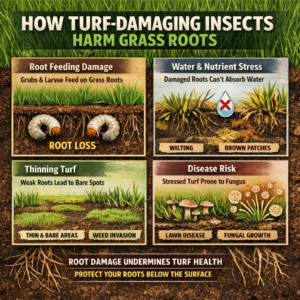
Root injury may occur through feeding on fine roots, severing larger structural roots, or disrupting the crown where roots and shoots connect. Each form of below-ground damage weakens turf from the ground up and reduces overall stability.
Root Damage and Water Stress in Lawns
When insects disrupt root systems, lawns lose their ability to manage moisture efficiently. Even when soil contains sufficient water, damaged roots cannot absorb or transport it properly.
As temperatures rise, affected turf wilts faster and recovers more slowly after rainfall or irrigation. Over time, repeated moisture stress accelerates decline and increases the risk of permanent turf loss.
Why Insect Root Damage Leads to Thin and Patchy Turf
Healthy turf relies on dense root systems to support consistent top growth. When insect root damage occurs, individual grass plants weaken and lose their ability to fill space, a process that contributes directly to chinch bug lawn damage at the surface.
As plants decline, gaps form between blades and soil becomes exposed. These thin areas allow weeds, disease organisms, and additional insect activity to establish more easily. Over time, this progression mirrors patterns explained by the sod webworm life cycle, where early stress below the surface leads to visible damage later, compounding long-term turf decline.
How Root-Feeding Insects Increase Lawn Disease Risk
Root-feeding insects often set the stage for fungal disease. When roots weaken, turf loses natural defense mechanisms that help suppress disease organisms already present in the soil.
Disrupted root systems also alter moisture balance, creating conditions that favor fungal growth. This explains why lawns under insect pressure frequently develop recurring lawn fungus issues shortly afterward.
Why Symptoms of Insect Root Damage Appear Late
One of the most challenging aspects of insect-related root injury is delayed visibility. Root damage often begins weeks before surface symptoms appear.
Early on, grass compensates by using stored energy, and above-ground growth may still look acceptable. By the time discoloration or thinning becomes visible, root systems may already be severely compromised.
The Role of Healthy Roots in Limiting Insect Damage
Strong, actively growing roots help turf tolerate minor insect activity. Healthy root systems recover faster, stabilize soil structure, and maintain consistent water and nutrient movement.
Science-based lawn care focuses on reducing stress and supporting steady root growth. When turf remains healthy below the surface, insect pressure causes less visible decline and slower progression.
Why Root Damage From Insects Requires Prevention
Because root damage develops silently, prevention is more effective than reaction. Once roots are compromised, turf recovery becomes slower and less predictable.
Preventative programs focus on monitoring insect activity, understanding life cycles, and strengthening turf before peak feeding periods. This proactive approach protects lawns from long-term decline rather than chasing symptoms.
Understanding Insect Root Damage Improves Lawn Care Decisions
Insect root damage explains why lawns weaken even when watering and fertilization appear adequate. When lawn care decisions account for what happens below the surface, results become more consistent and sustainable. This approach reflects the principles behind science-based lawn care resources, where long-term turf health depends on reducing biological stress rather than reacting to visible symptoms.
At Dr. Green Services, turf-damaging insect management begins with protecting roots. Our turf-damaging insect control service focuses on limiting below-ground damage before it disrupts water uptake and turf stability. By reducing stress and preserving root health, lawns develop stronger resistance and maintain healthier growth season after season.
Hear What Our Happy Customers Have to Say!
For a Limited Time
Get Started Today and Enjoy Our Special Offer: Free Grub Control, Free Aeration, Free Fungicide, and Free Turf-Damaging Insect Control! Plus, Save 10% When You Prepay!
Your Local Lawn Care Experts
Dallas-Fort Worth
Address
3333 Earhart Dr., Suite 200
Carrollton, TX 75006
Phone Number
1-800-465-2934
Ready to elevate your lawn care game?
Get a free quote today.