
Lawn Seeding Science: How Grass Seed Grows and Establishes
Lawn seeding science explains how grass seed germinates, develops roots, and spreads to create a thick, healthy lawn. At first glance, seeding may look simple. However, successful establishment depends on timing, soil conditions, moisture, and seed-to-soil contact. When even one factor is off, seed struggles to grow or fails entirely.
In Illinois and Indiana, cool-season grasses dominate residential lawns. Because these grasses follow predictable biological patterns, lawn seeding science helps explain when seeding works, why it sometimes fails, and how to improve results. Ultimately, understanding the science behind seed growth is the key to filling bare areas and strengthening turf long-term.
What Lawn Seeding Science Reveals About Grass Growth

Lawn seeding science focuses on how grass plants develop from a dormant seed into a mature turf plant. Inside each seed, there is a living embryo, stored energy, and genetic instructions that control growth. Once conditions are right, the seed activates and begins producing roots and shoots.
However, grass seed does not behave like mature turf. Instead, new seedlings are fragile, shallow-rooted, and highly sensitive to stress. As a result, early establishment becomes the most critical phase in the lawn’s life cycle.
Successful seeding depends on:
-
Soil temperature and oxygen availability
-
Consistent moisture levels
-
Proper sunlight exposure
-
Minimal competition from weeds
-
Protection from foot traffic and mowing
When these conditions align, grass seed establishes more quickly and more evenly.
How Grass Seed Germination Works
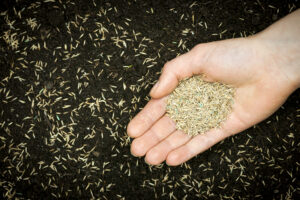
Lawn seeding science shows that germination begins when seed absorbs water through its outer coating. Lawn seeding science shows that germination begins when seed absorbs water through its outer coating. According to cool-season grass germination research from university extension programs, consistent moisture and proper soil contact are critical during the early stages of growth. This process, known as imbibition, activates enzymes inside the seed that convert stored energy into usable fuel.
Once activated, the seed follows a clear progression that depends on proper seed to soil contact. First, it produces a primary root. Next, the initial shoot emerges above the soil. Then, photosynthesis begins. Finally, secondary roots start forming.
Most cool-season grasses germinate within 7–21 days, depending on species and environmental conditions. During this stage, consistent moisture is critical. Even short dry periods, however, can interrupt development and kill emerging seedlings.
Root Development Is the Key to Successful Seeding
While homeowners often focus on visible green growth, lawn seeding science shows that root development matters far more than blade height during establishment. Strong roots, therefore, anchor the plant, absorb nutrients, and support long-term turf density.
Early root growth occurs just below the soil surface. However, if soil is compacted, dry, or poorly aerated, roots struggle to penetrate deeper layers. Consequently, seedlings remain weak and thin out quickly. Soil preparation and aeration play a major role in seeding success. Lawn aeration science explains how improving oxygen and water movement in the soil allows roots to grow deeper and establish faster.
Proper soil structure allows roots to:
-
Grow downward instead of sideways
-
Access water during dry periods
-
Absorb nutrients more efficiently
-
Support thicker, healthier turf
Because of this, soil preparation and aeration play a major role in seeding success.
Why Timing Matters in Lawn Seeding Science
Lawn seeding science confirms that timing is one of the most important factors for successful establishment. In Illinois and Indiana, cool-season grasses grow best when air temperatures are moderate and soil remains warm.
Seeding during the proper window allows:
-
Faster germination
-
Reduced weed competition
-
Stronger root growth
-
Lower stress on young plants
On the other hand, when seeding occurs outside ideal conditions, seedlings often fail before they can mature. That is why, professional timing consistently produces better results.
The Role of Soil Contact in Seed Establishment
Grass seed must touch soil to germinate properly. According to lawn seeding science, seed sitting on top of debris, thatch, or compacted ground often dries out before roots can establish.
Good seed-to-soil contact ensures:
-
Better moisture absorption
-
Faster root penetration
-
More uniform germination
-
Higher overall success rates
Because of this, overseeding works best when soil is loosened and prepared correctly beforehand.
Why Lawn Seeding Often Fails Without Proper Preparation
Many seeding failures occur because lawns look healthy on the surface. However, hidden soil problems often exist below. Lawn seeding science reveals that compacted soil, poor drainage, and low oxygen levels all limit seed success.
Common reasons seed fails include:
-
Hard, compacted soil
-
Inconsistent watering
-
Mowing too early
-
Heavy foot traffic
-
Competition from existing weeds
By addressing these issues ahead of time, homeowners dramatically improve establishment and long-term turf density.
How Lawn Seeding Science Explains Thick Turf Formation
Grass does not spread randomly. Instead, lawn seeding science explains that turf thickens through a combination of tillering and lateral growth. As seedlings mature, they produce additional shoots that gradually fill open space.
As a result, healthy turf density:
-
Crowds out weeds naturally
-
Improves drought tolerance
-
Enhances visual appearance
-
Reduces erosion and runoff
Therefore, proper seeding supports this process by introducing new plants that strengthen the lawn rather than compete against it. As a result, healthy turf density naturally limits weed growth. Weed control science explains how thicker grass crowds out weeds and reduces the need for corrective treatments.
Why Professional Seeding Produces Better Results
Lawn seeding science shows that success depends on precision. Specifically, seed selection, timing, soil conditions, and post-seeding care must all align. For this reason, professional lawn care programs account for these variables and adjust applications based on regional climate and turf type.
In Illinois and Indiana, local experience matters. Because soil composition, weather patterns, and grass varieties vary widely, applying science-based practices ensures seed establishes quickly. Over time, this approach continues strengthening the lawn.
Lawn Seeding Science and Long-Term Lawn Health
Seeding is not just about filling bare spots. In fact, lawn seeding science confirms that regular overseeding strengthens turf year after year. By continually introducing new grass plants, lawns stay dense, resilient, and better equipped to handle stress. Lawn fertilizer science explains how balanced nutrients fuel root growth and help young grass survive early stress.
When combined with proper aeration, fertilization, and watering, seeding supports:
-
Deeper root systems
-
Improved nutrient uptake
-
Greater resistance to disease
-
Stronger seasonal performance
Ultimately, understanding the science behind lawn seeding helps homeowners make smarter decisions. Lawn care science ties together seeding, aeration, fertilization, and seasonal management to keep turf healthy year after year.
Hear What Our Happy Customers Have to Say!
For a Limited Time
Get Started Today and Enjoy Our Special Offer: Free Grub Control, Free Aeration, Free Fungicide, and Free Turf-Damaging Insect Control! Plus, Save 10% When You Prepay!
Your Local Lawn Care Experts
Dallas-Fort Worth
Address
3333 Earhart Dr., Suite 200
Carrollton, TX 75006
Phone Number
1-800-465-2934
Ready to elevate your lawn care game?
Get a free quote today.