
Soil Compaction and Oxygen Science: How Compacted Soil Affects Lawn Health
Soil compaction and oxygen science explains why lawns struggle even when watering and fertilization seem correct. Although grass grows above the surface, long-term lawn health depends on what happens below ground. When soil becomes compacted, oxygen cannot move freely through the soil. As a result, roots weaken, growth slows, and turf gradually thins.
At Dr. Green Services, lawn care decisions follow lawn care science. Instead of treating surface symptoms alone, professional programs focus on improving soil conditions that support healthy root growth.
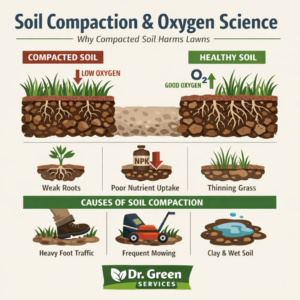
Soil Compaction and Oxygen Science and Lawn Root Health
Healthy soil contains small air pockets that allow oxygen to reach grass roots. However, when pressure collapses these spaces, soil becomes dense and restricts airflow. Over time, this change limits how well roots function below the surface.
Because grass roots rely on oxygen to produce energy, compacted soil interferes with respiration. As a result, roots struggle to grow deeper and absorb nutrients efficiently, which is explained further in grass root growth science. Even properly fertilized lawns can decline when airflow in the soil remains limited.
How Soil Compaction and Oxygen Science Explains Oxygen Loss in Soil
Oxygen moves through soil using tiny pores between soil particles. However, when soil becomes compacted, those pores collapse, and oxygen exchange slows. As oxygen levels drop, roots struggle to function properly, which limits growth and weakens turf over time. According to university extension research, compacted soil reduces pore space, directly restricting oxygen movement and root development.
In addition, beneficial soil microbes rely on oxygen to stay active. When airflow declines, microbial activity slows, which reduces nutrient availability for grass plants. As a result, soil biology weakens, nutrient cycling declines, and lawns become less resilient to stress.
Soil Compaction and Oxygen Science Behind Thinning Lawns
This science helps explain why lawns thin gradually rather than failing all at once. When roots lack oxygen, they remain shallow and inefficient. Shallow roots dry out faster and struggle during heat and foot traffic.
As a result, compacted lawns often show:
-
Thinning grass coverage
-
Poor response to fertilizer
-
Increased weed pressure
-
Slower recovery from stress
Although these symptoms appear above ground, the true problem begins below the surface. This is why lawn fertilizer science focuses on nutrient uptake efficiency, not just applying fertilizer to the soil.
Soil Compaction and Oxygen Science and Everyday Lawn Activity
Everyday lawn use contributes to soil compaction. Regular mowing patterns, foot traffic, pets, and rainfall slowly compress soil over time. Clay-heavy soils compact more easily, especially when wet.
Because this process happens gradually, homeowners often overlook it. However, lawn care science shows that unmanaged compaction limits oxygen movement and reduces long-term turf performance. As a result, comparing liquid aeration vs core aeration becomes essential, since each method affects oxygen movement through compacted soil very differently.
Lawn Care Science Solutions for Soil Compaction and Oxygen Loss
Professional lawn care addresses compaction by improving soil structure, not just surface appearance. By restoring airflow, roots regain access to oxygen and nutrients needed for growth, a process explained in lawn aeration science.
At Dr. Green Services, treatments are timed and selected based on how soil responds, not just how grass looks. As a result, this science-based approach supports stronger roots, better nutrient efficiency, and healthier lawns over time.
Why Soil Compaction and Oxygen Science Matters for Long-Term Lawn Health
This area of lawn care science shows that healthy soil creates healthy lawns. When oxygen movement improves, roots grow deeper and stronger. Deeper roots increase drought tolerance, improve nutrient uptake, and help lawns recover faster from stress.
Because soil health drives long-term results, addressing compaction early prevents many common lawn problems. Oxygen-rich soil forms the foundation of sustainable lawn care.
Hear What Our Happy Customers Have to Say!
For a Limited Time
Get Started Today and Enjoy Our Special Offer: Free Grub Control, Free Aeration, Free Fungicide, and Free Turf-Damaging Insect Control! Plus, Save 10% When You Prepay!
Your Local Lawn Care Experts
Dallas-Fort Worth
Address
3333 Earhart Dr., Suite 200
Carrollton, TX 75006
Phone Number
1-800-465-2934
Ready to elevate your lawn care game?
Get a free quote today.